Syngenta and M.S. Technologies partner in new soybean trait stack that promises more tolerance

In the continual arms race between nature and human genetic engineers, Syngenta and M.S. Technologies, L.L.C., announced in late August their partnership for “the next generation in soybean herbicide tolerance.”
A new soybean trait stack, the companies said, will provide farmers soybeans with tolerance of more active ingredients than any soybean trait stack in the industry. This new stack adds resistance to HPPD inhibitors to what the company calls the Enlist E3 “soybean event.” Enlist beans already resist glyphosate, glufosinate and 2,4- D choline. The new trait adds another layer of resistance and allows more flexibility in herbicide use.
Syngenta anticipates broad market availability in 2029, with introductory volumes available in 2028. This new trait stack will be marketed by Syngenta seed brands, Stine Seed Company and others.
The trait stack features HPPD inhibitor tolerance, providing tolerance to HPPD inhibitor chemistries such as mesotrione, isoxaflutole and bicyclopyrone. Bayer Crop Sciences had previously announced its version of this herbicide resistance stacking.
An HPPD inhibitor works by blocking the HPPD enzyme in plants, which in turn prevents the production of vital molecules needed for carotenoid and chlorophyll synthesis. The lack of protective pigments leads to oxidative damage, chlorophyll destruction, and a characteristic “bleaching” or white appearance of weeds, ultimately resulting in their death.
Syngenta isn’t the first company to develop genetically engineered soybeans to provide HPPD resistance. BASF’s LLGT27 beans offers resistance to glyphosate, glufosinate and an HPPD inhibitor.
“Three of the four tolerances [in the new product] are the same as those in some competing products,” said Tina Sullivan, assistant professor and a northeast area agronomist at Kansas State University.
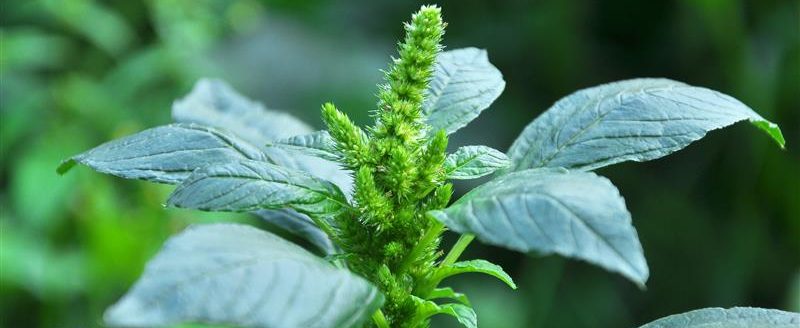
The HPPD resistance trait is commonly used in corn already, she said. It’s especially useful for tolerance to herbicides targeting palmer amaranth and kochia weed.
Kochia (bassia scoparia) is a tumbleweed for part of its life cycle. An aggressive competitor for sunlight and water, it has been spreading in northeast Missouri and can reduce yields by up to 70%.
This advancement, Syngenta says, gives farmers expanded weed control options and will allow use of HPPD inhibitor herbicides that have been a proven and effective strategy in corn, giving farmers more flexibility in early-season weed control—especially when planting delays or seed changes occur.
“This new technology represents the future of weed control flexibility in soybeans,” said Jared Benson, head of Soybean Portfolio Strategy, Syngenta. “By pairing broad-spectrum herbicide tolerance with Syngenta’s proven leadership in soybean genetics and crop protection innovation, this new soybean trait stack will give farmers a powerful tool to manage resistant weeds, reduce injury risk and simplify weed control across their operations.”
Soybean farmers across the United States face herbicide resistance, inconsistent early control and increasingly complex problems. This trait stack directly addresses these concerns by offering:
- Broad-spectrum tolerance to more active ingredients than any soybean trait in the market.
- Early-season weed control options with proven HPPD inhibitor chemistries used successfully in corn.
- Multiple modes of action to help lengthen the durability of active ingredients, address a broader weed spectrum and establish a robust residual program.
“Since the beginning, M.S. Technologies has been focused on developing the industry’s highest-performing soybean genetics,” said Joe Merschman, president of M.S. Technologies, L.L.C. “This collaboration builds on what M.S. Technologies started—combining the FG72 trait (formerly marketed as GT27) stacked with the Enlist E3 event will provide soybean growers with a robust and highly flexible weed control solution.”
Upon regulatory approval, Syngenta plans to release commercial varieties through the Golden Harvest and NK Seed brands, as well as through the GreenLeaf Genetics licensing brand. M.S. Technologies, L.L.C. plans to release commercial varieties through Stine Seed Company, Merschman Seeds and Latham Hi-Tech Seeds, and will also license the technology through Peterson Genetics.
Volunteer challenges
Every advance increases options, but also presents trade-offs. If herbicides can be applied earlier in the season, when weeds are younger, the timing could allow more beneficial soil activity.
Can genetic engineers stay a step ahead of nature and keep weeds off-balance? A year or two can be a long time in plant evolution. Kochia weed can rapidly develop resistance if farmers rely too heavily on any one herbicide.
Sullivan said stubborn weeds like waterhemp and palmer amaranth are already developing their own resistances to some HPPD inhibitors in some populations.
One possible outcome with corn or soybeans with these advanced resistance stacks, said Sullivan, is the “volunteer” problem. That is, plants left over from harvest that have these resistances can act as weeds themselves in the next planting and be more difficult to dislodge.
When controlling weeds, including leftover corn or soybeans with these resistances, she said, farmers should supplement herbicides with non-chemical weed control methods. Leave heavily infested weedy areas until last, she said, to avoid spreading seeds. These multiple methods of weed control are especially recommended for pests like kochia.
“Herbicides are not your only option,” she said.
David Murray can be reached at [email protected].
Related coverage and resources
- Related on HPJ: 3 entities enter into pact for soybean trait stack in Brazil
- Related on HPJ: Bayer introduces new soybean trait technology
- Outside resource: U.S. EPA — Pesticides