In 2025, it is likely that grasshopper populations will once again reach levels capable of causing issues in some areas of the state. This is in part due to the relatively late first hard freeze date experienced in much of South Dakota last fall.
The late freeze provided additional time for grasshopper egg-laying activity in 2024, which could result in increased populations this season.
In addition to the late hard freeze dates, all of South Dakota is currently experiencing some level of drought. Grasshopper populations tend to be more observable in drought-affected areas, as the alternative food sources are not as abundant as normal. The limited food supply causes grasshoppers to seek additional options including crops.
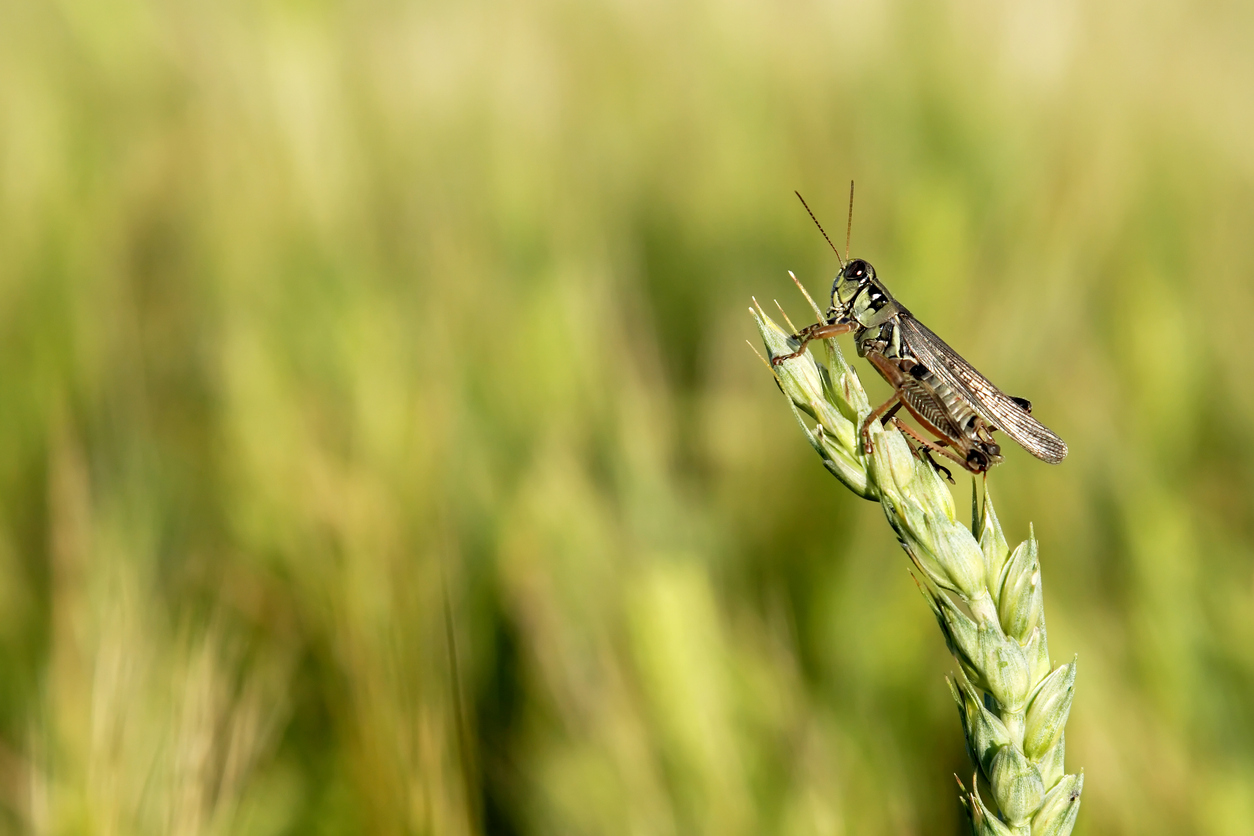
PHOTO: A grasshopper clinging to a grain stalk. (iStock │ #186865286 – Spauln)