Conservation drainage school to teach subsurface drainage practices in August
Three-day program offers resources for in-field and edge-of-field drainage water quality improvement practices
Nutrient loss from tiled fields has prompted the creation of sub-surface drainage designs that include practices to protect downstream water quality. Iowa State University Extension and Outreach will cover the planning, design and installation of drainage water quality improvement practices at the Conservation Drainage School.

The Conservation Drainage School will take place Aug. 26–28 at the Borlaug Learning Center on ISU’s Northeast Research and Demonstration Farm near Nashua, Iowa.
“Conservation Drainage School provides educational opportunities for all interested in drainage, whether they are contractors, farmers, consulting engineers, watershed coordinators, county officials or others,” said Matt Helmers, professor and agricultural engineering specialist with ISU Extension and Outreach. “The school focuses on the fundamentals of planning and design of oxbows, saturated buffers, controlled drainage, wetlands, alternative intakes, drainage water recycling, woodchip bioreactors and two-stage ditches, including ACPF and Batch and Build programs.”
The three-day school features classroom lectures and discussions combined with team problem-solving and field exercises. Student teams will plan and design drainage practices using concepts learned during classroom discussions. By attending this school, participants will be able to plan and lay out water quality improvement practices. Farm visits to sites where some of these practices have been installed, along with panel discussions with contractors already involved in constructing such practices, are planned.
Water quality improvement practices also provide opportunities for additional drainage work during times when regular tiling work may not be feasible. Drainage contractors, professional engineers and consultants, NRCS professionals, watershed coordinators, county administrators, landowners, drainage district officials and anyone interested in subsurface drainage water quality improvement practices are invited to attend and learn new practices.

The cost to register is $475 per person before midnight, Aug. 11. Late registration is $525 and must be received by midnight, Aug. 18. Class size is limited, and pre-registration is required. Registration includes meals indicated on the agenda, refreshments, a course notebook and reference materials.
Professional Development Hours and Certified Crop Advisor continuing education units are available for this school.
Additional program information and online registration is available on the Conservation Drainage School website. For registration assistance, contact Registration Services at 515-294-6222 or [email protected].
For more information, visit the Conservation Drainage School website.
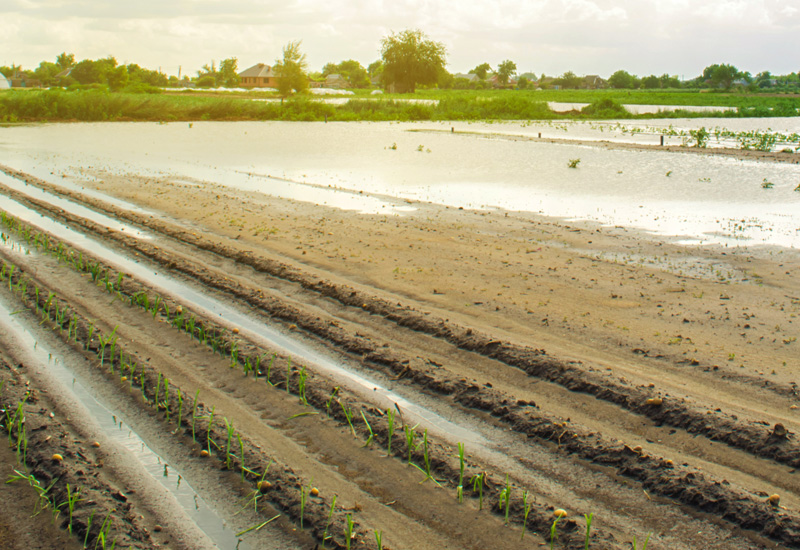
PHOTO: Agricultural land affected by flooding. Flooded field. Natural disaster and crop loss risks. (Photo: Adobe Stock │ #279795333 – Andrii Yalanskyi)