Patrick Maher understands that many factors can shape consumers’ opinion and that is the philosophy he uses as CEO of Atkins Ranch, which is based in New Zealand.
However, he willingly shares his knowledge about sheep and cattle production with United States producers and he uses it as opportunity to showcase his products and why they fit here. Atkins Ranch is a supplier of grass-fed lamb from New Zealand and Maher advocates for improved farm animal welfare and environmental health, including soil health, through regenerative practices.
Atkins Ranch was started in 1989 by two farm families, but by 2000, the producers were disillusioned with the meat industry, Maher said. “Their view was that the farmers weren’t getting the rewards for all the hard work and the big corporations were getting fatter and fatter. So, they decided to go and do it themselves.”

As a result, John Atkins moved to San Francisco. From there, containers carrying lamb meat were shipped to a port in Oakland so the product could be sold. Atkins Ranch started selling lamb in small volumes and the business has continued to expand.
Maher’s duty as CEO is to “get as much money back in the farmers’ pockets as possible so we’ve chosen ‘natural retail’ as the best way to do it.”
The company worked with the Non-GMO Project that emphasizes using non-genetically modified feedstocks and the meat includes no antibiotics or hormones. “We’ve been doing that for 15 to 20 years and I think we were the first lamb company to do that in the world,” he said.
Atkins Ranch works with the Global Animal Partnership, which has a high animal welfare standard that was started by Whole Foods Market, Maher said.
Regenerative ag
That led to a greater emphasis on regenerative agricultural practices, and it is a natural evolution in the process of raising lambs aligned to what consumers want and in ways that benefit producers, too, he said. Today, Atkins Ranch has more than 100 farmer-stakeholders participating, and they are believers in the practices.
The shareholders set and meet goals related to soil health, animal welfare and economic biodiversity, work to sequestering carbon, improve water quality, enrich soil, and ultimately leave natural systems stronger, healthier and more resilient, according to a company news release.
“The mission for regenerative agriculture is pretty simple,” Maher said. “It’s leaving the farm or the property in a better state for future generations. Our farmers have been doing that for a long time. I don’t think I’ve ever met a farmer who wants to leave his property in a worse state for his son or daughter to take over.
“But regenerative agriculture has helped us to measure the impact of management decisions, particularly in the soil and the wider ecosystem. It’s about monitoring the outcomes from your management decisions.” That puts the onus on the farmer to understand not only his farm, but the ecosystem he is working under and applying that management, and Maher says producers find it empowering.
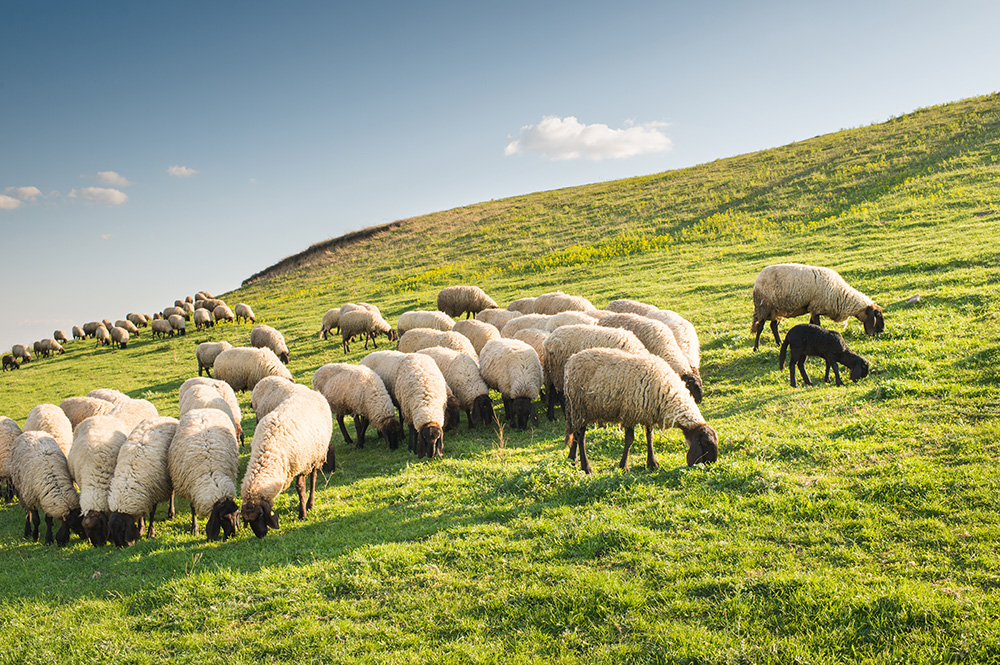
Lamb producers apply rotational grazing in New Zealand and split the land with paddocks, he said, so production can be efficient and the rest can then recuperate. That keeps forage quality high.
“The best way to sum it up is your grass is like a photosynthesis factory,” he said. “The longer the grass grows, the bigger the surface area and it can pull the good from the sun and carbon is then pulled down into the soil and then the soil can do its thing. So leaving higher cover (crops) is a core principle of regenerative agriculture.”
New Zealand is blessed with a temperate climate with good rainfall, so grass grows well, but it also requires producers be efficient managers.
Helping U.S. producers
`U.S. producers have different environments, but he said the management system can work for beef and sheep. Because of the size of their tracts, a U.S. producer may simply turn livestock out into a large pasture, as an example. However, since livestock will often go to where the grass and water are available and without management, they can overgraze. A paddock system can help them use the rangeland in a more efficient manner and allow grass to recharge.
“It’s really about converting grass into meat at the end of the day,” he said. “The more efficiently you can do it, the more stock you can turn over during the year. It’s a better outcome for both the farmers and in the end for the consumer, because there’s product available.”
Unexpected market opportunity
The company believes strongly in listening to consumers. Atkins Ranch benefitted from the COVID-19 pandemic five years ago when consumers wanted grass-fed meat and grocery stores struggled at first. The pandemic opened an opportunity for the company to build its market. Consumers, he said, sought grassfed lamb and sales continued to grow for the company as the consumers enjoyed the taste and quality even as supply chain problems eased.
Lambs are harvested in New Zealand then are cut into primal cuts and shipped by containers to Fremont, California, south of Oakland, where there is a retail packaging for supermarkets. The company has a third-party facility in New Jersey so that branded markets are available in the East Coast.
The company also launched its first third-party regenerative certified line with Dorothy Lane Market based in Dayton, Ohio. It now offers the first-ever Verified Regenerative lamb that is available to Dorothy Lane’s Land to Market line.
Dave Bergmeier can be reached at 620-227-1822 or [email protected].