I remember a presentation at a livestock meeting where the presenter talked about a “social license” to produce food for people.
Honestly, at the time, I was mostly falling prey to the nonsense of thinking that if we don’t do things a certain way to please consumers regarding how we produce their food, they may tell us to quit. Today I realize there are people seeking control—rather than consumers—about sending signals about preferences. The experts (farmers and ranchers) are not going to make progress if we listen to the profiteering cubicle dwellers instead of the people who actually get their hands dirty doing the job.
That brings me to the world of “climate change” where there is no greater example then those trying to shape the future of humanity by implementing measures of food and fuel production that are not grounded in reality.
Cattle owners face scrutiny for methane and carbon dioxide emissions from cows based on a flawed model that wasn’t about improving the environment, but rather about eliminating ruminant animals, in my opinion. If you don’t believe me, just ask the dairy and beef producers in European countries.
I hear the board members of the American Angus Association shouting at me, “Yes Trent; that is why we are going to take $4.85 million from the Bezos Earth Fund/Global Methane Hub to prove that cows are the solution and not the problem.” Now I am confused. Are we trying to prove the cow is not a methane contributor or are we trying to determine which cows are genetically more efficient in grass consumption based on an indicator that suggests lower methane means less grass consumed?
Do you know how many actual studies have been released since the flawed data from Pierre Gerber was released in 2006? To be honest, I don’t either, but it was quite easy to find this report from the University of Manitoba about greenhouse gas emissions of Canadian beef production in 1981 as compared with 2011. Link to full research report. CSIRO PUBLISHING | Animal Production Science
In summary it says: The efficiency and environmental footprint of beef production in Canada have improved significantly in the last 30 years. Researchers at the University of Manitoba and Agriculture and Agri-Food Canada Lethbridge found that producing each unit of Canadian beef in 2011 compared to 1981:
- used 17% less water,
- required 29% less breeding stock, 27% fewer harvested cattle and 24% less land,
- reduced greenhouse gas emissions by 15% and ammonia emissions by 20%.
Yet even with this data clearly available to the public for the past 14 years, who references it? Certainly no one who has invested in meat alternates and is trying to kill cattle ownership. Instead of American Angus Association board of directors saying, “We screwed up” and giving the money back, they have doubled down on this efficiency rhetoric which also doesn’t hold water. All you need to do is look at the announcement on the Global Methane Hub website to see how they positioned this partnership in April 2025.
“Reducing methane from cattle is one of the most elegant solutions we have to slow climate change,” said Dr. Andy Jarvis, Director of the Future of Food at the Bezos Earth Fund. “Thanks to collaboration with the Global Methane Hub, we’re backing an effort that uses age-old selection practices to identify and promote naturally low-emitting cattle – locking in climate benefits for generations to come.”
I can’t bring to light only this decision by the Angus people when the University of Nebraska received $2.3 million from this Bezos Earth Fund, along with a long list of other research institutions around the world.
In closing, the most important point I want to make is that all living things create emissions that enable the cycle of life.
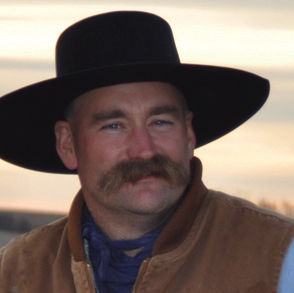
Editor’s note: The views expressed here are the author’s own and do not represent the views of High Plains Journal. Trent Loos is a sixth-generation United States farmer, host of the daily radio show “Loos Tales” and founder of Faces of Agriculture, a non-profit organization putting the human element back into the production of food. Get more information at www.LoosTales.com, or email Trent at [email protected].
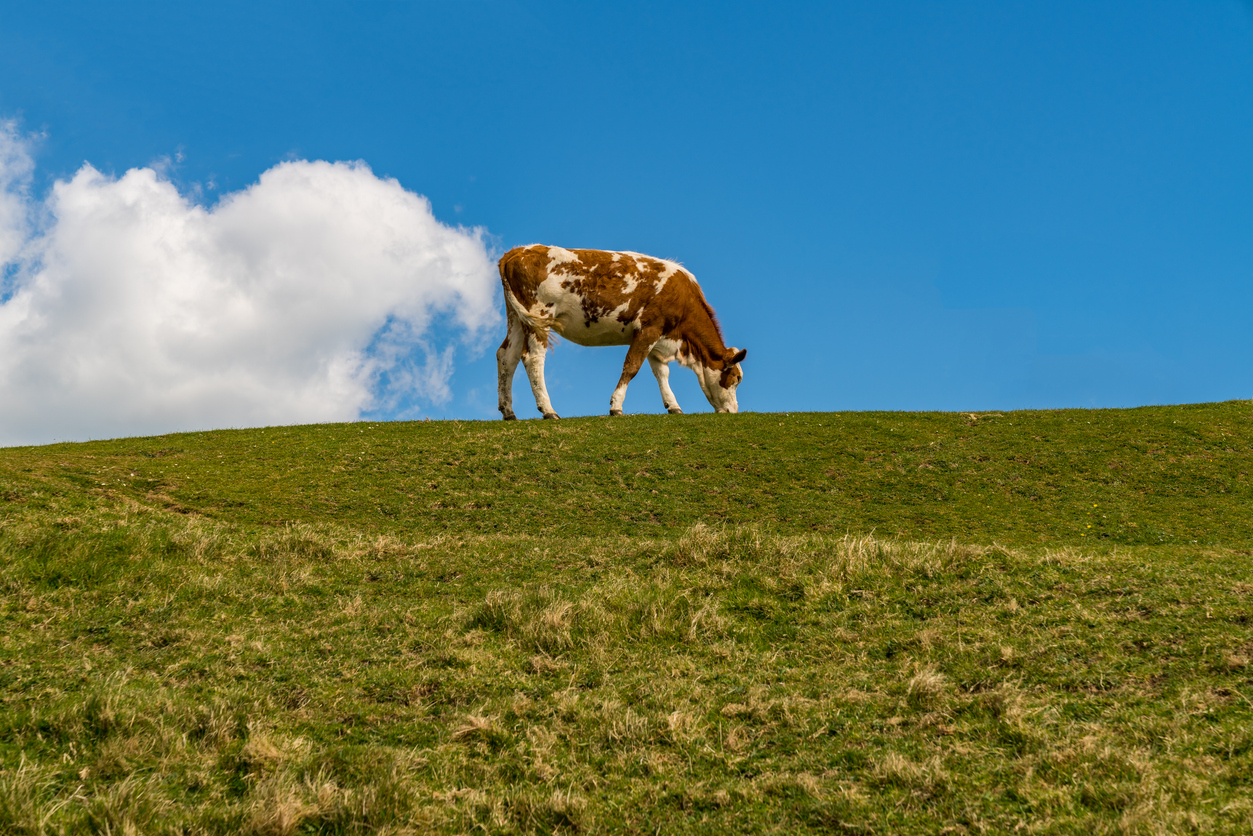
PHOTO: ‘The farting cow’, a Cow with a cloud. (iStock │ #913410556 – BerndBrueggemann)