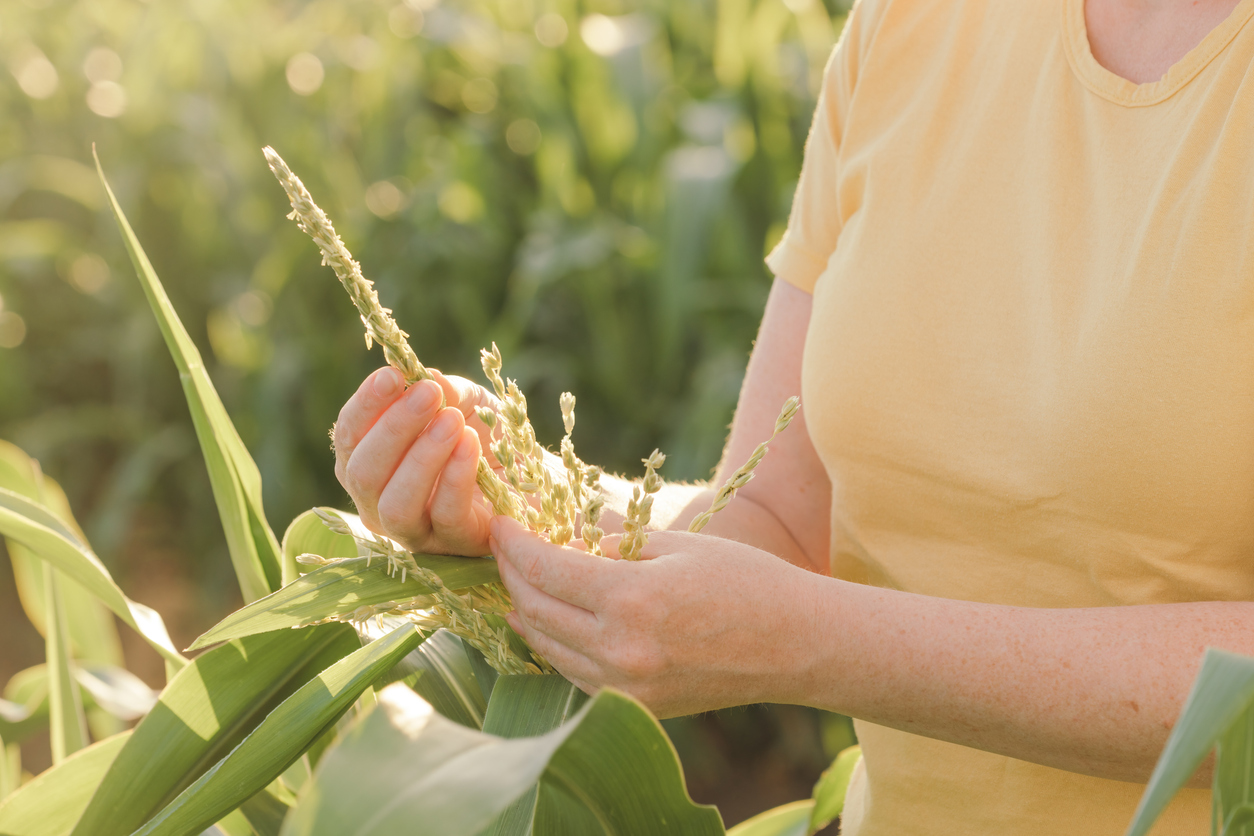
Two of our three daughters, and my wife as a high schooler, engaged in the infamous corn country summer employment that thousands of teenagers have participated here in the Midwest: Detasseling.

Landri finished the work, but it was a one-time stint in the battle with summer dew, heat, insects, and corn that was 3 feet taller than she was. She didn’t hate it, but she concluded that there were far better ways to spend the summer—like teaching swimming lessons at the pool.
Recently I drove past a “school bus” in central Nebraska sitting along the road in front of a field of corn where detasseling was occurring. The only difference was that these weren’t kids in the corn field, they were adults. While I did not stop and check IDs, I am very confident they were H2A workers from south of the border.
It is reported that in 2002, there would have been 100,000 teenagers hired nationwide to trapse up and down the muddy rows, pulling the tassels that the mechanical detasseling machine had missed. Even as recently as 2020, numbers of kids seem to have been quite high as evidenced by this 2019 post from the Nebraska Department of Agriculture:
“We hire around 1,300 to 1,800 workers each summer, depending on the number of acres we contract,” said Julie Bohlen, one of three owners of S&J Detasseling based in Glenvil, near Hastings. “We estimate almost 80 percent of those workers are under 18 years old.”
The trend today is that the seed companies do not hire the detasseling crews. Instead, they contract it out to groups like S & J Detasseling and, like all things in today’s world, the cost of liability and insurance along the way appears to be the limiting factor. In my opinion labor challenges extend beyond detasseling crews. Recent reports indicate that many farms and food processors are running 30% lower than capacity due to labor shortages. In fact, one report out this week would confirm:
“A bigger challenge facing the industry is a vanishing workforce, often due to recent immigration raids. The labor shortage for U.S. farmers is expected to exceed 400,000 jobs.”
Back to the original topic at hand, where are the kids? First off, some of our nation’s youth does not have the work ethic to do what it takes to get up early and fight the elements, regardless of what the task is. Then, quite honestly, the kids who do have the gumption are always taking care of junior livestock projects that require much more time than ever before. In addition to all of that, these kids tend to also be involved in high school sporting activities where the coaches now feel compelled to provide mandatory workout requirements throughout the entire year.
One side note that I found while researching Midwest corn issues was in a 2025 issue of Farm Progress:
“Corn behaving this way began shedding pollen with tassels still wrapped in leaves. What caused this unusual event? “We believe this may be a form of rapid growth syndrome occurring at the end of the vegetative stages, likely triggered by a combination of high temperatures, ample moisture and non-limiting nutrient availability,” says Mark Licht, Iowa State University Extension cropping systems specialist.
All of that I find very interesting, but the real story of the day is the lack of work ethics in not only our young folks, but people across the board. Is there anything more important in raising kids than to develop a work ethic and problem-solving skills? We know that risks exist and accidents do happen, but I am very confident that we do not want to live in a bubble and be afraid to try or do anything.
Everything is not going to go right every time but how you handle yourself and seek a solution is going to prepare us all for the future. Let’s not shortchange the next generation from that learning opportunity.
Editor’s note: The views expressed here are the author’s own and do not represent the views of High Plains Journal. Trent Loos is a sixth-generation United States farmer, host of the daily radio show “Loos Tales” and founder of Faces of Agriculture, a non-profit organization putting the human element back into the production of food. Get more information at www.LoosTales.com, or email Trent at [email protected].
PHOTO: Female farmer inspecting corn tassel in cultivated field. (iStock │ #1453064225 – BitsAndSplits)