How much can precision ag tech help with water crisis?
The High Plains water crisis is no longer a “slow-motion” crisis anymore. Irrigation accounts for 83% of all water usage in Kansas.
The Kansas Water Plan Implementation document, developed more than a year with input from multiple stakeholders and released in January 2023 (updated in December 2024), warns that up to 100 Kansas communities could disappear altogether due to declining water resources—by 2030. It lays out a 10-year scenario for improving water infrastructure.
The framework lays out a 10-year scenario for improving water infrastructure. One of its key recommendations is to “upgrade technology for 10,000 agriculture irrigation systems to reduce water use by 15% while maintaining profitability.” Technology—in the form of better sensors, switches and controls, as well as artificial intelligence and other aids to precision ag—can help automate and refine practices that maximize efficiency and save water.
Water allocation is often determined by laws and interstate water compacts, some decades old. Where these are outdated, they might need to be changed or adjusted, policy experts say. Obviously, technology can’t be the entire story in water conservation. But research indicates we haven’t yet begun to reach the limits of what technology improvements alone can do, and reducing water use with technology’s help will generate substantial water savings.
Professor Jonathan Aguilar of Kansas State University’s Southwest Research Extension Center, Garden City, has received much attention recently from ag producers for his work on the speed of center-pivot systems. Aguilar’s work showed that, contrary to what some farmers believe, slowing down pivot drip speeds can actually increase water efficiency—and save significant dollars in water costs while improving yields.
Regulating pivot drop speeds doesn’t sound “sexy,” but using AI and advanced data to regulate producer practices in dozens of small ways that will conserve precious resources like Ogallala Aquifer.
Aguilar told the High Plains Journal the U.S. Department of Agriculture is conducting field research at its Cropping Systems Research Laboratory in Lubbock, Texas, testing sensor systems that provide feedback loops to help pivot systems self-regulate to some extent.
“Ultimately, though, it will have to be the producer’s decision how to regulate water use,” he said. “There can be so much variability of conditions within one field or center-pivot circle that each ‘slice’ may need to be handled separately. Sensor systems and AI can help with providing data. These systems won’t replace human decision-making, but instead they will help producers make better decisions that maximize resources and increase yields while saving water.”
North Dakota and Nebraska, which between them sell almost half of all U.S. corn and soybeans, are the current leaders in drip-regulating technologies. But Aguilar says Kansas’ data collection on water usage is outstanding.
“Kansas is blessed with a lot of good information on water use and resources, and it’s that information that allows us to do these studies,” he said.
In recent months, increased rainfall has mitigated the drought conditions somewhat in Kansas, Aguilar said, although patches of farmland in drought conditions remain.
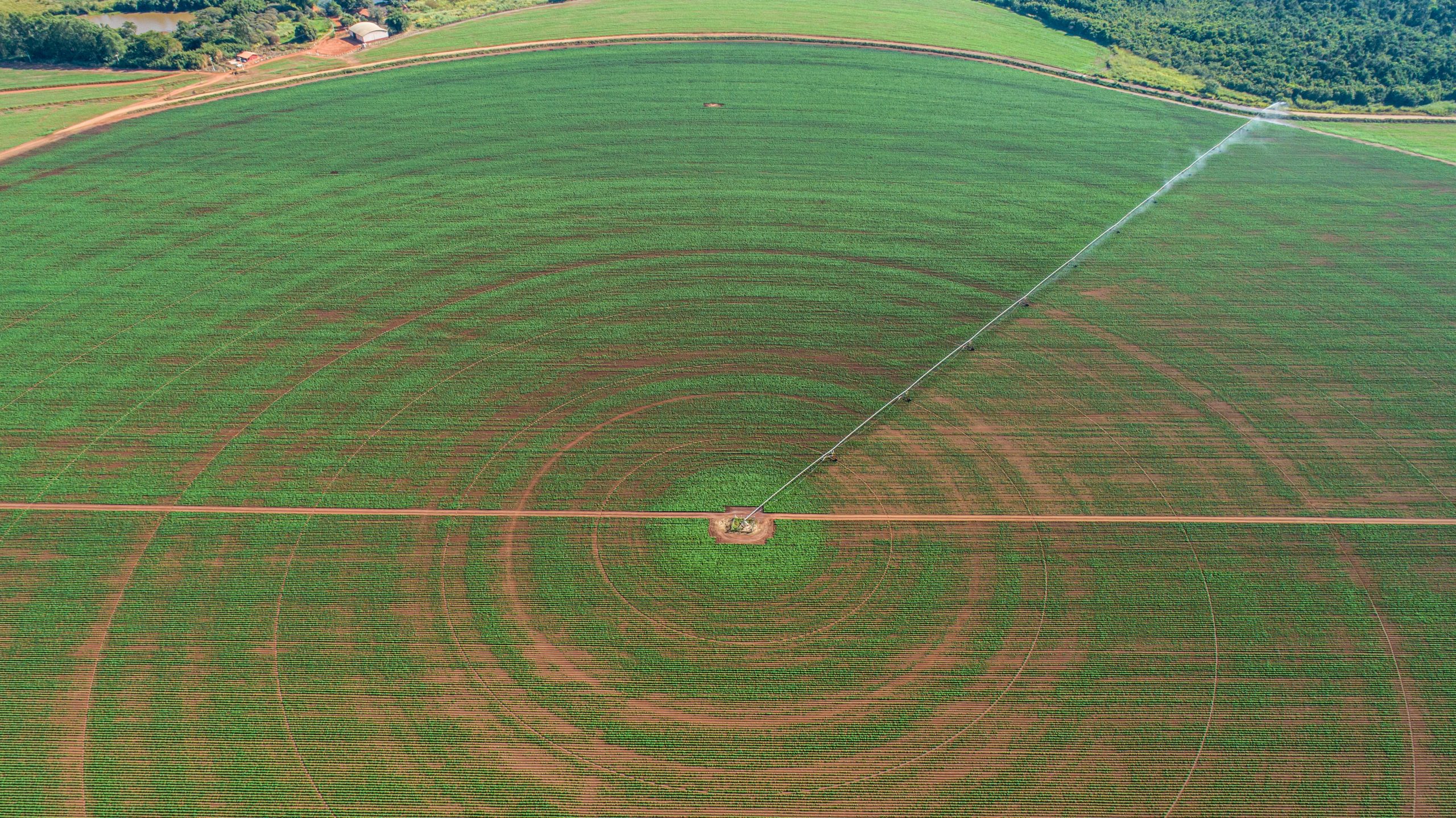
Pictured above, an agricultural irrigation system on sunny summer day. An aerial view of a center pivot sprinkler system. (Photo courtesy of AdobeStock.)
David Murray can be reached at [email protected].