
Lesser prairie-chicken endangered status vacated
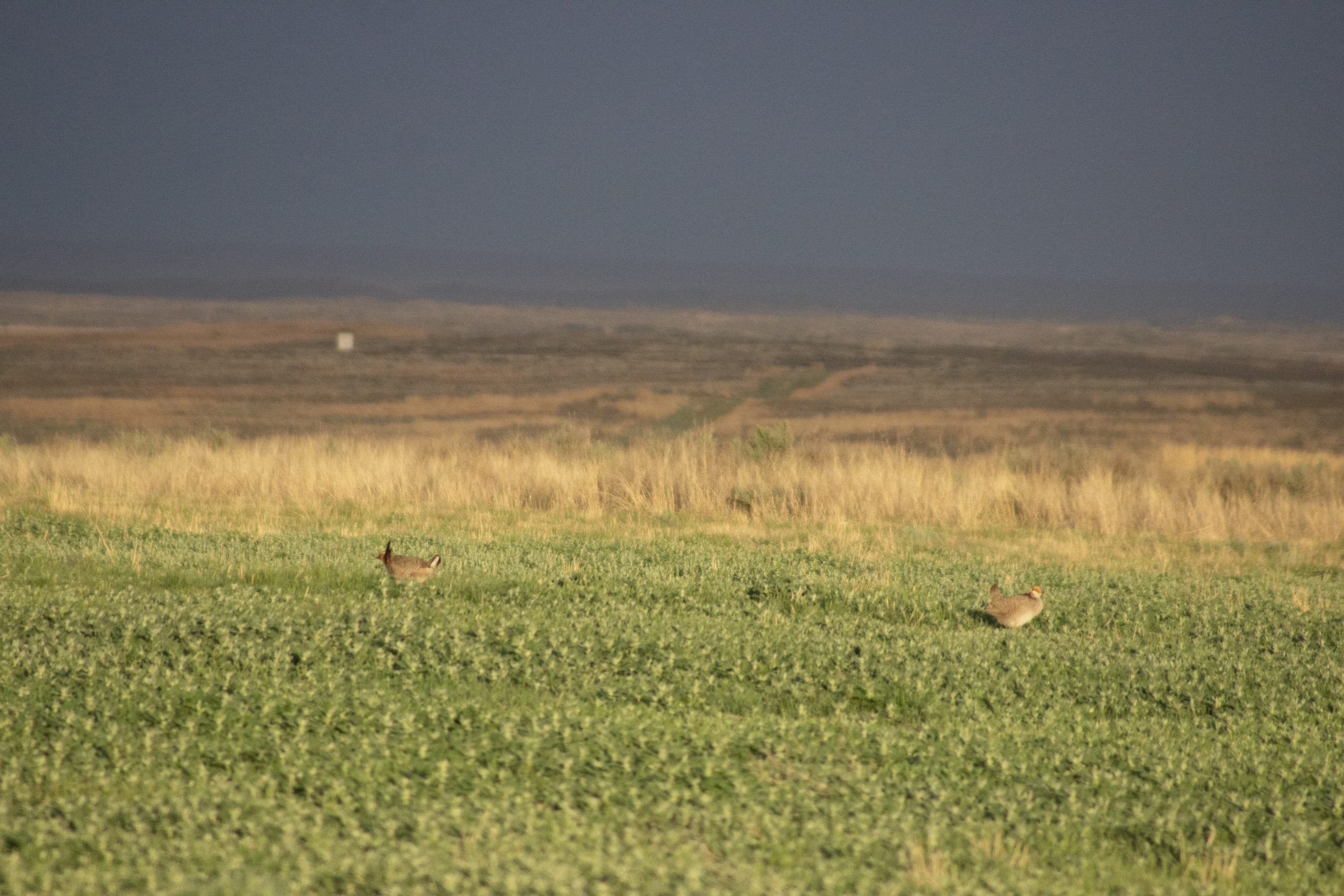
The United States District Court for the Western District of Texas reversed the listing of the lesser prairie-chicken on the endangered and threatened species list under the Endangered Species Act on Aug. 12. U.S. District Judge David Counts reversed the U.S. Fish and Wildlife Service’s 2022 endangered classification in a 15-page order.
Under President Donald Trump the USFWS had urged the reversal, and Judge Counts agreed, writing, “Fish and Wildlife’s concession points to serious error at the very foundation of its rule,” Counts wrote, adding that “mere remand would not cure this error.” The “defect” was the failure of the service to give a rationale for why they separated prairie chickens into two populations, a northern and southern one, in 2022, and failed to describe the degree of endangerment for each population.
More than 70% of the estimated lesser prairie chicken population resides in Kansas. If USFWS wants to renew that listing, it will have to do an entirely new study from scratch.
U.S. Rep. Tracey Mann (KS-01) said, “Kansas farmers, ranchers and agricultural producers have always been and always will be the original conservationists of the land. The District Court of West Texas’ ruling to remove the lesser prairie-chicken from the endangered and threatened species list honors their stewardship of the land and acknowledges the facts on the ground. This ruling is a win for Kansas agricultural and energy producers and a huge loss for radical climate activists and bureaucrats who have abused the Endangered Species Act for over a decade to hurt American agriculture and energy production.”
Mann has fought to reverse the LPC’s listing since he joined Congress in 2021. In February 2023, he led a bicameral Congressional Review Act to strike down the LPC’s listing. The resolution passed in the U.S. House of Representatives in July 2023, but President Joe Biden vetoed it. In April 2025, Mann urged Secretary of the Interior Doug Burgum to delist the lesser prairie-chicken from the threatened and endangered species list. In January 2025, Mann introduced legislation to remove the LPC from the threatened and endangered species list and to prohibit future efforts to relist it.
In his ruling, Counts said the existing 16 various state, private and local programs to conserve the bird were sufficient and that removing federal protections would not significantly disrupt conservation efforts.
Wayne Walker, whose LLC Common Ground Capital has led private, market-based efforts to protect the lesser prairie-chicken by incentivizing land developers and landowners with conservation credits, told High Plains Journal, “The district court has issued its decision and LPC Conservation, LLC respects the outcome. However, the only way to gain certainty with permitting for American energy security is to break the regulatory whiplash of repeated listings and de-listings of the lesser prairie-chicken.
“As the listing status is reconsidered by the U.S. Fish & Wildlife Service, to whom the judge has remanded this decision on species status, we at LPC Conservation stand ready to support both industry and the U.S. Fish and Wildlife Service in meeting our nation’s infrastructure and energy demands while supporting the bird’s recovery.
“Over the past two years, our conservation banks have permanently conserved nearly 40,000 acres of stronghold habitat with industry’s and our ranching partners’ support. Our private capital market-based program is the most effective LPC recovery program available today. Government programs have either not worked or don’t deliver. We pay the ranchers a fair market rate to achieve strategic and durable conservation outcomes that is a win for the LPC, ranchers and industry.
“We all know that recovering the lesser prairie-chicken will require even more conservation as its numbers dwindle. We urge all stakeholders to collaborate towards a stable recovery, market-driven solution. Our Service-approved Habitat Conservation Plans are ready to support that mission.”
David Murray can be reached at [email protected].



