Bayer announced July 30 that it has submitted applications in four major agricultural markets—the European Union, Brazil, Canada, and the United States—for a new herbicide with a new mode of action, the first such innovation in more than 30 years.
Bayer expects to launch the new product in Brazil in 2028, followed by the other markets.
Displaying unique product properties, the new herbicide, icafolin-methyl, “meets the highest safety and sustainability criteria of CropKey,” Bayer’s research and development approach for crop protection products that uses AI to help analyze new products across a range of factors, the company said.
Icafolin acts on plant tubulin by inhibiting tubulin polymerization in plants, essentially “freezing” them in place while leaving their structure intact. This disruption prevents weeds from competing for resources like water, nutrients and sunlight, while also creating a beneficial mulch layer that helps retain soil moisture and prevent erosion. It attacks weeds in a way not previously used in commercial agriculture and is designed to be effective at low dose rates, Bayer said. By providing effective weed control, icafolin reduces the need for tillage, supporting regenerative practices in agriculture that can improve soil health.
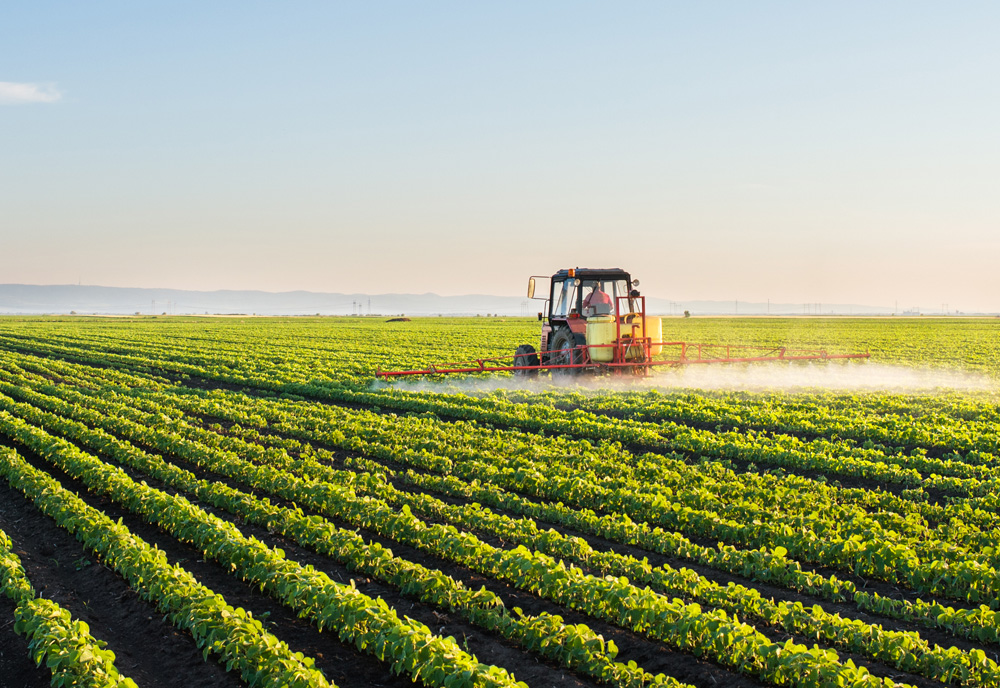
Additionally, Bayer said, icafolin’s intrinsic properties make it suitable for targeted spray applications and lower dose rates, which allows the company to submit registration applications under reduced risk status.
Bayer credits its new operating model DSO for advancing ahead of schedule. The new operating model DSO has been instrumental for advancing icafolin regulatory submissions ahead of schedule.
Bayer said icafolin is designed to complement existing herbicides, such as glyphosate, adding a novel solution in the fight against weed resistance, a top priority for farmers. Weed resistance has increased globally over the last years and are a threat to food security as resistant weeds are competing with crops on sunlight and nutrients, thus significantly reducing yield and harvest quality. Icafolin has been developed for initial uses in soybean, cereals, pulses, and oilseed crops, as well as pome and stone fruits, tree nuts, grapes, and citrus.
Does this mean Bayer is abandoning glyphosate? On its website, Bayer insists that glyphosate still has a role in agriculture, and it vigorously defends scientific findings that it does not cause cancer. But it introduced a glyphosate-free formula of Roundup this year, and Bayer CEO Bill Anderson has threatened to pull it on several occasions. In 2020, Bayer spent $10 billion to resolve past claims and set aside another $6 billion for future claims. More recently, it set aside another $1.37 billion to its Roundup litigation reserves. But it still faces more than 60,000 active lawsuits, many in state courts. It wins or settles more lawsuits than it loses, but some courtroom losses come with big awards that must be contested.
On its website, Bayer states, “We stand fully behind the safety of our glyphosate products. The measures Bayer is taking are not admissions of legal liability or wrongdoing but are the result of the mass tort system in the U.S. and a lack of clarity regarding the correct interpretation of U.S. labeling laws by courts. We have great sympathy for anyone who suffers from a disease, but at the same time, the extensive body of science continues to show that our products are not responsible for the illnesses alleged in this litigation.”
David Murray can be reached at [email protected].