Plant pests threaten Missouri soybean fields
Two plant pests are threatening soybean fields at opposite ends of Missouri.
Red crown rot, a destructive fungus (Calonectria ilicicola), which survives in crop residue and soil, was first discovered in Missouri in Marion County, on the state’s eastern border across the Mississippi River from Illinois and north of St. Louis. It was confirmed in July 2024, with symptoms observed in a commercial soybean field. The disease was also later confirmed in Audrain County, according to the University of Missouri MU Extension.
The disease could cut soybean yields by up to 80% and has no known cure. Its initial symptoms are easily mistaken for those of sudden death syndrome, another soybean disease.
According to a booklet released by the Missouri Soybean Merchandising Council, the disease is revealed by interveinal chlorosis followed by necrosis, similar to soybean sudden death syndrome, beginning in the early pod fill stages. The lower stem will become discolored and show the presence of white fungal growth near the soil line. When split open, internal stem tissue may appear discolored and browned, and plants will begin to die prematurely. Orange to red fungal growth, often in the form of spots, will occur on the outer stem of affected plants that have died or are nearing death and are a distinctive sign.
According to University of Missouri Extension state plant pathologist Mandy Bish, seed treatments may reduce symptoms and infection, but these treatments cannot eliminate the fungus, which persists in the soil. Corn, however, is not a host for the pathogen, so corn rotation is recommended as a management tool. Experts recommend avoiding rotating peanuts (in those growing regions) with soybeans.
This disease was first identified in the southern United States in the 1960s and was confirmed in Illinois in 2018. It infested peanut fields in the Southeast, severely reducing yields. Although it’s not fully known how red crown rot spread to the north-central U.S., exchange of used equipment could have hastened its spread.
Kochia weed
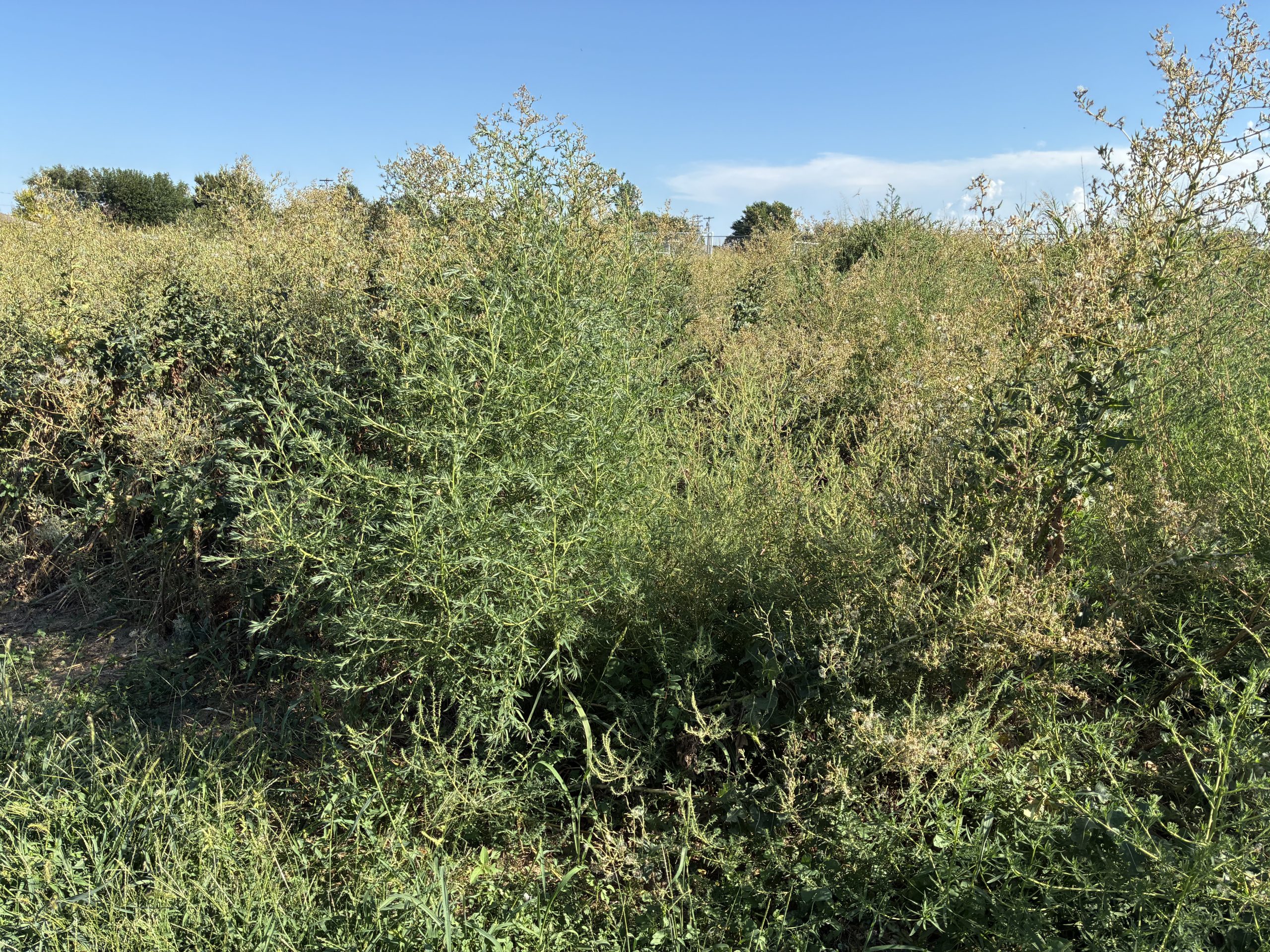
At Missouri’s northwest corner, another plant pest has made a disturbing appearance in a soybean field: kochia, a tumbleweed during part of its life cycle. According to MU Extension field agent Wayne Flanary, kochia is resistant to many herbicides. During its tumbling phase it drops seeds as it rolls. It was recently discovered in a single soybean field near a railroad embankment lined with kochia, which may be how it spread.
It was first identified in western Canada in 2018. A website maintained by the Saskatchewan Pulse Growers has been tracking its increasing resistance to multiple herbicide modes of action. Kochia appears to be resistant to multiple herbicide modes of action, including Group 2 (ALS inhibitors), Group 4 (synthetic auxins), Group 9 (glyphosate), and Group 14 (PPO inhibitors).
Bayer labs recommends a combination of manual, mechanical, cultural, and chemical control methods. Effective management involves preventing seed production, limiting disturbances that spread the weed, and using a combination of control tactics to combat herbicide resistance.
David Murray can be reached at [email protected].