Researchers at Iowa State University have discovered a unique and environmentally friendly solution of utilizing crop waste to seal abandoned oil wells and capture carbon by permanently sequestering it in the soil.
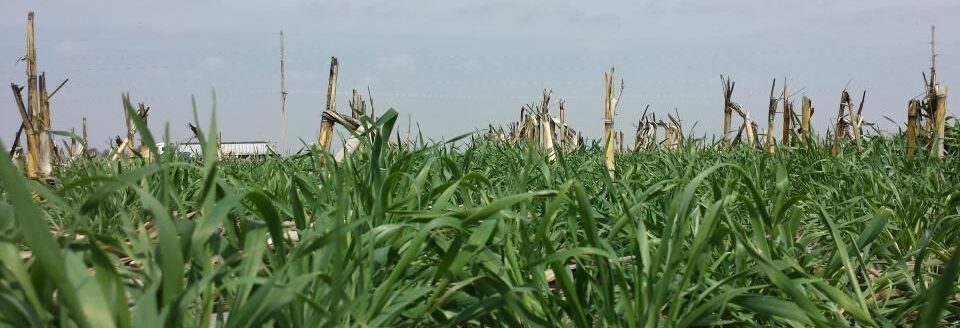
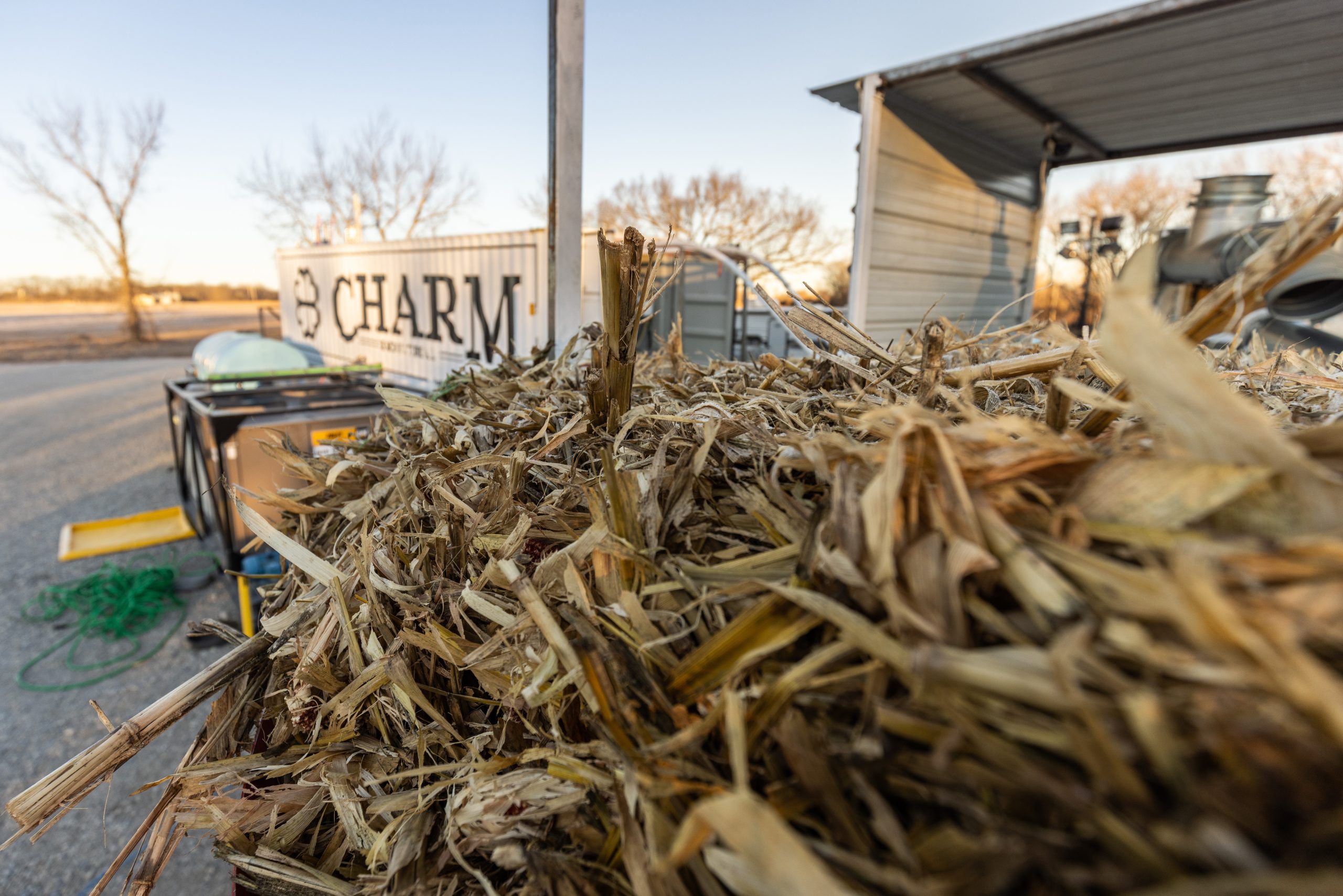
Mark Mba-Wright, ISU professor of mechanical engineering, is leading the research team that has been experimenting with materials for filling oil wells. He said the research began as a way of producing biofuels from non-edible crops. Corn stover, which includes leaves, stalks and corn cobs left in the field post-harvest, has emerged as one of the most promising crop waste materials used in the research.
“We wanted an alternative to ethanol, and so here in the Midwest, we focused on using corn stover to make gasoline and diesel compatible fuels,” Mba-Wright said. “More recently, we were approached by a company called Charm Industrial from San Francisco. They were interested in using the same technology to produce a bio-oil that could be converted into cement to plug oil wells. We can use our biomass resources in the Midwest, but we’re also able to remove carbon from the environment and plug these oil wells, which would otherwise keep emitting CO2 to the environment.”
According to ISU’s research program, the average oil well measures 1.6 feet wide and 2.6 miles long and can hold about 216,000 gallons of liquid. Additionally, there are as many as 800,000 undocumented orphaned wells in the United States. Mba-Wright said the number of wells being built in the U.S. is increasing, but many wells have a short lifespan of only three to five years. After that point, their production often becomes too low to be commercially viable, and the companies cease operations.
“Even though they are no longer being used, they’re still emitting methane and other gases,” Mba-Wright explained. “There are efforts to close these wells, but they’re expensive to plug. It costs between $17,000 to $25,000 per well. Finding an economical solution was a common goal for both the operators of these wells and companies like our partner, Charm Industrial.”
Adding value to crop waste
Aside from corn stover, Mba-Wright said researchers have tried other feedstock, such as algae, woody crops and forest residue to plug wells.
“Our partners are very interested in forest residue, because it is a fire hazard in many parts of the country, and so there are many states, like California, that are looking for commercial solutions to reduce the amount of forest waste that’s left on the ground.”
Mba-Wright said although there has been success with other byproducts, corn stover is the most abundant and underutilized crop waste product available, especially in the Midwest.
“It has some properties that can be challenging for making other types of products, but for this particular application, it does show a lot of promise,” he said. “We believe that farmers would benefit from the dual market value of using the bio-oil to plug the wells, which has some value, but also, they can collect carbon renewable credits from this process.”
Mba-Wright estimated that pyrolysis companies would pay $50 to $100 per ton for the ag waste to be used in plugging wells. He said Charm Industrial is actively commercializing the process of using ag waste for sealing abandoned wells and they already have contracts in place. He said farmers might have an opportunity, whether to partner with Charm Industrial or similar company, to sell their crop waste soon.
“We believe this is a win because, one, we’re reducing the amount of stover that’s left in the field and generating revenue for the farmers. For the environment, not only are we removing carbon from the atmosphere by sequestering the biogenic carbon in the plant, but we’re also reducing the emissions in the oil.”
Lacey Vilhauer can be reached at 620-227-1871 or [email protected].
Photo Caption: Corn stover has been found to be an ideal crop waste product to use in sealing abandoned oil wells. It is the most abundant and underutilized crop waste product available, especially in the Midwest. (Photo courtesy Mark Mba-Wright.)