For thousands of years, humans have been eating animal products that come from mammalian species. So where was the lone star tick that suddenly is responsible for Alpha-Gal Syndrome that some believe was the culprit in taking a human life?
For those who may have missed it, numerous media outlets are reporting that a 47-year-old man in New Jersey, who ate a burger at a barbecue last summer, has just now died from complications caused by AGS.
We have been hearing bits and pieces about this allergy that is induced by multiple tick bites. The saliva from the ticks contains a sugar that, once it gets into the human body, induces this allergy after humans consume meat from mammalian animals.
We have no idea what truly caused this man’s death, but the numbers for a meat allergy are low and the symptoms seem to be varied. What we do know for a fact is that in 2000 these conditions were first discovered in rural Tennessee and the University of Virginia was the institution to tie the symptoms to tick bites. From body rash to shortness of breath, it apparently does display symptoms similar to an allergic response to wasp or bee stings.
This is where the story takes a serious “oh wait a moment” turn, in my opinion. On one of my broadcasts back in August, I shared the story of a pair of researchers at Western Michigan University who discussed their research of trying to increase the prevalence of lone star ticks with AGS saliva.
I remember they openly stated that cows were contributing to climate change and, in the name of protecting the climate, they wanted to chase more people away from consuming meat. To that point, you can find their “research” project post in the National Institutes of Health under the title Beneficial Bloodsucking.
I wanted to share a couple of the most interesting components of the authors’ piece printed as “science.”
“Therefore, promoting tickborne AGS is strongly pro-tanto obligatory. It is presently feasible to genetically edit the disease-carrying capacity of ticks. If this practice can be applied to ticks carrying AGS, then promoting the proliferation of tickborne AGS is morally obligatory.”
“Public health departments warn against lone star ticks and AGS, and scientists are working to develop an inoculation to AGS. Herein, we argue that if eating meat is morally impermissible, then efforts to prevent the spread of tickborne AGS are also morally impermissible. After explaining the symptoms of AGS and how they are transmitted via ticks, we argue that tickborne AGS is a moral bioenhancer if and when it motivates people to stop eating meat.”
The most interesting piece presented in this journal is the notice was posted at the end:
“Data sharing is not applicable to this article as no data sets were generated or analyzed during the current study.”
The data is clear that people with access to animal protein are better with cognition. The fact that ruminants are continually targeted as the enemy lies solely on the fact that over 70% of the world’s land mass will not grow food to feed people, but yet a ruminant animal can upcycle that cellulose material into the most nutrient dense food on the planet.
The answer to research motivation always lies in who is funding these different projects. I have been unable to find the funding mechanism for this particular project of mass genocide but, trust me, before the lone star tick bites me I will have the answer.
Editor’s note: The views expressed here are the author’s own and do not represent the views of High Plains Journal. Trent Loos is a sixth-generation United States farmer, host of the daily radio show “Loos Tales” and founder of Faces of Agriculture, a non-profit organization putting the human element back into the production of food. Get more information at www.LoosTales.com, or email Trent at [email protected].
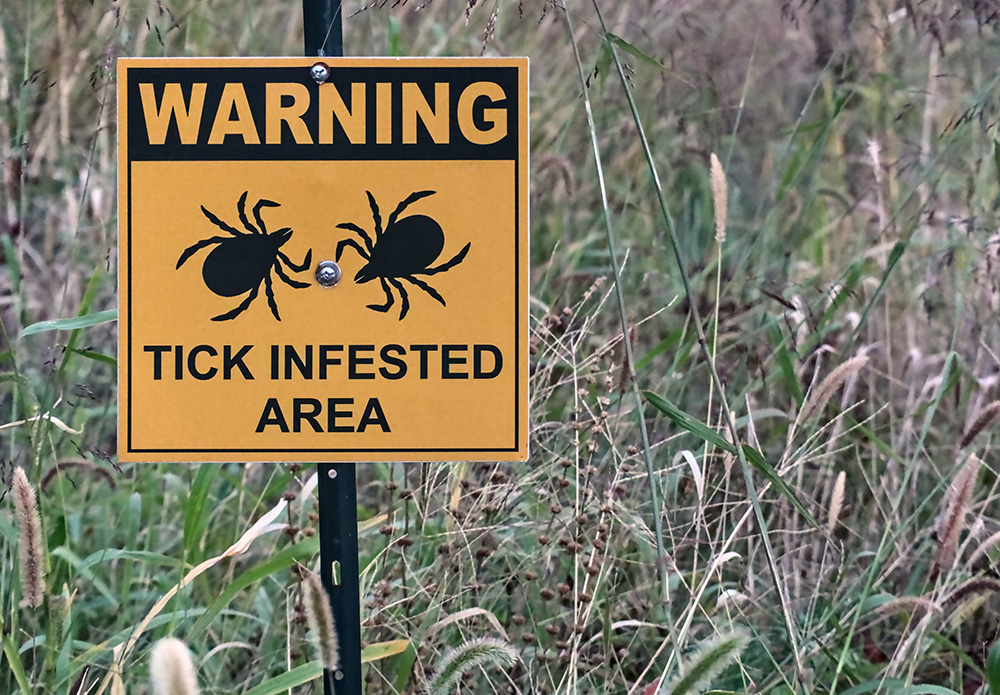
PHOTO: Warning tick infested area sign in a grassy field. (Adobe Stock │ #690377558 – Yuriy T)