Cotton harvest progressing well with promising yields
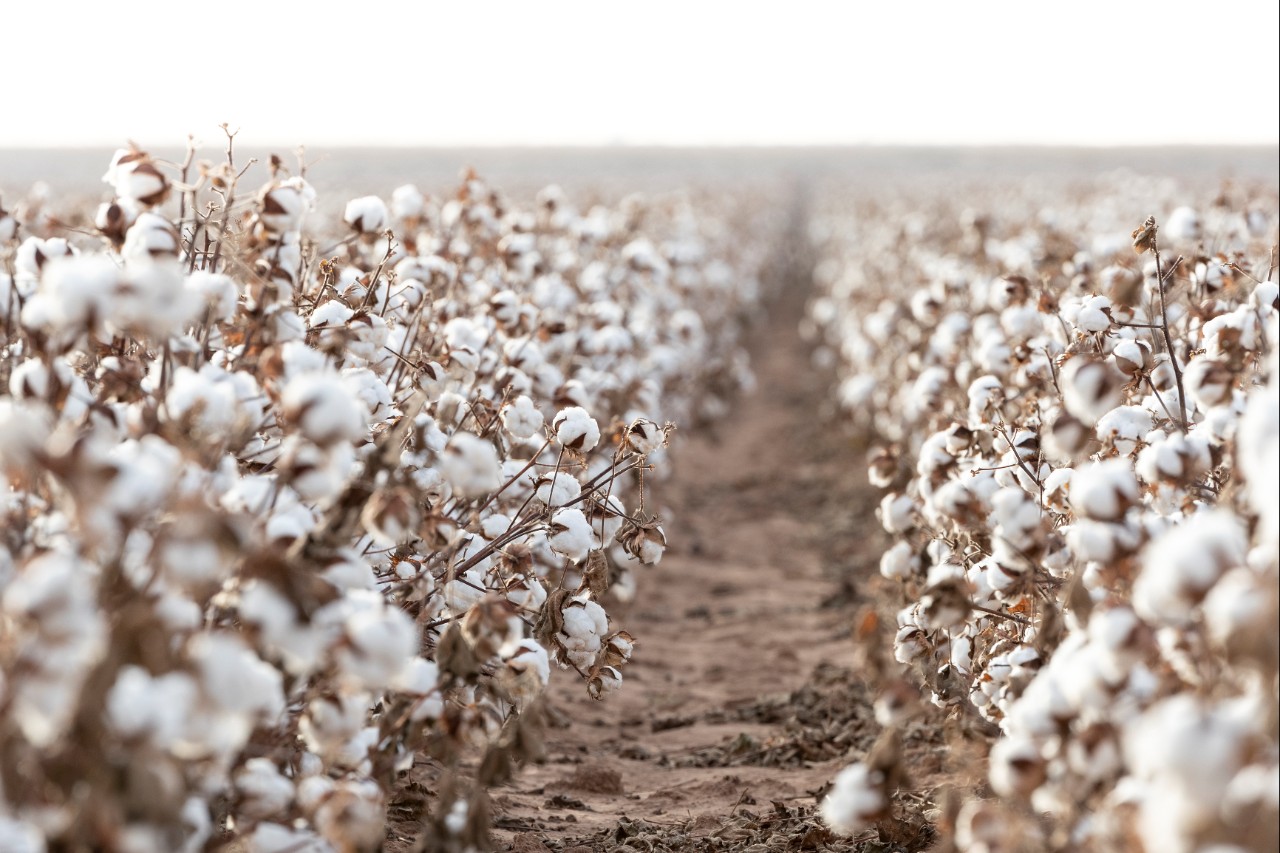
Cotton farmers in a major growing region have taken advantage of favorable November weather as harvest hits its stride.
Kara Bishop, director of communications and public affairs at the Lubbock, Texas-based Plains Cotton Growers Inc., said scouts on Nov. 22 indicated that 95% of the cotton crop was harvested north and east of Lubbock and about 75 to 80% was harvested south and west of Lubbock.
“We haven’t had a whole lot of weather delays or anything like that,” Bishop said. “Obviously equipment breaks down and kinks have to be worked out, but as far as harvest goes, it’s progressing pretty well in this area.”
Many cotton farmers should wrap up their harvest after Thanksgiving, if favorable conditions continue, she said. Some growers had later planted cotton as they worked around rain and hail events in the late spring, while some of producers are waiting for a hard freeze.
The harvest is “exponentially better” than it has been the past three years, and indications are the quality has a similar performance, she said. Meanwhile, low prices are the No. 1 challenge. When top quality cotton only brings 57 cents a pound “that is a hard pill to swallow.”
One grower reported harvesting above 5.5 bales per acre on a drip-irrigated field.
The 2025 crop’s colors, strength, uniformity, and staples are all good, she said, which is encouraging. Farmers in the Plains Cotton Growers service area have not faced too many disease pressures, she said. While growers in other cotton growing regions in the country have been reporting cases of cotton jassid, most notably in Georgia with a few reports in southern Texas. The Texas Department of Agriculture and Commissioner Sid Miller for took a proactive approach and made sure that infected hibiscus plants, that fed the invasive pest, were destroyed and retail stores that had carried the impacted plants were identified.
There were a few reports of cotton leafhoppers, but cases were isolated, she said.
“The quality has been good, the yields have been good, the production has been good and the harvest progression has been good, too,” Bishop said. “It’s just the price. It’s really kicking us.”
Cotton producers have also faced a tougher bottom line because of high input costs and including the fuel it takes to harvest a crop.
The Plains Cotton Growers includes 42 counties, that goes as far north as the Oklahoma border and as south as Midland. Typically, the region plants about 3.5 to 4 million cotton acres each
year. North of Interstate Highway 40 there is not as much cotton grown in that region as farmers have better water resources, she said.
Farmers have been innovative, too, she said. To stretch limited water resources, some irrigators have used a half-circle of cotton and half-circle of sorghum and have had good results for both crops. They also have been using other crops in rotation.
This year, producers did report timely rains in comparison to the past three years, she said.
“It just depends on where you are and who caught the rain,” she said. “There was a producer out looking in his dryland field and he said the bolls weren’t quite as big and fluffy as he wanted, and he added, ‘I just needed one more rain’ and the rain he was referring to was on a field literally across the road, but it didn’t hit that one.”
Trade deals
The recent news about a United States trade deal with China and other countries in the Pacific Rim have made cotton farmers cautiously optimistic.
“I do know the trade deal with China does include cotton purchases and we’re excited about that,” Bishop said. “One thing we have always said is that if China is not playing in the marketplace, then our cotton sales and exports are going to be negatively impacted.”
She said tough times hurt profitability from 2018 to 2020, but they were followed by several profitable years. However, the end of 2023 marked a new era of low profitability—the past couple of years have been difficult.
China has kept higher reserves of cotton and as a result has not been in the market, she said. If the trade agreement stands as presented, that could really benefit farmers. Plus, other Pacific Rim countries also have an interest in U.S. cotton, she said. The industry has been pushing Congress to pass the Buy American Cotton Act that would also open new opportunities.
WASDE report
The November outlook for 2025-26 U.S. cotton supply and demand shows higher production, exports and ending stocks compared to September, with no change to consumption and imports, according to the World Agriculture Supply and Demand Estimate.
The forecast for U.S. production was raised almost 900,000 bales to 14.1 million, reflecting higher than expected yields in most states and increasing the projected national average yield almost 7% to 919 pounds per harvested acre. The export forecast increased from 200,000 bales to 12.2 million. The balance of the production increase flows to ending stocks, which were raised almost 20% to 4.3 million bales, for a stocks-to-use ratio of 30.9%. The projected season-average upland price for 2025-26 was lowered to 62 cents per pound.
The 2025-26 outlook for world cotton supply and demand in November shows higher production, consumption, trade, and stocks compared to the September outlook. Global cotton
production is forecast 2.4 million bales higher with increases of 1 million bales in China, about 900,000 bales in the U.S., and 500,000 bales in Brazil. World trade was raised to 300,000 bales and consumption by 50,000 bales. Beginning stocks were raised more than 400,000 bales largely reflecting updated 2024-25 trade data for several countries. As a result of these changes, global ending stocks were raised about 2.8 million bales to 75.9 million bales.
An October report was not available because of the federal government shutdown.
Dave Bergmeier can be reached at 620-227-1822 or [email protected].