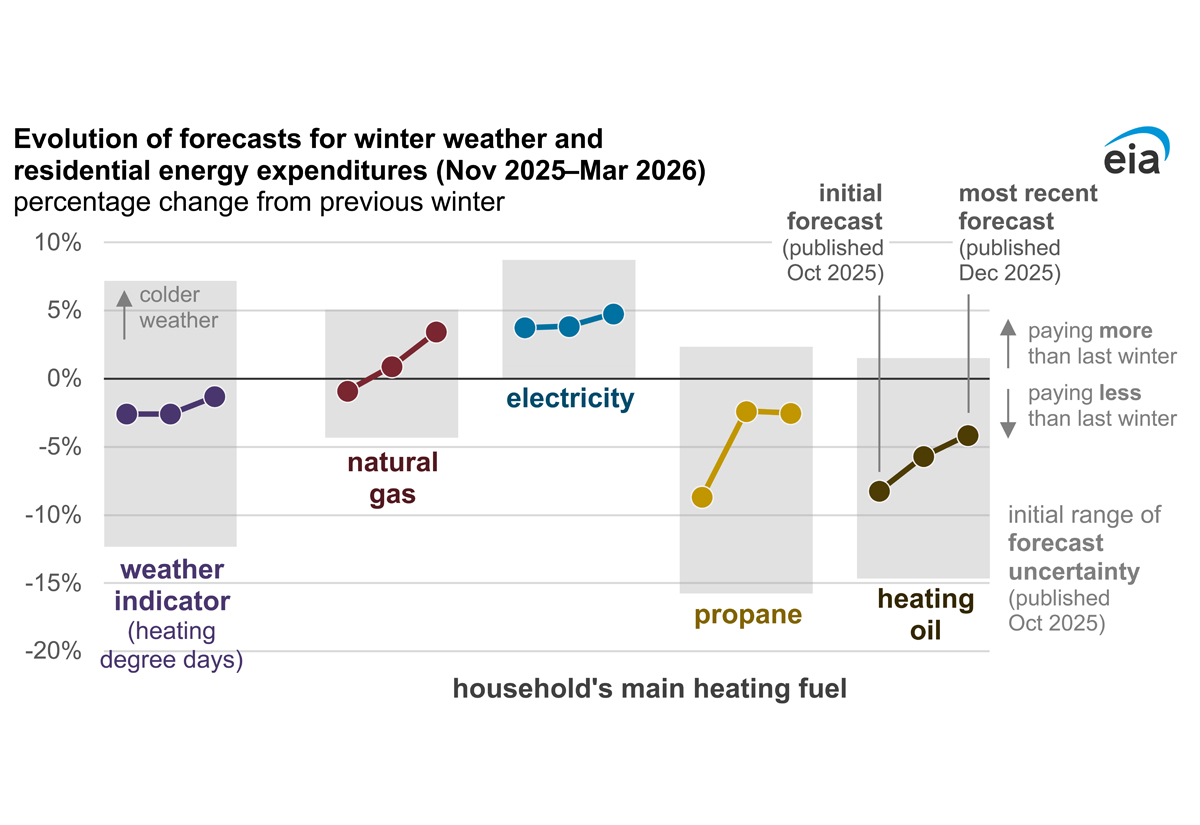
Colder-than-expected winter weather is likely to raise heating costs across much of the United States, according to updated forecasts from the U.S. Energy Information Administration (EIA). As winter temperatures trend lower than earlier projections, farmers, ranchers, and rural households should prepare for possibly higher energy expenditures during the November through March heating season. These increased costs may affect not only home heating but also energy-intensive agricultural activities that rely on electricity or fuel.
The EIA revises its winter energy outlook each month to reflect updated weather data and fuel price trends. For agriculture, these updates are especially important because energy costs are a key input expense. The agency groups energy use by primary heating fuel—natural gas, electricity, propane, and heating oil—all of which are commonly used in rural areas. Many farms depend heavily on propane and electricity, particularly in regions without access to natural gas pipelines, making them more vulnerable to price swings and cold-weather demand spikes.
New forecasts from the National Oceanic and Atmospheric Administration indicate that December temperatures may be about 8% colder than the average of the past decade. Colder weather generally increases fuel consumption, especially for heating livestock barns, poultry houses, and farm residences. Extended cold spells can also drive up energy use for frost protection, water system maintenance, and equipment operation, further adding to winter operating costs.
Energy prices themselves are also trending higher than earlier expectations. Residential natural gas prices have increased in response to higher wholesale prices, and propane prices—critical for many agricultural producers—have followed patterns similar to last winter. Even though wholesale propane prices remain relatively moderate, retail prices in rural markets can remain elevated due to transportation costs and localized demand during cold weather.
For producers, these trends highlight the importance of planning ahead for winter energy needs. Locking in fuel contracts can help manage costs. Operations that rely heavily on electricity may also want to review peak-demand charges and consider load management strategies during extreme cold events.
Overall, the EIA’s updated outlook underscores that weather variability and fuel price movements will play a significant role in winter energy expenses. For the agricultural sector, where margins are often tight and energy use is unavoidable, staying informed about fuel markets and weather forecasts can be a valuable tool for managing risk during the winter months.
Data source: U.S. Energy Information Administration, Winter Fuels Outlook
PHOTO: EIA Evolution of forecasts for winter weather and residential energy expenditures (November 2025 – March 2026)