Choosing a sorghum hybrid for 2026
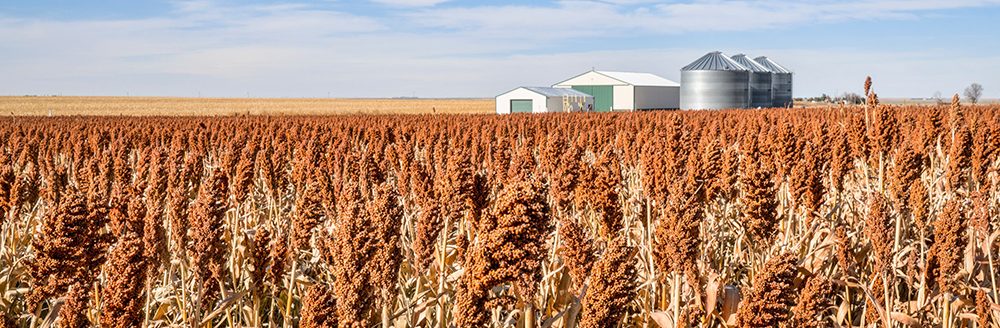
Timely rainfall in 2025 resulted in exceptionally good yields in many sorghum fields across the sorghum belt.

Yields reflect better hybrids sold by seed companies. One of the most important decisions growers can make is which hybrid to plant. Historically, the release of new sorghum hybrids has been slower than some of the other crops, but that has not been the case in recent years.
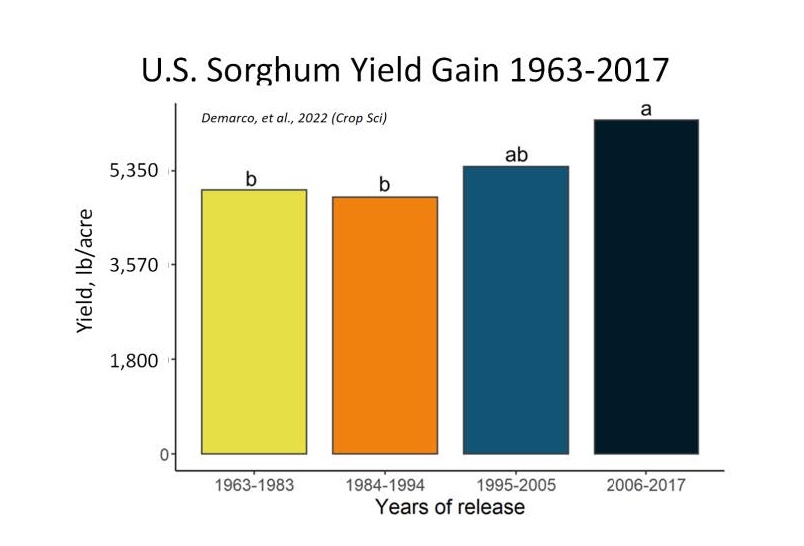
A study published in Crop Science, conducted by scientists at Corteva Agriscience and Kansas State University, revealed that yield gain of Pioneer commercial hybrids increased 24 pounds per acre per year from 1963 to 2017. It is especially noteworthy that yield gain accelerated in the most recent years of the study, and I have little doubt that this yield increase has continued in recent years.
In the coming years, growers should expect the rate of yield gain to increase as new breeding techniques are adopted. We read a lot about how artificial intelligence is going to increase the rate of technological gains in all areas of our lives, and I believe this will also be true in sorghum hybrid development.
Our knowledge of the genetic makeup of sorghum through sequencing and mapping has helped us identify genes with valuable traits. Marker-assisted selection is helping breeders select desirable plants much earlier in the breeding process than ever before. This knowledge can now be used in predictive models to help breeders select which parents to cross that will have the highest probability in producing superior hybrids.
AI can then be used to analyze massive data sets collected by drones and even satellites to assess plant traits quickly and accurately. What all of this means is better hybrids for your farm arriving faster than ever before.
Higher yield is always the goal and is accomplished in two ways. First, by simply having a higher yield potential under optimum conditions, and second, by having better defensive traits that equip the hybrid to better withstand abiotic (nonliving) and biotic (living) stress.
Abiotic stress is typically caused by drought and high temperatures. Since sorghum tends to be grown in dry environments, sorghum breeders spend a large portion of their efforts developing hybrids that can withstand periods of drought and still maintain yield potential. Often overlooked by growers is the importance of heat stress.
Much of the United States has experienced elevated temperatures over the last few years, and this is not expected to change any time soon. More effort is going into breeding for heat stress than in the past.
Biotic stress is usually from insects or diseases. Sorghum companies have placed considerable effort into identifying hybrids and parent lines with sorghum aphid tolerance. Most new hybrids now have tolerance to sorghum aphid. For those regions where diseases are a problem, better anthracnose resistance has been incorporated in some of the new hybrids.
Hybrids with specific herbicide tolerances were introduced by the industry a few years ago. We are now seeing these traits incorporated into elite genetics.
As plans are being made for the 2026 season, contact your seed company representative and ask what new hybrids are in their lineup, and consider planting at least a few acres of a new hybrid on your farm.
Editor’s note: Brent Bean, Ph.D., is the Sorghum Checkoff director of agronomy, Lubbock, Texas. For more information, visit www.sorghumcheckoff.com.