University of Minnesota agrivoltaics research may yield dual harvests of food and energy.
Adam Kronback has been looking for ways to innovate since coming back to his fourth-generation family farm in Lamberton after eight years working as a food scientist. He likes the idea of putting solar panels on a piece of his land.
“But I see too many solar panels go up for energy and the land left fallow instead of for growing food,” he says. “Can’t the land be used for both?”
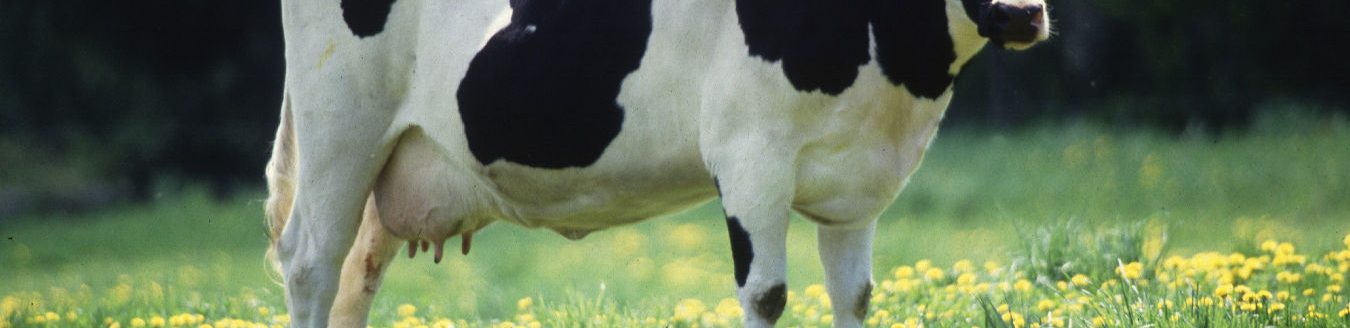
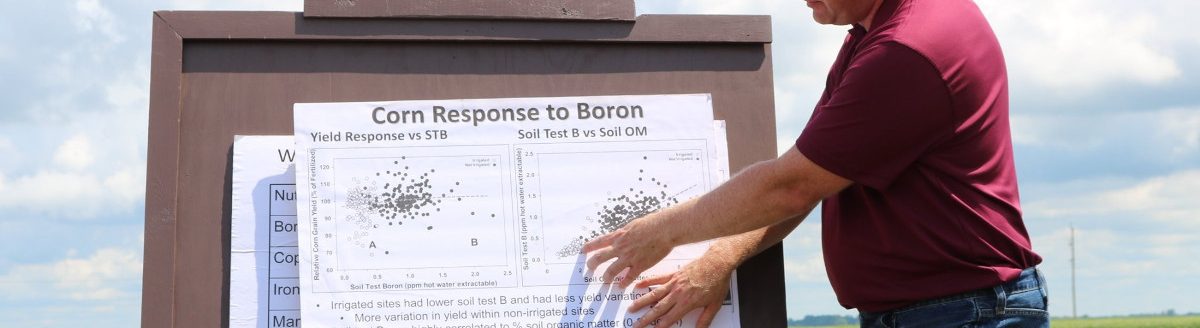
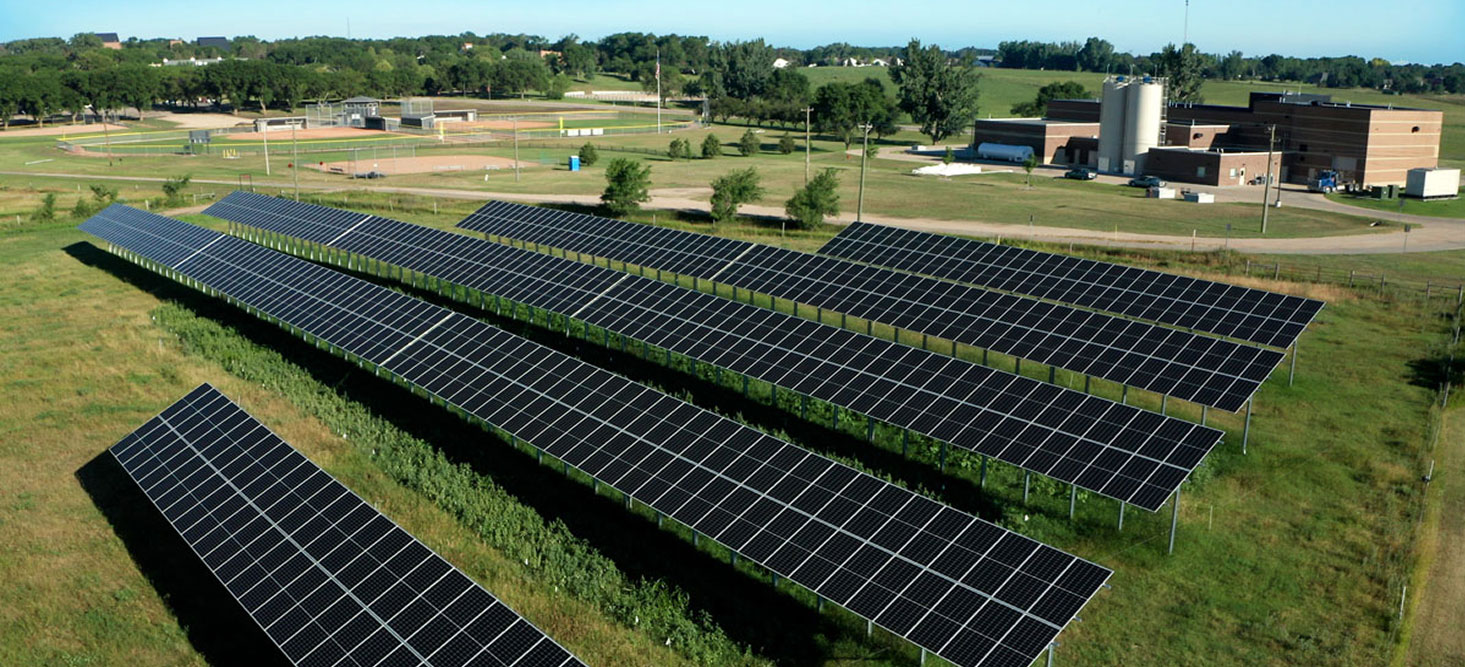
Kronback attended a June 2025 Agrivoltaics Field Day at the West Central Research and Outreach Center at University of Minnesota Morris. There, Brad Heins, organic dairy management researcher and Extension specialist, has been grazing the herd he manages alongside and under elevated solar panels since 2017.
Heins shared the results and insights with farmers, businesses, sustainability groups and collaborators. Kronback took the opportunity to ask questions.
There are many questions about agrivoltaics, the combination of solar panels and agriculture. One Heins hears frequently is, “Won’t the cows knock it over?” or “Won’t they chew on the panels?”
His system is elevated and custom built and the answer so far is, “No,the cows don’t bother it at all.”
And so far, the benefits are remarkable.
Livestock health
Research by Heins in 2019 evaluated the impact of solar grazing on heat stress in cows, using sensors to monitor various factors. Cows with shade cast by solar panels had lower respiration rates, indicating reduced heat stress compared to those without shade. Forages grown for nutritious grazing also grew well under the panels.
Heins recommends starting small with solar grazing projects to gain experience, and working with a good solar partner, veterinarians and local government.
A solar menagerie
Other farmers are hiving honeybees alongside their wildflower fare, and even putting pigs and poultry on solar panel sites. Mobilizing and transporting the animals, ensuring water access and dealing with predators are just some of the challenges Jodee Nohner of Minnesota Native Landscapes says make innovation a challenge.
Not every animal is a fit for the solar landscape. “Goats eat, damage and jump up on everything,” says Nohner.
Sheep are a fit in many ways. “Solar wool” is wool sheared from sheep grazed on land used for solar energy.
“Anyone who has raised sheep knows if a sheep can get caught on something, it will get caught on something,” says Nohner. During the agrivoltaics field day, she wryly shared her many experiences bringing sheep to solar sites. “Sheep are also much more likely than a cow to scoot under a gate.”
Persistence paying off
Crops present their own challenges, and while “solar beer” made with grains grown under solar panels is already brewing, changes in field design and machinery could be required in order to plant, care for and harvest these crops among the panels.
“It may be easier to start with agrivoltaics in mind than to retrofit in some cases,” says Peter Schmitt, project development director at U.S. Solar, based in Minneapolis.
Innovators are weighing these challenges with the economic and environmental incentives of a future with solar-powered barn lighting, electric tractors and grain dryers — and reduced dependence on fossil fuels.
“We’re taking ideas coming out of universities and bringing them to scale,” says Schmitt. “We’ve been following Dr. Heins and see a lot of potential for more cattle producers to use solar, but also for projects in food deserts, where we’re hoping to bring energy and food to communities.”
Meanwhile, Kronback spent the rest of his summer tending to his corn, soybeans, hay and cattle. But his gears are turning.
“Now I’ve seen proof of concept,” he says. “I’m glad groups are out there, companies are out there. And I’m glad someone is willing to do the research.”
PHOTO: An agrivoltaic approach provides an array of benefits. (University of Minnesota System)