Bare backs, bare butts – mating, molting, or mites?
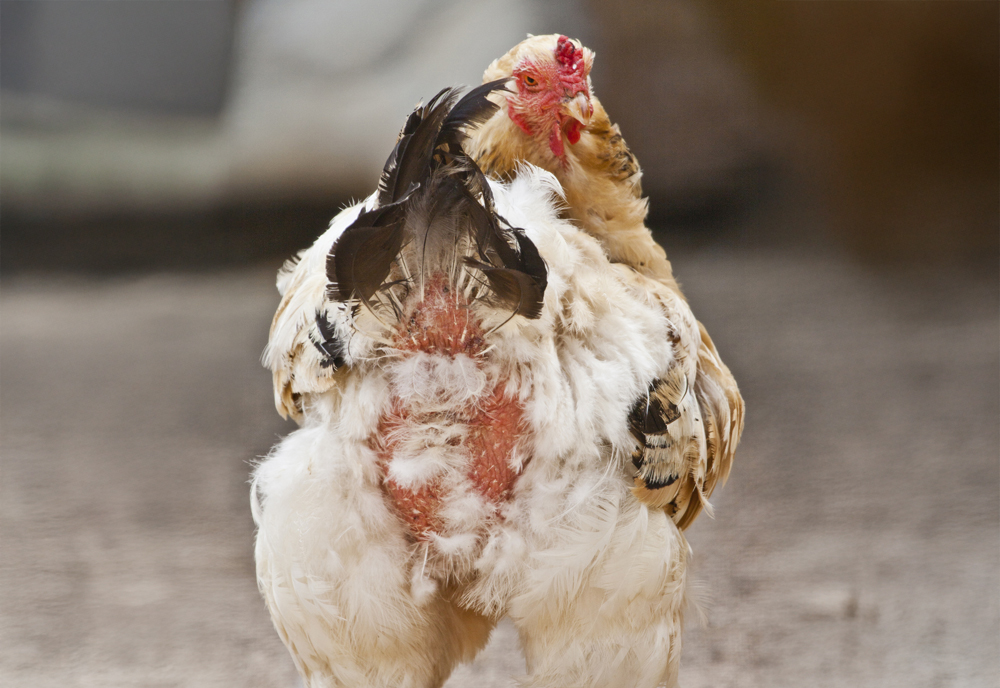
For the longest time, I had several chickens with bare backs and bare butts. I did so much research, trying to figure out what the problem was. At first, I thought it was the rooster abusing a few of his favorites too often. Then I worried that it was mites and treated my whole flock for mites. Molting season came and went, still no new feathers. It wasn’t until our rooster was caught by a fox that my hens started growing their feathers back, so it was in fact, a rooster problem.
Roosters grip hens with their feet and beaks during mating. It can look quite brutal, especially when the backs of your hens’ heads are bald because the rooster is ripping out their feathers. I tried hen saddles. I could not get them to stay on. I obviously don’t know what I’m doing in that department.
Here are three common reasons chickens lose their feathers and what to do about it.
1. Mating Damage (Rooster Wear and Tear)
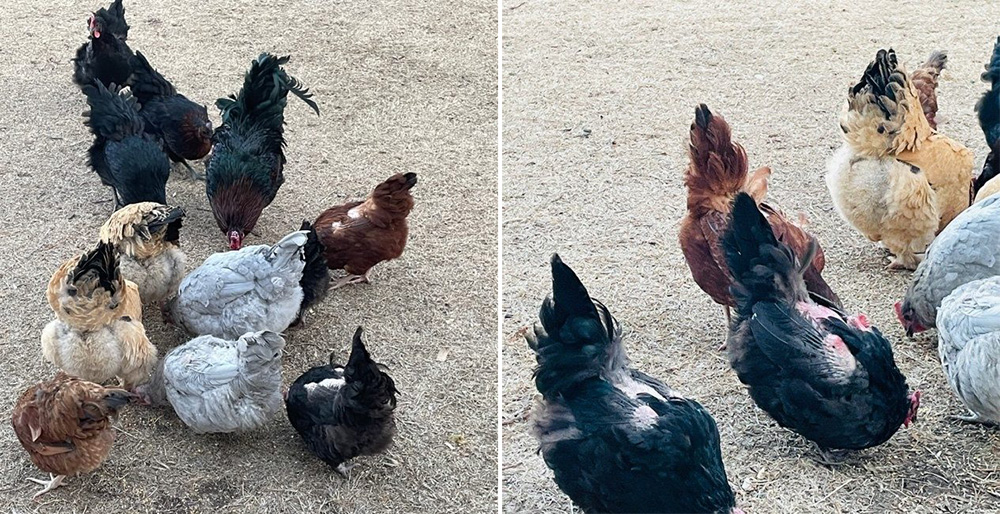
What it looks like:
Hens may lose feathers on their backs, shoulders, or the sides of their wings. Skin can appear pink or red and may look irritated or scraped.
Why it happens:
Roosters grip hens with their feet and beaks during mating. If you have:
- Too many roosters
- An aggressive rooster
- Or not enough hens per rooster
…the repeated mounting can quickly wear feathers down to the skin.
How to treat it:
- Add a hen saddle (chicken apron) to protect bare areas
- Improve rooster-to-hen ratio (generally 1 rooster per 8–12 hens)
- Separate or rehome aggressive roosters
- Clean and treat wounds with an antiseptic spray to prevent infection
Once protected, feathers will usually grow back over time.
2. Molting (A Normal, Seasonal Change)
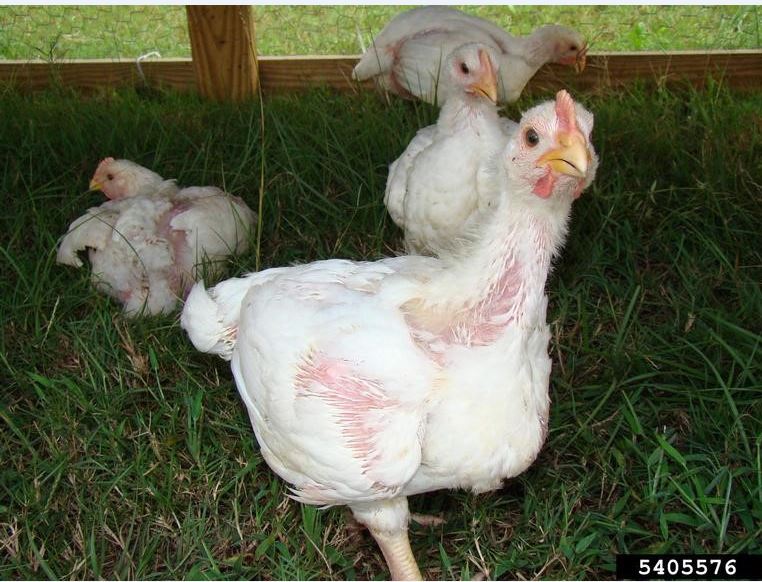
What it looks like:
Feather loss can be patchy or dramatic, sometimes exposing skin on the back or around the rear. You may see pin feathers (small, spiky new feathers) emerging. Chickens often look scruffy during this phase.
Why it happens:
Molting is a natural process, usually occurring in late summer or fall, when chickens shed old feathers to make room for new ones. Egg production often drops or stops during this time.
How to treat it:
- Increase protein in their diet (16–20% or higher)
- Reduce stress and avoid unnecessary handling
- Be patient – molting cannot (and shouldn’t) be rushed
No medication is needed. Healthy feathers will return on their own.
3. Mites (Tiny Pests, Big Problems)
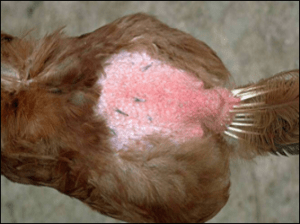
What it looks like:
Feather loss is often concentrated around the vent (butt). Skin may look scaly, crusty, or inflamed. Chickens might:
- Scratch excessively
- Act restless, especially at night
- Lay fewer eggs
You may see tiny moving dots near the vent or on the skin.
Why it happens:
External parasites such as poultry mites or lice feed on chickens, damaging feathers and irritating skin. Infestations can spread quickly through a flock.
How to treat it:
- Inspect the vent area closely
- Use poultry-safe mite or lice treatments (dusts or sprays)
- Treat all birds, even those without obvious symptoms
- Clean and treat the coop, paying attention to cracks and roosts
Repeat treatment as directed to break the mite life cycle.
Bare backs and bare butts may look alarming, but they’re usually manageable once you identify the cause. Whether it’s a lovesick rooster, a healthy molt, or an unwelcome parasite, quick action keeps your flock comfortable and thriving. Regular observation, good nutrition, and a clean coop go a long way toward keeping feathers where they belong—on the chicken, not on the ground.