
Jensen Bros. tries for sweet spot in cattle breeding markets
“It’s a good time to be in the cattle business,” said Kevin Jensen as he toured his cow pasture. His neighbor is letting his cattle graze the stalks.
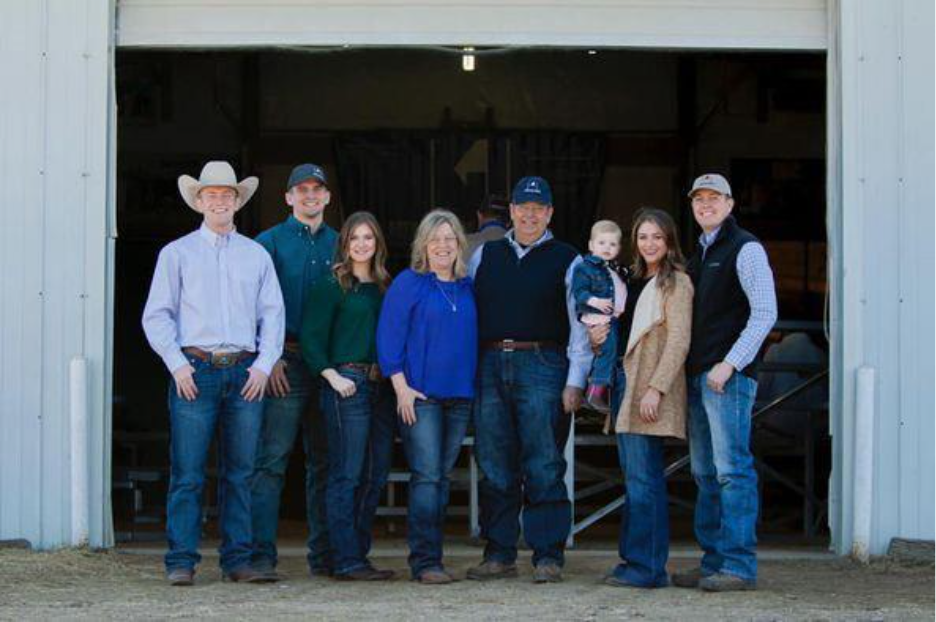
The Jensen Ranch, a premium breeding cattle operation located in Courtland, Kansas, is a family operation in the full sense of the word. Kevin’s wife, Sheila, is a co-equal partner in the ranch’s operation. Their oldest son Brady, who had been teaching animal science at South Dakota State University before joining ST Genetics, recently came back to Courtland to rejoin the family ranch. (Pictured above in the courtesy photo are several generations of Jensens pose outside an outbuilding at Jensen Ranch in Courtland, Kansas.)
He and his wife “bought a chunk of ground, built a home and are raising their three beautiful daughters there,” Kevin Jensen said.
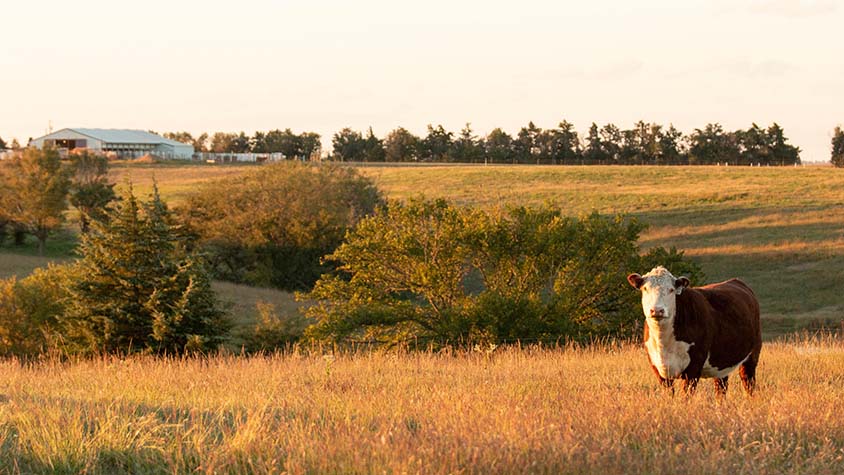
The Jensen Ranch is getting ready for an annual auction of premium bulls on the first Thursday in March, at 1 p.m. CST. The March 5 bull auction will be live but also online with DV Auction.
“Most of the bidders are from North America, but we do get some from overseas,” Jensen told High Plains Journal.
That will be followed by a Fall Born Hereford Heifer Sale & Frozen Genetics on April 2. On Oct. 23 will come “The Chosen Sale” of heifers. Last October, Jensen said, the heifer sale made $1.25 million on fewer than 50 animals along with some frozen genetics and semen.
Most of Jensen Ranch’s income comes from raising purebred livestock, but frozen genetics—embryo transfer and IVF in which they were pioneers—accounts for a side income stream. Harvesting the eggs and fertilizing them invitro makes for better, more efficient timing and use of a heifer’s breeding and reproductive cycles.
“The benefits of increasing the use time of the cycle are well worth the extra cost of invitro fertilization,” Jensen said.
The Jensen Ranch uses its own bulls plus outside bulls, in its breeding program. “AI is a big thing” in analyzing DNA data, he said. Jensen has added Angus bulls to his breeding stock. He sees Baldies (Hereford/Angus crossbreeds) as being an increasingly important part of his market.
“There’s where our commercial market is—in crossbreeding. Baldies are among the most valuable animals in the beef business because of their versatility. You can feed out a Baldy female or keep her for breeding.”
“What we do takes a little longer because we focus on quality and performance,” he continues.
It’s the part of the job that AI analysis of DNA and expected progeny difference can’t automate—what Jensen calls “cow sense” that can only be gained from a lifetime of experience.
Jensen is trying to straddle what he sees as a growing split in the market between show cattle and what mainstream commercial cattle raisers want.
“We have a beef shortage in this country, and it’s not going to get better soon,” he said.
“When we retain heifers (for breeding), it will get tighter.”
Show cows are bigger and stronger than commercial cows, but also require more inputs and a lot more labor to care for than mainstream commercial cattle. Commercial cattle raisers are also more interested in calving ease, while still maintaining performance.
Jensen sees possible changes in the U.S. Department of Agriculture’s yield grades that will require more muscle in commercial cattle. He says it’s something that has been talked about for years. Yield grade measures the amount of muscle in a carcass.
“As we have changed how we’ve bred cattle, it’s become a bit less accurate as a measurement, but the USDA has been talking about updating the yield grade,” he said. “A lot of cows with big rib-eyes don’t have big rumps, just because of how we’ve bred them. We need more beef per carcass-weight.”
Overall, though, the years ahead look positive for cattle breeders. Jensen sees beef demand remaining strong for the next three to five years and beyond. He reflects that he is doing business at the same bank his grandfather did. He grew up in the business and remembers when it was not so flush. “We had nothing when I started out.”
David Murray can be reached at [email protected].



