
Anyone who has ever read one of my articles or heard one of my presentations knows I am a strong advocate for the attributes of grain sorghum. However, one characteristic of sorghum grain that I could certainly do without is the skin irritation, or itchiness, caused by its grain dust at harvest.
Dust from other grains can cause itchiness, but few would argue to the extent caused by grain sorghum. So, what causes sorghum grain dust to itch and is there anything we can do about it?
Researchers at Kansas State University asked this question and hypothesize that much of the itchiness is related to the structure of the glumes that surround each grain in the grain head.
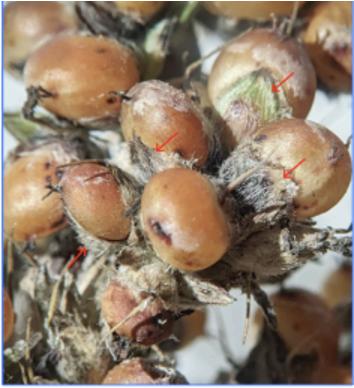
Grain sorghum glumes are covered by tiny, rigid, hair-like appendages called trichomes (figure 1). These trichomes are known to be a primary contributor to the total dust produced by cereal grains at harvest.
Interestingly, dust from rice grown in the United States in the early 1900s was known to cause itchiness. The rice varieties grown at that time had “hairy” glumes like sorghum. In the 1920s, rice varieties with “hairless” glumes gained popularity and, as a result, the dust produced at rice harvest was greatly reduced. Currently, all U.S. rice varieties have hairless glumes. The technical term for “hairless” is “glabrous.”
The researchers at K-State theorize that if sorghum glumes were hairless, then like rice, the reduction of dust produced at harvest would address the source of irritation, leading to less itchiness. The problem is that all commercial sorghum hybrids grown in the U.S. have hairy glumes.
This led to the search for hairless sorghum glume germplasm that could be introduced into U.S. sorghum hybrids.
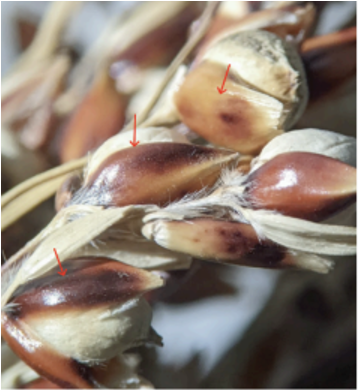
Following the screening of hundreds of diverse sorghum lines, representing all the major sorghum races, a few hairless glume lines were identified (figure 2). Dust production from thrashed sorghum heads of a U.S. hybrid was then compared to one of the hairless glume lines. Dust production was found to be greatly reduced from the hairless glume line.
Armed with this discovery, the next step will be to use modern breeding techniques to insert the hairless glume trait into elite U.S. breeding lines to develop what will hopefully be low-dust, itch-free sorghum.
The sorghum molecular breeding program at K-State is positioned to make this a reality. The researchers specialize in identifying novel sorghum genetics, such as glabrous sorghum, and devising strategies to rapidly translate into commercial sorghums with molecular breeding strategies and public-private partnerships.
Although taking the itch out of sorghum will likely not add any additional profit in growing sorghum, the relief from skin irritation will be much appreciated by sorghum growers.
Editor’s note: Brent Bean, Ph.D., is the Sorghum Checkoff director of agronomy, Lubbock, Texas. For more information, visit www.sorghumcheckoff.com.
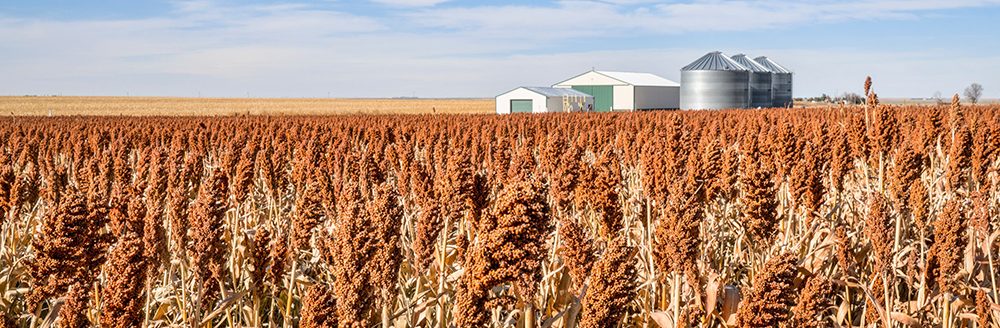
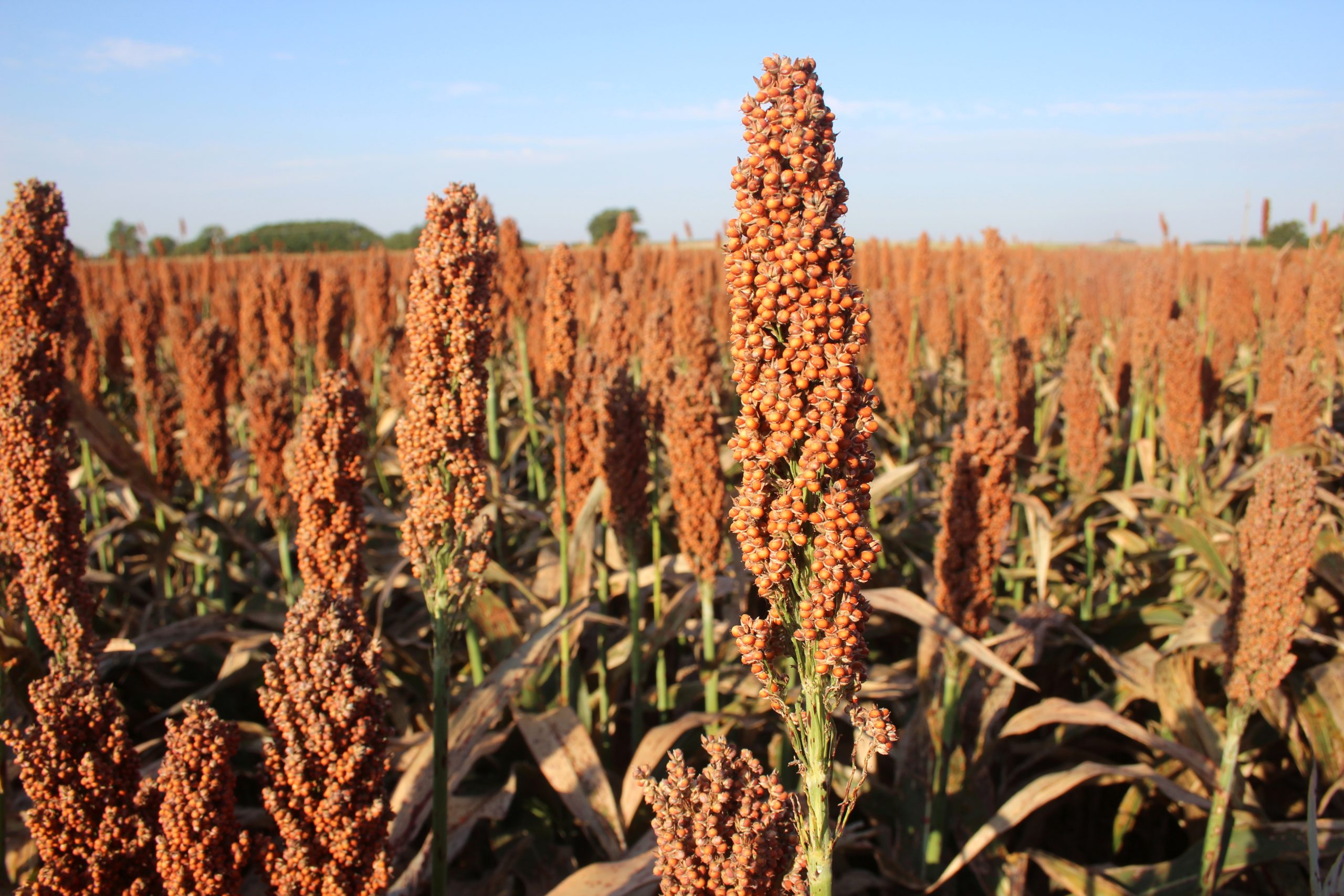
PHOTO: Ripe milo or grain sorghum field. (Journal photo by Lacey Vilhauer.)