
K-State beef cattle experts weigh opportunity cost, disease progression and reassessment when making treatment decisions
When a calf looks “off,” the clock starts ticking. But should cattle producers treat the calf immediately or wait for clearer clinical signs?
According to Kansas State University Beef Cattle Institute experts, the answer isn’t simple — and pretending it is can be costly to the animal’s health and the effectiveness of the treatment.
On a recent episode of BCI Cattle Chat, veterinarians tackled one of the most common — and challenging — questions producers face: are we better off treating disease early or treating it precisely?
“There isn’t a perfect answer,” veterinarian Bob Larson said. “I’m not always good at identifying disease early, but sometimes if you wait too long, you’re already behind. Every interaction has an opportunity cost.”
Producers are often taught to improve treatment precision by waiting for clear, measurable symptoms. Some diseases progress rapidly, where early intervention matters more than perfect diagnosis. Others may benefit from additional observation to avoid unnecessary treatment. The challenge lies in recognizing which situation you’re facing — often with incomplete information.
Rather than framing treatment as a one-time decision, Larson encouraged producers to think in shorter evaluation windows.
“‘Tomorrow’ is a great diagnostic test,” Larson said. “What that really means is what changes in that animal in 24 hours is a really important piece of information.”
Larson recommends making an initial decision, then reassessing in 12 hours — and again in another 12. That process allows producers to adjust their approach based on how the animal responds.
“Just because I acted doesn’t mean my job is over,” Larson said. “I have to be willing to change my mind. I might say, ‘Yeah, I was wrong 24 hours ago, but I’m right now.’”
That willingness to reassess is key not only for animal welfare, but also for responsible antimicrobial use. Re-evaluating cattle after treatment helps producers determine whether the therapy is working or whether a different approach is needed — without automatically defaulting to additional antibiotics.
The takeaway, experts say, is that treatment decisions should be dynamic, not rigid. Early action, careful observation and follow-up assessments all play a role in effective disease management.
“There’s no single rule that fits every situation,” Larson said. “What matters is making a decision, watching the animal closely and being willing to adjust as new information shows up.”
Additional information on treating disease is available through the K-State Beef Cattle Institute Cattle Chat podcast. For questions, reach out on social media or send an email to [email protected].
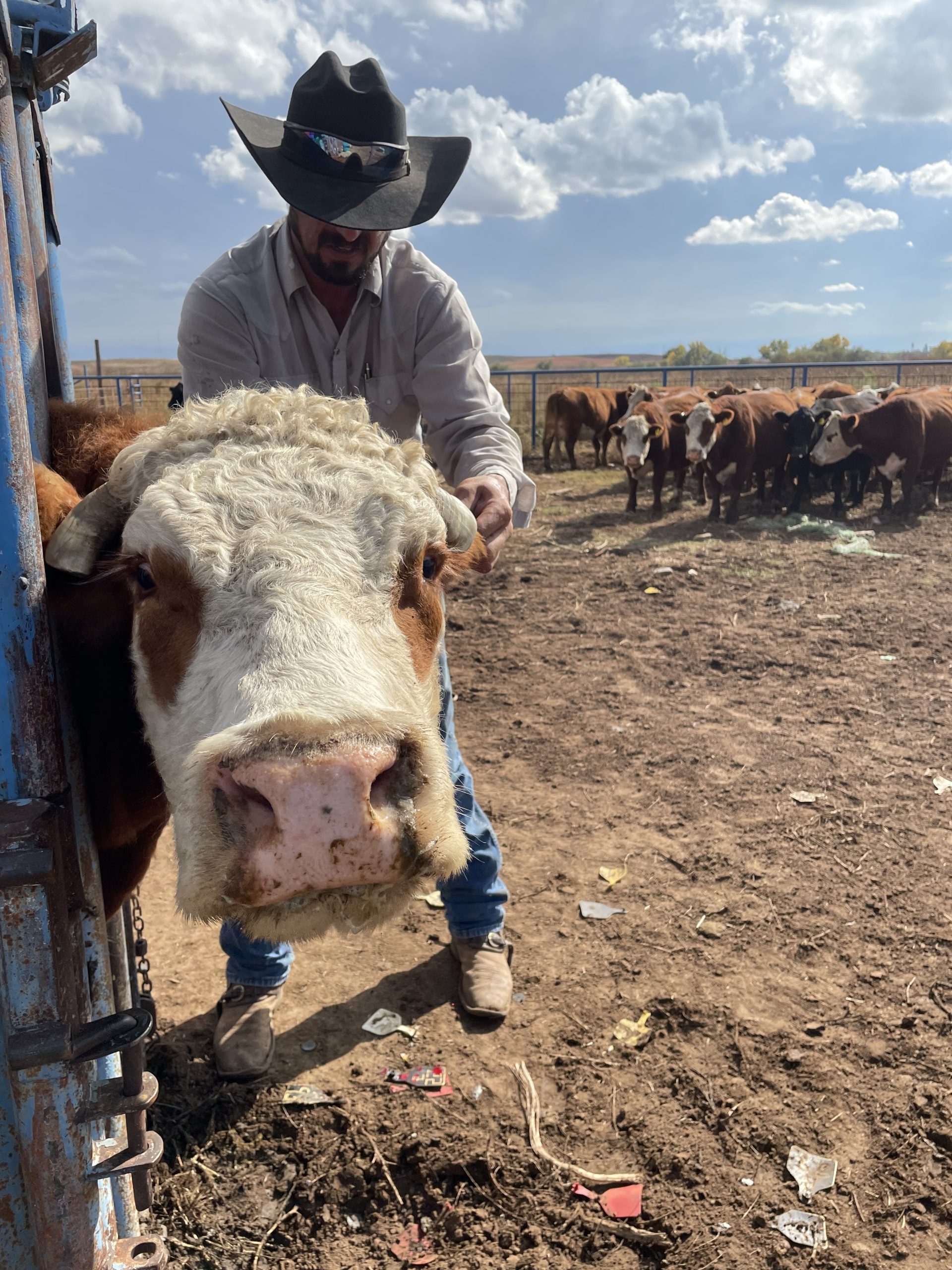
PHOTO: Closeup of white-faced cow, an unknown cowboy, and a group of white-faced cows in the background. (Journal photo by Jennifer Theurer.)



