Bassett Healthcare Network, Cooperstown, New York, has named Tyler Malone, PhD, as the incoming director of the Bassett Research Institute. Malone, who most recently served as the deputy director of the North Carolina Rural Health Research Program, began his tenure at Bassett on Feb. 2.
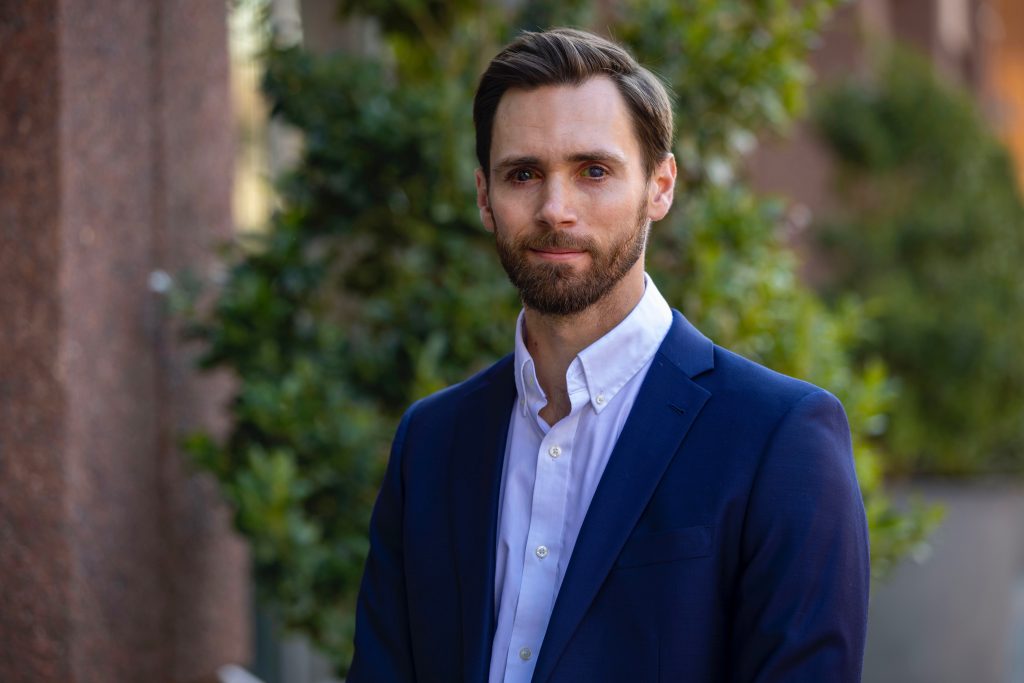
Tyler Malone, PhD, director of the Bassett Research Institute. (Courtesy photo.)
Malone’s appointment follows a national search for the next leader of the Bassett Research Institute’s mission. He succeeds Anne Gadomski, who retired after serving more than 28 years at the Bassett Research Institute, six of them as director. Following Gadomski’s retirement, Stephen Clark had served as interim director of the Bassett Research Institute in addition to his duties in research and grants administration.
The Bassett Research Institute, founded nearly 100 years ago, is an integral part of Bassett’s mission. Through groundbreaking exploration in the fields of immunology, tissue transplantation, community health, injury prevention, and chronic and infectious disease studies, Bassett research faculty and staff have been pioneers in advancing rural health for decades.
The first bone marrow transplant in the world took place at Bassett Medical Center in 1956. The Bassett Research Institute also collaborates closely with its partner organization, the New York Center for Agricultural Medicine and Health, led by Julie Sorensen. NYCAMH’s team of nationally recognized experts care for workers in the farming, fishing, and forestry industries by addressing and preventing occupational injuries and illness.
“I am absolutely thrilled to join Bassett’s team of exceptional researchers,” Malone said. “The Bassett Research Institute is infused with cross-disciplinary expertise, including biostatistics, rural health, occupational health, and other specialties. This institution has done incredible work to impact rural health outcomes, an area I am deeply passionate about. This is a dream professional opportunity.”

Malone grew up on a small farm in rural Illinois. “My parents were raised on farms and my grandparents were farmers,” he said. “Agriculture is an important part of our family’s history.”
He attended Illinois State University, where he studied biology and mathematics. It was in his undergraduate years that Malone discovered his love for research and biostatistics.
“I’d always gravitated toward math and science, so I pursued them in college,” Malone said. “As an undergraduate, I never fully considered how these disciplines could intersect with public health policy and the medical field. Eventually I discovered this was the path for me, especially as I began to explore rural public health.”
Malone went on to the University of Michigan and earned a master’s degree in biostatistics.
Malone was accepted to the University of North Carolina at Chapel Hill, where he attained a doctorate in health policy and management with an economics minor.
“The research I did during my doctorate studies solidified my knowledge that I had entered a field that I was passionate about,” he said. His research focused on rural health services in vulnerable populations, substance use disorders, and mental health outcomes.
While working as a research assistant as a doctoral candidate, Dr. Malone became connected to the North Carolina Rural Health Research Program (the Cecil G. Sheps Center for Health Services Research), an organization that seeks to address problems in rural healthcare delivery through research, policy development, data analysis, and collaboration with human services organizations to address complex social issues affecting rural populations. He was named deputy director in July 2025. “The work we have accomplished as a team has been incredibly rewarding,” he reflects.
Malone’s views of rural health were shaped at a young age. He was born with glaucoma. As a child, he received treatment and had to travel a significant distance to see a specialist.
“Some of my first memories of being a patient involved long car rides through the country,” he said. “This left an impression on me. As I think back to my earliest understanding of how rural medicine works, I recognize it contributes to my passion for rural healthcare access and building connections for people in rural areas to get needed medical care.”
Malone said being at the Bassett Research Institute feels like a full-circle moment in his life.
“I believe, as rural health researchers, we have a responsibility to be innovative. We can be leaders and impact patient outcomes and rural populations not just in central New York—but across the country,” Malone said. “The most rewarding work of my life is still ahead of me.”
Bassett Healthcare Network is an itegrated health system that provides care and services to people living in a 5,600 square mile region in upstate New York.