Many of us have heard of a proposed artificial intelligence data center in their area. The realization is really starting to hit home that the data centers are a serious drain on the local resources, in my opinion.

I am not just talking about water and electricity, but the fact that it generates zero positive economic impact to the local area after the construction phase is complete. I conducted a search on the actual ownership of the push for AI technology and found some very interesting discussion points.
There is underlying research about blending a computer and the human brain. Which one is actually superior?
Let’s start with some information from the National Institutes of Health. I found this very interesting article called:
The computational power of the human brain.
However, more recently, digital and analog processes have been combined to implant human behavior in robots, endowing them with artificial intelligence (AI). Therefore, we think it is timely to compare mathematical models with the biology of computation in the brain. To this end, digital and analog processes clearly identified in cellular and molecular interactions in the Central Nervous System are highlighted.
In conclusion, brain computation is not only digital or analog, or a combination of both, but encompasses features in parallel, and of higher orders of complexity.
Check out this from Duke University:
Brain greatly exceeds digital computers in the computation per volume per watt.
Biological brains involve different principles than digital computers and these principles are not yet understood so that it is difficult to compare directly the computational capability of a human brain with a supercomputer. But some order-of-magnitude estimates suggest that human brains also carry out the equivalent of 100-1000 petaflops of information processing. (A petaflop is one quadrillion).
But consider the huge differences between the power and volume requirements of these two computing systems. A 100-petaflop supercomputer requires about 15,000,000 watts (enough power to support a city of about 10,000 homes), occupies an area of about an American football field of interconnected cabinets of CPUs, and requires a sophisticated and expensive cooling system to withdraw the large amount of heat produced. In contrast, your brain, even when solving a difficult physics problem, consumes about 15 watts (the power to keep lit a rather dim light bulb) and has a volume of about two fists.
We have just arrived at the real core. I never thought about the energy required to fuel a computer versus that required to fuel the human brain. This is pretty much a no brainer; the concept here is to replace independent-minded, logical-thinking human beings with completely controlled computers.
When considering fuel for computation, what does fuel the brain? Fat and cholesterol are responsible for brain power rather than electricity. The brain comprises only 2% of human body weight but requires 20% of the daily energy intake. Dr. Georgia Ede has research about the dietary requirements to keep the brain properly fueled.
According to Dr. Ede, “Our brains are extremely rich in fat. About two-thirds of the human brain is fat, and a full 20% of that fat is a very special omega-3 fatty acid called docosahexaenoic acid, or DHA.
DHA is critical to the development of the human cortex—the part of the brain responsible for higher-order thinking. Without DHA, the highly sophisticated connections necessary for sustained attention, decision-making, and complex problem-solving do not form properly.
For those who choose vegan diets, it is important to know that plant foods contain no DHA. It has been estimated that as many as 80% of Americans have suboptimal blood levels of DHA.”
The great news is that by reducing vegetable oil consumption and increasing animal foods and animal fats in your diet, you can give your brain the DHA that it needs to function at its peak.
Here we are in 2026 with a government that suggests we restrict the consumption of animal fats and take cholesterol-blocking statin drugs, both of which minimize the capacity of our brains to function up to their full potential. I don’t need a computer or AI to research how folks born before the age of computers had healthier brains because they ate farm-fresh foods with healthy fats and got plenty of sunshine and exercise.
Editor’s note: The views expressed here are the author’s own and do not represent the views of High Plains Journal. Trent Loos is a sixth-generation United States farmer, host of the daily radio show “Loos Tales” and founder of Faces of Agriculture, a non-profit organization putting the human element back into the production of food. Get more information at www.LoosTales.com, or email Trent at [email protected].
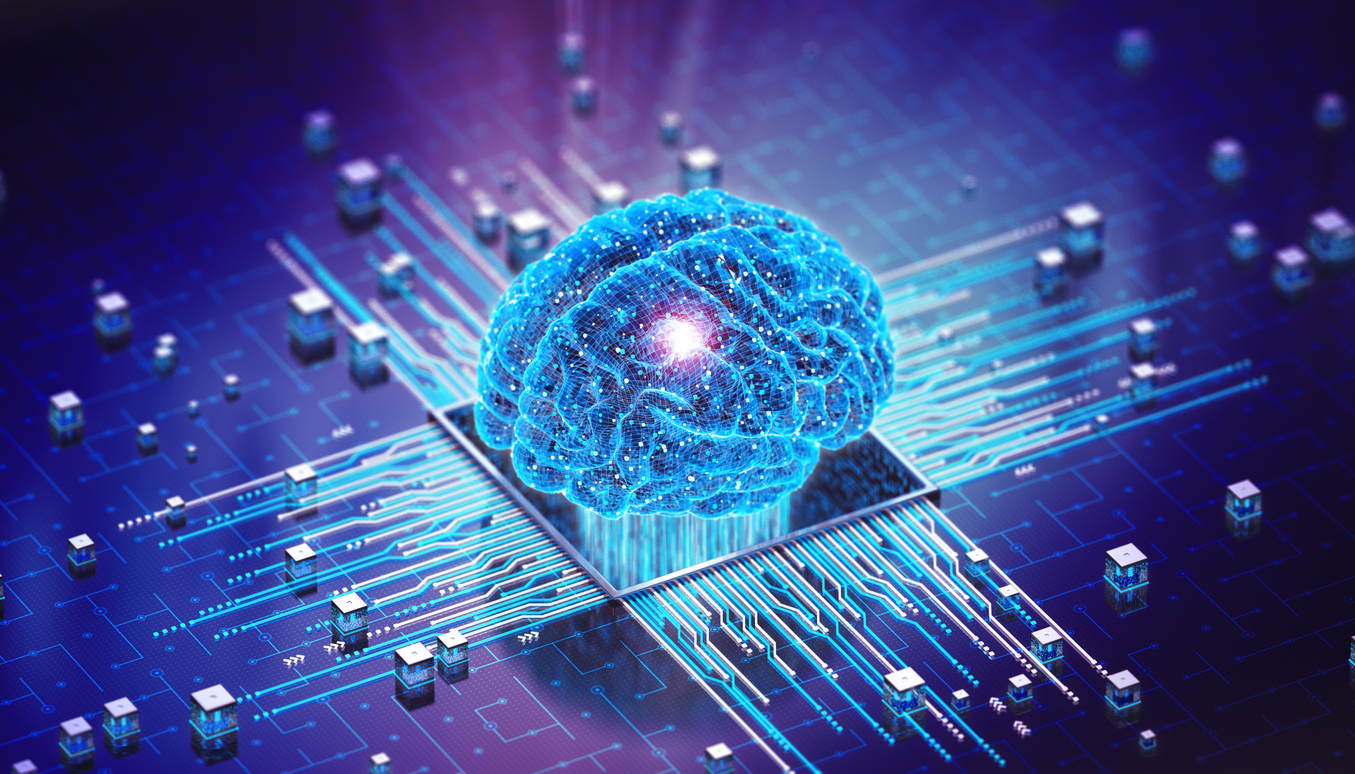
PHOTO: AI concept. 3D render. (iStock │ #1495819409 – BlackJack3D)