Spring herd checks can improve reproductive efficiency and calf performance
As spring approaches, cattle producers face several key management decisions that can affect herd productivity and profitability, according to Patrick Davis, University of Missouri Extension livestock field specialist.
Davis encourages producers to work closely with their local veterinarians to guide management strategies and herd health decisions.
Reproductive efficiency remains a central component of a successful cattle operation, Davis said. Conducting pregnancy checks and removing nonpregnant cows in a timely manner can improve reproductive performance and help control costs.
He also recommends prebreeding examinations for heifers. Culling heifers with inadequate pelvic dimensions or unsound reproductive tracts before the breeding season allows producers to focus resources on females with greater potential for productivity. Early pregnancy checks on replacement heifers, followed by removal of open heifers, can further improve resource use and herd performance.
Davis said veterinarians should be regularly involved in these processes to support effective herd management.
Bull management is another critical area, particularly given current market conditions for calves and herd bulls. Factors that reduce bull performance or lower calf crop percentages can negatively affect an operation’s bottom line.
Breeding soundness examinations should be conducted before each breeding season to ensure bulls meet fertility standards before being turned out to pasture, Davis said. The prebreeding period also provides an opportunity to update vaccinations. He advises contacting a veterinarian 30 to 60 days before the breeding season to schedule breeding soundness exams and ask about programs that may offer discounted rates for bull vaccinations and parasite control.
Calf health and weaning management also influence long-term performance. Davis recommends completing procedures such as dehorning and castration before weaning to reduce stress and limit potential health setbacks. Administering vaccinations before weaning can strengthen immunity and reduce the risk of postweaning illness.
He suggests working with a veterinarian to develop a vaccination and processing plan tailored to the operation prior to weaning.
Cow herd health should also be evaluated in the spring. As cows move through the chute, producers can update vaccinations to help maintain herd immunity.
Guidance on cow herd vaccination programs is available through MU Extension publication G2044, “Herd Health Programs and Reproductive Efficiency of Beef Cattle.” Davis recommends using the guide in consultation with a veterinarian to develop a vaccination program that supports herd health and reproductive performance.
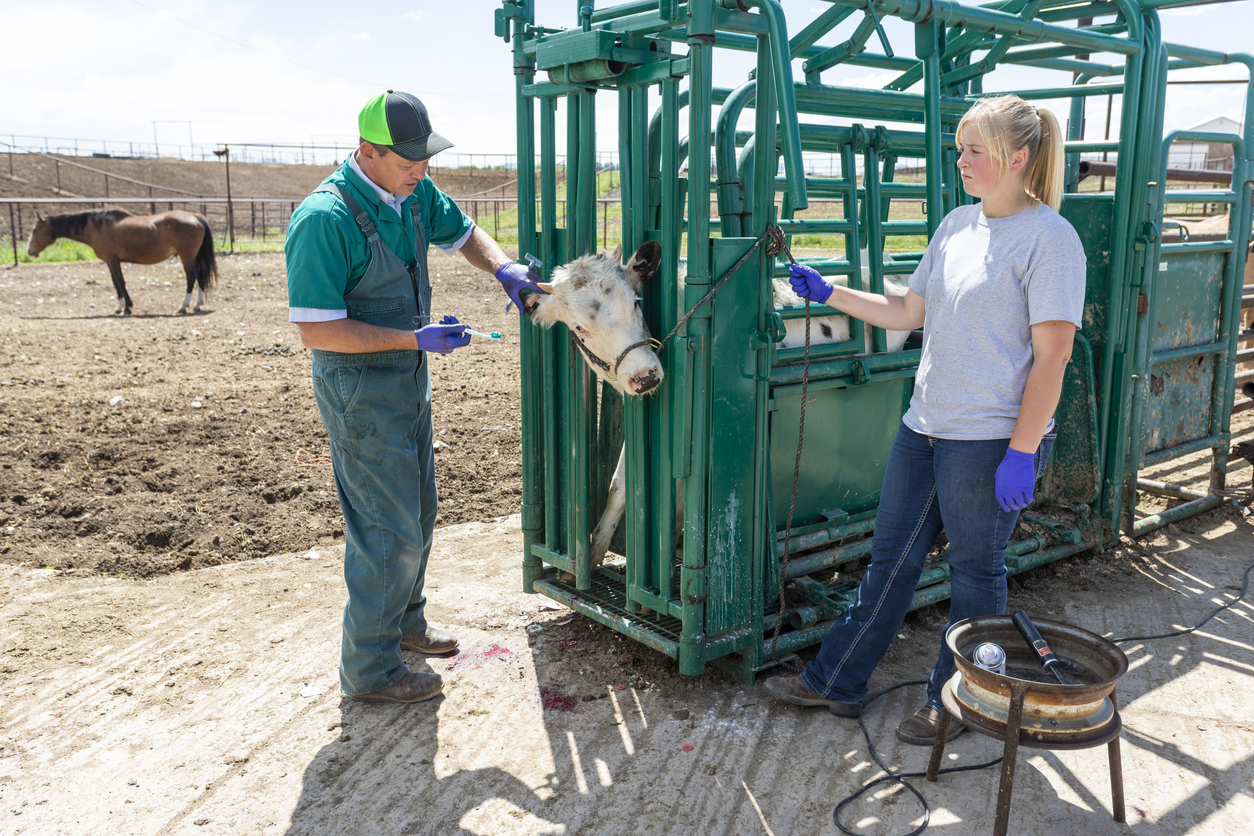
PHOTO: Cattle being treated by a veterinarian. (iStock │ #1032411090 – davidf)