The U.S. Supreme Court, by a 6-3 decision, invalidated most of President Donald Trump’s tariffs on Feb. 20. Justices Clarence Thomas, Samuel Alito and Brett Kavanaugh dissented.
The ruling, written by Chief Justice John Roberts, affects only the “Liberation Day” tariffs Trump declared last April based on a 1977 law called the International Emergency Economic Powers Act, which grants the president power to “regulate imports’ during times of declared national emergency. Tariffs citing IEEPA make up roughly 60% of Trump’s total tariffs.
While the ruling does not affect other tariffs imposed under other laws and authorities, it is nonetheless a significant restriction on a weapon the president has wielded in the past year. Trump and his team have already said they would use other laws and authorities to re-impose tariffs if the court ruled against them, and Trump reiterated that determination in a press conference he gave after the ruling. He specifically mentioned Section 122 of the Trade Act of 1974 as an alternative authority for extending or re-imposing tariffs. Since then, Trump has reimposed across-the-board baseline tariffs of 15% on all countries based on Section 122, but those only last for 150 days.
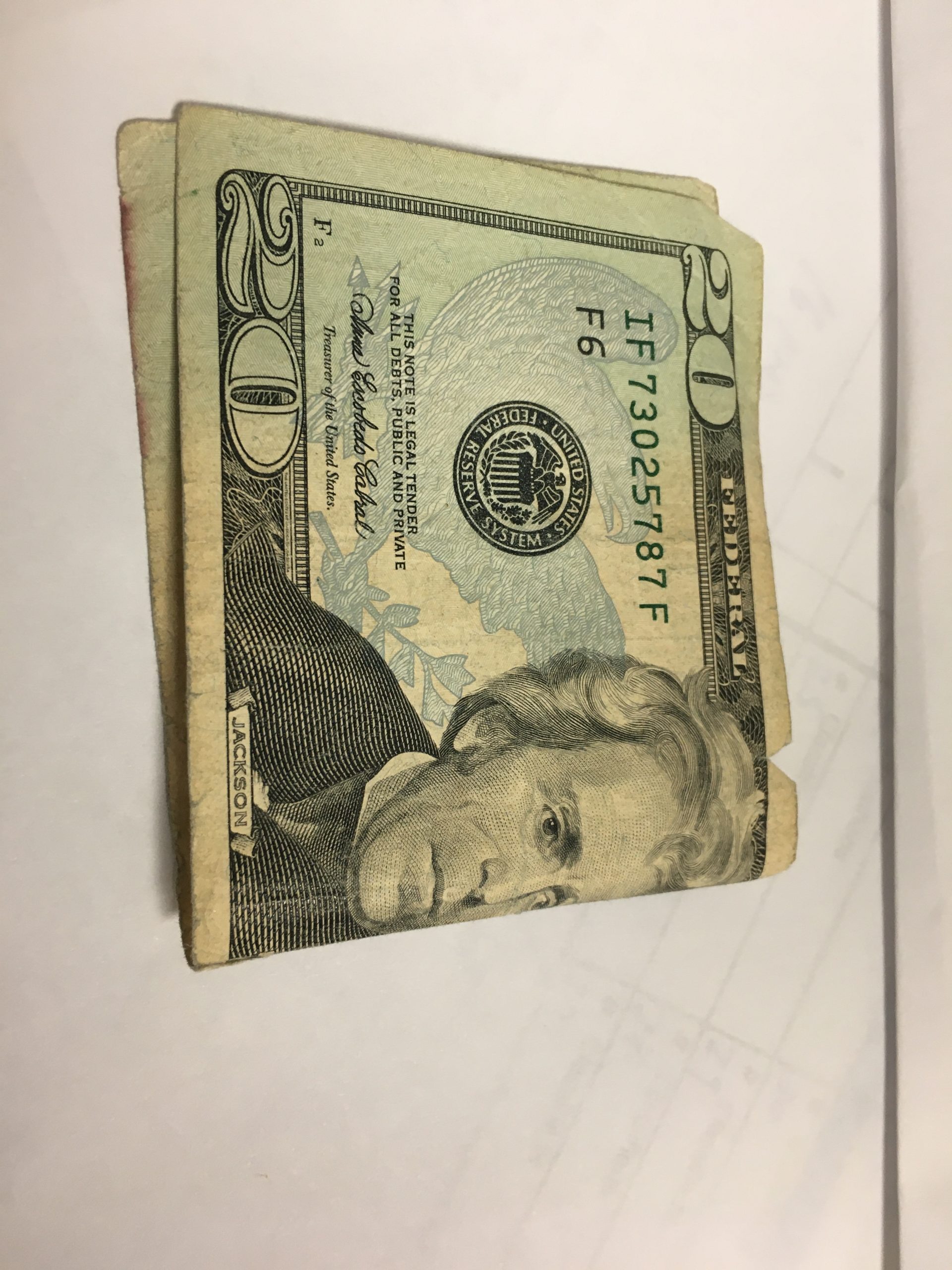
The General Accounting Office said that as of December Trump’s tariffs have raised about $130 billion for the government to offset deficits. They are paid by importers, who may or may not pass costs on to consumers. The court’s ruling said nothing about whether, when and how refunds might be forthcoming. An anti-tariff group of businesses called We Pay The Tariffs has called for “full, fast, and automatic” refunds.
Reactions
Reactions to the widely awaited ruling came swiftly.Trump called it a “terrible, defective decision” and said he is “ashamed of certain members of the court.”
Vice President J.D. Vance called the ruling “lawlessness from the court, plain and simple,” and said on social media, “Today, the Supreme Court decided that Congress, despite giving the president the ability to ‘regulate imports’, didn’t actually mean it.”
Sen. Amy Klobuchar (D-MN), who said she attended the court’s deliberations, wrote, “Today, the Supreme Court finally affirmed what I have been saying for a year: President Trump’s reckless tariffs—which are costing families, farmers, and small businesses—are illegal. To strengthen our economy, we must provide our small business owners and farmers with more certainty—not trade wars that raise prices for consumers and shut out American businesses from export markets. With today’s decision, it is clear that Congress—not the president—has the power to impose tariffs. We must reassert this authority and stand up for American workers, businesses, and consumers.”
Klobuchar is the ranking member of the U.S. Senate Agriculture Committee.
“Soybean farmers across the nation have seen a negative impact on their profitability due to tariffs amid shifting trade dynamics and rising input costs of fertilizer, seed, pesticides and agricultural equipment,” the Illinois Soybean Association said in a statement.
The IEEPA allows the president to regulate commerce, freeze assets, and impose sanctions following a declared national emergency regarding an “unusual and extraordinary threat” from abroad. It was first used by President Jimmy Carter to seize and freeze assets of Iran’s government during the hostage crisis in November 1979.
Trump’s use of IEEPA sparked controversy. Critics of Trump’s tariff policies frequently pointed out that the word “tariff” does not appears in the text of the IEEPA.
Since its passage, IEEPA has been invoked by former presidents Carter, Ronald Reagan, George H.W. Bush, Bill Clinton and George W. Bush. All of them cited its authority to freeze financial assets of various adversaries accused of terrorism. But none used it to impose tariffs or address trade issue—a fact noted by the court.
Lower courts—including the Court of International Trade, a special Article III tribunal with jurisdiction over trade disputes—disagreed among themselves over the scope of IEEPA’s tariff authority, what types of tariffs might be allowed under it, what constitutes an “emergency,” and the scope of relief that might be offered.
Even before IEEPA was passed, President Richard Nixon invoked trade imbalances as a “national emergency” to impose tariffs, and his decision was upheld by the Federal Circuit’s predecessor court. But reading IEEPA to allow tariffs the court said, would “represent a transformative expansion of the President’s authority over tariff policy.”
Trade agreements remain in place
The president and his team credit pressure from the tariffs—including the IEEPA tariffs—with enabling major trade agreements between the United States and major trading partners, including the 27-nation European Union. It remains unclear whether or not the Supreme Court ruling invalidates those agreements, which recalibrated reciprocal tariffs in the U.S.’s favor that Trump’s team said were stacked unfairly against U.S. exporters.
When asked about that at his press conference, Trump said “some” of those agreement would remain in place. Those agreements have facilitated $2 trillion worth of foreign purchases in the U.S. by trade partners, with trillions more under negotiation.
In his dissent, Justice Kavanaugh noted that the majority decision said nothing about tariff refunds. Both Trump and Treasury Secretary Scott Bessent have said any potential refunds may have to be “litigated,” in a process that could take months or years.
David Murray can be reached at [email protected].