Experts expect shift in chicken prices amid fertility, bird flu concerns
Chicken prices have dipped slightly on the heels of increased broiler production, but Texas A&M AgriLife Extension Service experts expect output to slow and prices to climb.
David Anderson, Ph.D., AgriLife Extension economist and professor, Texas A&M Department of Agricultural Economics, said high beef prices and trends for more protein in American diets are helping poultry demand.
U.S. broiler production jumped from 46.5 billion pounds in 2024 to 47.5 billion pounds in 2025 and is projected to reach 47.6 billion pounds this year, as it has already increased 3.5% since Jan. 1. However, prices have been lower overall compared to last year, and Anderson believes that could trigger a slowdown in production.
Competitive prices help chicken demand
Wholesale boneless, skinless chicken breasts spiked near $2.77 per pound in mid-2025 before sliding to $1.16 per pound by year’s end, Anderson said. However, the January Consumer Price Index showed retail chicken breasts were higher – $4.17 per pound compared to $3.97 per pound this time last year. Legs were 5 cents lower per pound – $1.74 compared to $1.79 last year.
“Chicken remains a value relative to beef and continues to experience strong demand on the grocery and restaurant side,” Anderson said. “Chicken continues to benefit from creative products and ideas to expand its market share among proteins.”
But he said potential production disruptions could complicate supply/demand factors even more, and lower supplies could signal higher prices are ahead.
Avian influenza risk weighs on chicken producers
On the production side, lower feed and energy costs and technological efficiencies have helped profitability but growers and the industry remain concerned about highly pathogenic avian influenza, or HPAI, said Greg Archer, Ph.D., associate professor and AgriLife Extension poultry specialist in the Department of Poultry Science.
Farms are placing a high priority on biosecurity but concern about broader potential impacts of HPAI, also known as bird flu, will remain until summer, he said. A single broiler farm in East Texas experienced an outbreak earlier this year.
Archer said the primary concern is not isolated broiler farms, but laying facilities that provide fertilized eggs for broiler hatcheries. Broiler farms can recover relatively quickly, while breeder flocks can take more than a year, and the losses ripple throughout the production chain and to prices at grocery stores.
“The industry is really pushing biosecurity to stay on top of the disease,” he said. “It’s a concern that isn’t going away, so the focus is limiting its impact on production.”
Industry focuses on hatchability and bird health
Bird nutrition and health also continue to be a focus as production moves away from antibiotics, Archer said. Industry has been quick to adopt research related to probiotics and prebiotics in feed and continues to investigate how nutrition can improve flock health.
Egg fertility in breeder flocks remains a lingering concern for the industry. Fertility rates, or chick hatchability, hover around 75% – nine of every dozen eggs produce viable chicks – but a 2025 Texas A&M AgriLife Research study showed fertility rates could reach 60% by 2050.
The U.S. poultry industry produced more than 9 billion broilers last year, which means 12 billion eggs were needed to meet capacity. It would require 15 billion eggs to hatch 9 billion viable broiler chicks if fertility rates continue to fall.
“Fertility rates have been an issue, and avian influenza outbreaks are a threat that compounds the potential impact in a way that consumers would notice,” Archer said.
Market forces weigh on production, prices
Anderson expects production to slow compared to the first quarter of 2026. Just like higher prices last year led to increased production, lower prices will influence output. Demand will weigh on the various chicken cuts differently.
Anderson said broiler weights have trended higher in recent years to meet the broader demand for white meat that consumers prefer. But a significant amount of broiler chickens is being grown to meet specifications for restaurant chains, especially in recent years, as wings and sandwiches became staples on menus.
Broader consumer demand, including seasonal spikes, continues to influence prices on certain cuts like breasts and wings that are limited by chicken biology, he said.
“I expect to see some contraction, and that typically means prices will go higher,” he said. “It will be interesting to see how beef, pork and other proteins trend as we get closer to grilling season, but it’s safe to say chicken will remain a value option in relation to beef.”
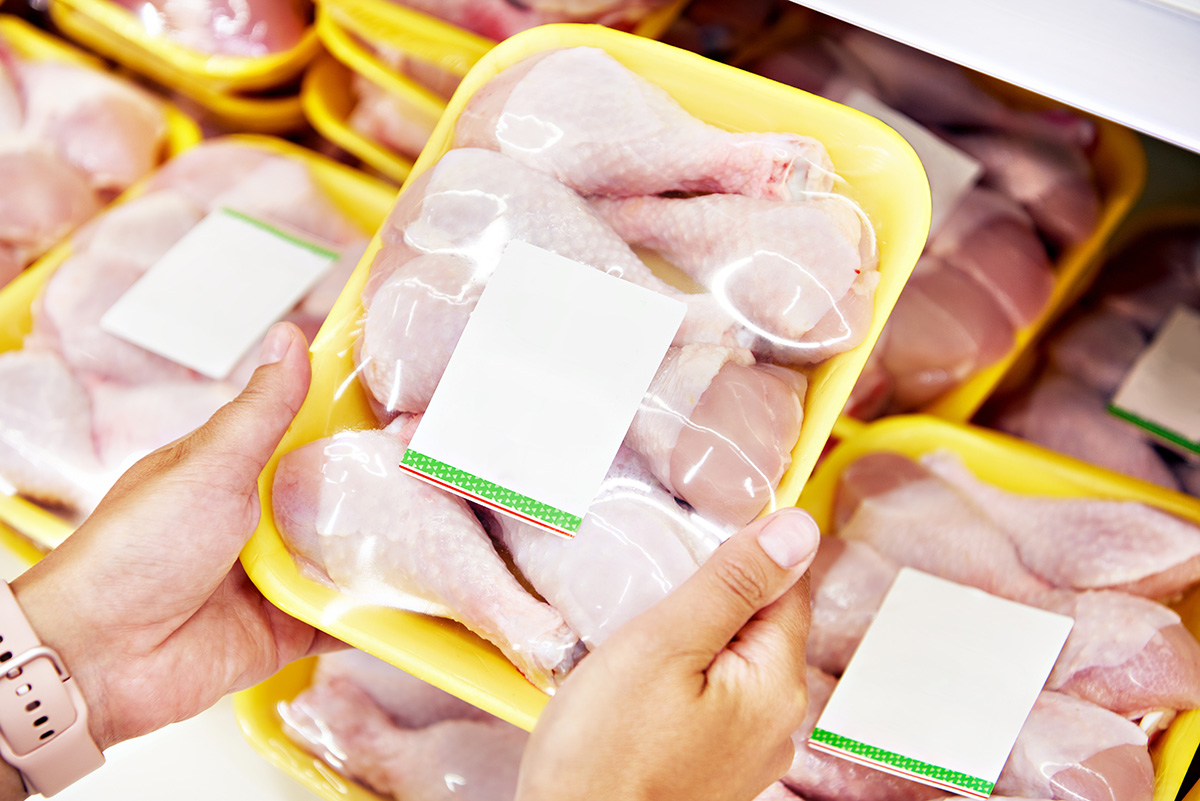
PHOTO: Hands with chicken meat in shop. (Adobe Stock │ #367675022 – Sergey Ryzhov)