Consider grazing-friendly alfalfa varieties for pastures
Alfalfa is mostly known for its high-quality forage when hayed, but what about grazing? Although it is drought-tolerant and a great source of nutrients for cattle, it has stigma around it. Grazing cattle on alfalfa puts them at significant risk for bloat, and hoof traffic can kill off an established stand, or decrease the productivity. But what about planting grazing-friendly alfalfa varieties with grass?
In 2024, a team of forage and beef researchers at Iowa State University began a study sponsored by the Iowa State Beef Checkoff Program to evaluate the performance of three types of alfalfa that are considered to the grazing tolerant.
The varieties were seeds with a grass mix to mimic a diverse pasture. Alfalfa was planted at a seeding rate of 7 pounds per acre, while the grass mixture was planted at 10 pounds per acre to achieve a target stand composition of 40% alfalfa and 60% grass. The first year the fields were mechanically harvested to allow the stand to establish. In 2025, a rotational grazing system and nearly 60 yearling heifers were used to test the varieties and although the study is ongoing, researchers have been pleased with the results so far.
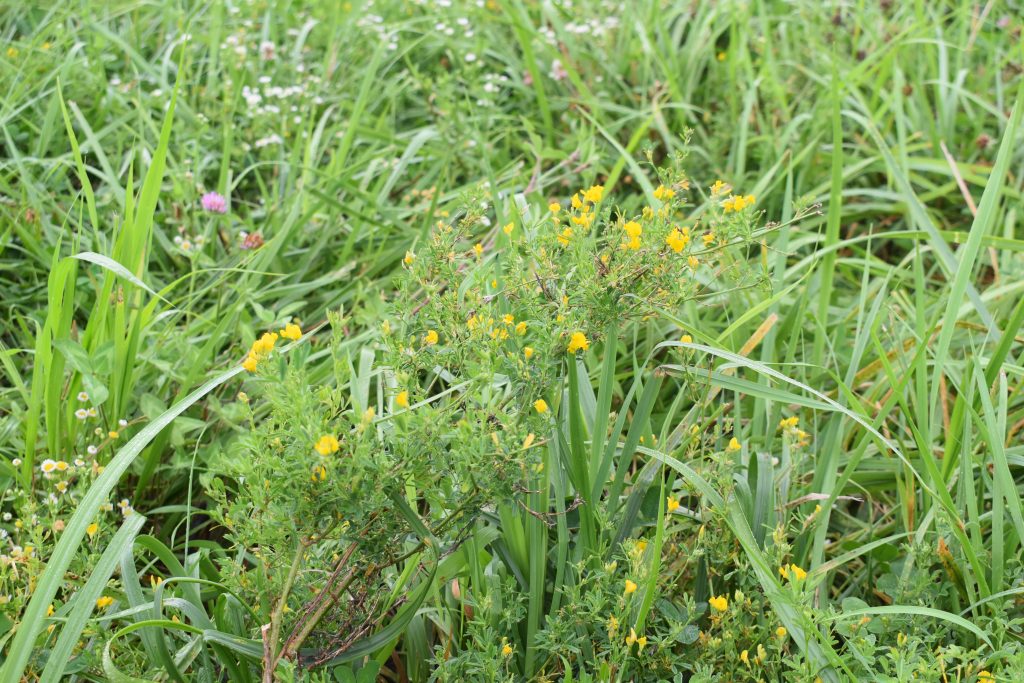
Shelby Gruss, assistant professor and forage Extension specialist at Iowa State University, said the three varieties selected were branchrooted or sunken crown alfalfa, which tends to protect the crown better; creeping or rhizomatous alfalfa, which have potential for spreading and filling in gaps; and falcata alfalfa, known for drought tolerance, it’s unique yellow bloom, fibrous root structure and longterm persistence.
“Some of these are newer varieties, while others —such as the falcata type—have a long history in rangeland systems,” Gruss said. “We selected varieties that represent different strategies for grazing persistence. These categories allowed us to compare how well different morphological traits contribute to maintaining stands under grazing pressure.”
Gruss said all three varieties are available to purchase commercially, although the falcata variety is generally more limited in supply and can be harder to source. She said there are other alfalfa varieties that are marketed as grazing tolerant.
Bloat concerns and summer slump
Erika Lundy-Woolfolk, ISU beef specialist in Extension and outreach, also participated in the study. She said these varieties were also chosen because they have been bred for reduced bloat risk.
“We’re always a little cautious about grazing alfalfa, even though these have been selected to be more grazing friendly,” Lundy-Woolfolk said. “There’s always that risk of bloat out there. However, we didn’t have any bloat cases at all (in the study.) We did put out a bloat block while they were still on the pasture the week heading out to the alfalfa plots, but I don’t think they were supplemented with anything, while they were on the alfalfa all summer.”
Alfalfa is not only a high-quality forage; but it can also be used to work in tandem with other grasses and get cattle through the summer slump, which occurs from July to September. Cattle can experience reduced performance, weight loss and heat stress due to high temperatures and poor forage quality.
“In Iowa, our cool season pastures are kind of our forage base,” Lundy-Woolfolk said. “One of the challenges with that is we have a lot of different grasses that can be in there, like Timothy, fescue, and orchard, which are great in terms of quality and quantity in the earlier spring months like April, May and June. But after that they hit summer slump, and then we usually don’t see a lot of value in them again until the fall months. The nice thing about the alfalfa is it really takes off when those cool seasons are at their lowest peak, and so it just gives us a nice forage boost through those drier summer months.”
Interseeding alfalfa with grass can also reduce supplementation for cattle on pasture; this reduces inputs and labor for producers.
“Alfalfa fixes nitrogen too, so it can help feed itself and the grasses that are in the mix,” Lundy-Woolfolk added.
Preliminary takeaways
In the first year of grazing cattle on the alfalfa, the researchers were mainly tracking forage yield. The highest yield for all three varieties was in the first round of rotation, which was in late May 2025. The varieties produced similar yields for all five rounds of grazing rotation. The study also measured alfalfa percentage during each round.
“We were pleasantly surprised by how well the alfalfa persisted and how competitive the yields were in the first year,” Gruss said. “The stands maintained good alfalfa presence under grazing, which is encouraging. The falcata type, which has a fall dormancy rating around 2, was slower to establish early in the season—which is expected—but it caught up later and contributed well to the stand by mid to late summer.”
Although the researchers did not weigh the cattle before turning them out on the alfalfa plots, Lundy-Woolfolk believes the alfalfa provided the cattle with an extra bump of nutrition that helped them put on weight.
“We don’t actually have any data, but visually, these heifers were in better condition than they have been in previous summers,” she said. “A disclaimer with that is, we received more rain that summer than we had the last several years, but it supports what we would expect. We have a higher quality forage that’s out there and available, so we would hope that we would have a performance boost on the beef side.”
Gruss agreed, but added the caveat of additional management is needed by producers.
“I think alfalfa can fit very well into a grazing system when managed appropriately,” Gruss said. “It offers high-quality forage and can significantly help offset summer forage shortages in coolseason pastures. However, producers need to be prepared to manage grazing height, rotation timing and fertility to maintain stand health. We are still learning from the study, but so far, the results suggest these varieties have strong potential in a managed grazing system.”
The study is funded through 2026, but it is unclear where it will go in 2027. Lundy-Woolfolk hopes there will be an opportunity to continue collecting data to learn more about alfalfa grazing long-term.
“I think it’s a good opportunity to boost forage productivity,” Lundy-Woolfolk said. “We’re at extremely low national cow-herd numbers and our forage acre potential has kind of been dwindling as well. I think looking at some of these options to improve productivity of what we have is really beneficial for the cowherd it’s going to be important as we look at herd expansion.”
Lacey Vilhauer can be reached at 620-227-1871 or [email protected].
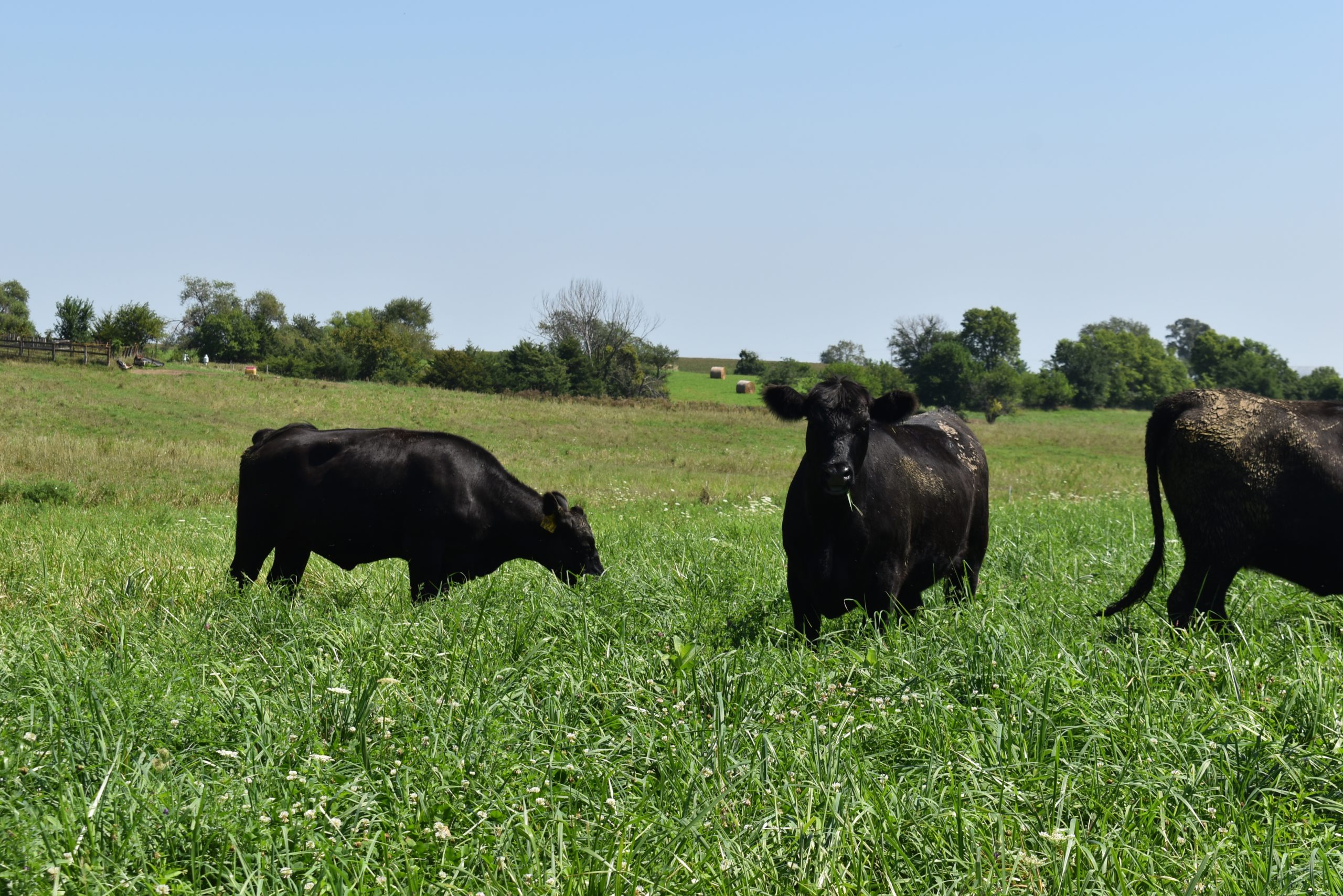
PHOTO: Heifers on the alfalfa plots. (Photo courtesy Iowa Beef Center at Iowa State University.)