Recently I have had a couple of people send me articles about the dire situation of minimal snowfall in the Rocky Mountain region that feeds the Colorado River Basin.
Naturally, these were sent because the articles were attacking the agricultural use, which is 70% of the total, but of course as irrigation for alfalfa and hay production they focused on that to target the “unnecessary cows” in the region. So that sent me down a path of searching for facts on water use from the Colorado River.
Without surprise, I found that most research institutions have blamed climate change for the snow drought because it is likely they can’t reduce their efforts spent writing grant applications for government funding long enough to seek factual history of the situation, in my opinion.
First off, let’s take a good look at the Colorado River Basin according to your Uncle Sam.
The Colorado River Basin, located in the southwestern United States, occupies an area of approximately 250,000 square miles. The Colorado River is approximately 1,400 miles long and originates along the Continental Divide in Rocky Mountain National Park, Colorado, and ends where it meets the Gulf of California in Mexico. The Colorado River is a critical resource in the West, because seven basin states (Arizona, California, Colorado, Nevada, New Mexico, Utah and Wyoming) depend on it for water supply, hydropower production, recreation, fish and wildlife habitat, and other benefits. Although agricultural uses depend on 70 percent of Colorado River water, between 35 and 40 million people rely on the same water for some, if not all, of their municipal needs. Moreover, the United States also has a delivery obligation to Mexico for some of the Colorado River waters pursuant to a 1944 Treaty with Mexico.
The current news indicates that the snowpack across the entire region as of today is roughly 50% of normal. In fact, in another note from Uncle Sam:
According to Bureau of Reclamation (BOR) data, Lake Mead’s elevation is at 33% capacity and Lake Powell’s level is at just about 26%. In just one year, Lake Powell has dropped by about 32 feet.
No one would make the argument that we are in good shape. Although research centers tell us how alarming this is for the 25 million residents of the Southwest. Of course, they have to mention that it is all exacerbated by climate change with no mention of the acceleration of water users moving into the region in the past couple of years.
Before I go into that let’s just take a look at history. Drought is nothing new.
After one notably severe drought struck the Colorado River Basin near the end of the 13th century, the Ancestral Puebloans, a group who had inhabited the Colorado Plateau for the prior millennium, migrated out of the area into the Rio Grande region.
Even more recently, four years ago WYOFILE was talking about seeking solutions in this article:
Water authority to present options for Colorado River Basin water crisis
Sept 22, 2022
There’s simply not enough water in the system to fulfill the water allotments divvied among stakeholders by the 1922 Colorado River Compact, and the situation is expected to get worse, according to federal officials.
So just out of curiosity I decided to research the new wave of “development” in the country, the massive water users which are artificial intelligence data centers. It turns out that Phoenix and Las Vegas, both in this parched watershed, are two of the three largest data center growth areas in the entire nation.
In fact, 40% of the nation’s total (currently operating or capacity under construction) is AI data centers in the Colorado watershed. This includes 24 of the hyperscale AI data centers and 397 regular sized units. In fact, near Buckeye, Arizona, a unit covers 2,000 acres.
Yes, the drought may be upon us, and I am not talking about a drought with less measurable precipitation. I am talking about a drought of common sense. Who moves into the arid desert where 40 million people now call home and try to take all the water? Who permits and builds water-hogging facilities like we have an endless supply and then blames cows that have apparently caused climate change? Only someone who foolishly believes that AI data centers will soon be generating your nutrition.
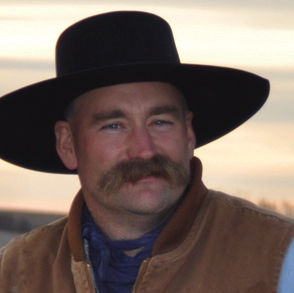
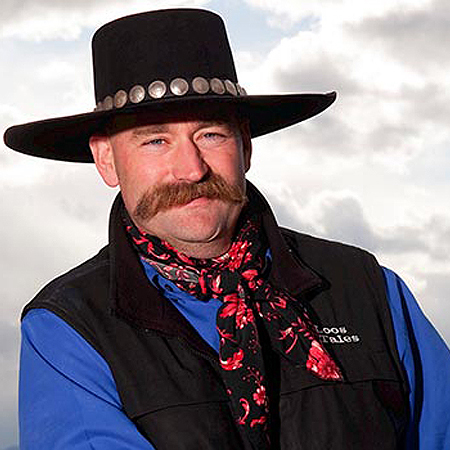
Editor’s note: The views expressed here are the author’s own and do not represent the view of High Plains Journal. Trent Loos is a sixth generation United States farmer, host of the daily radio show, Loos Tales, and founder of Faces of Agriculture, a non-profit organization putting the human element back into the production of agriculture. Get more information at www.LoosTales.com or email Trent at [email protected].
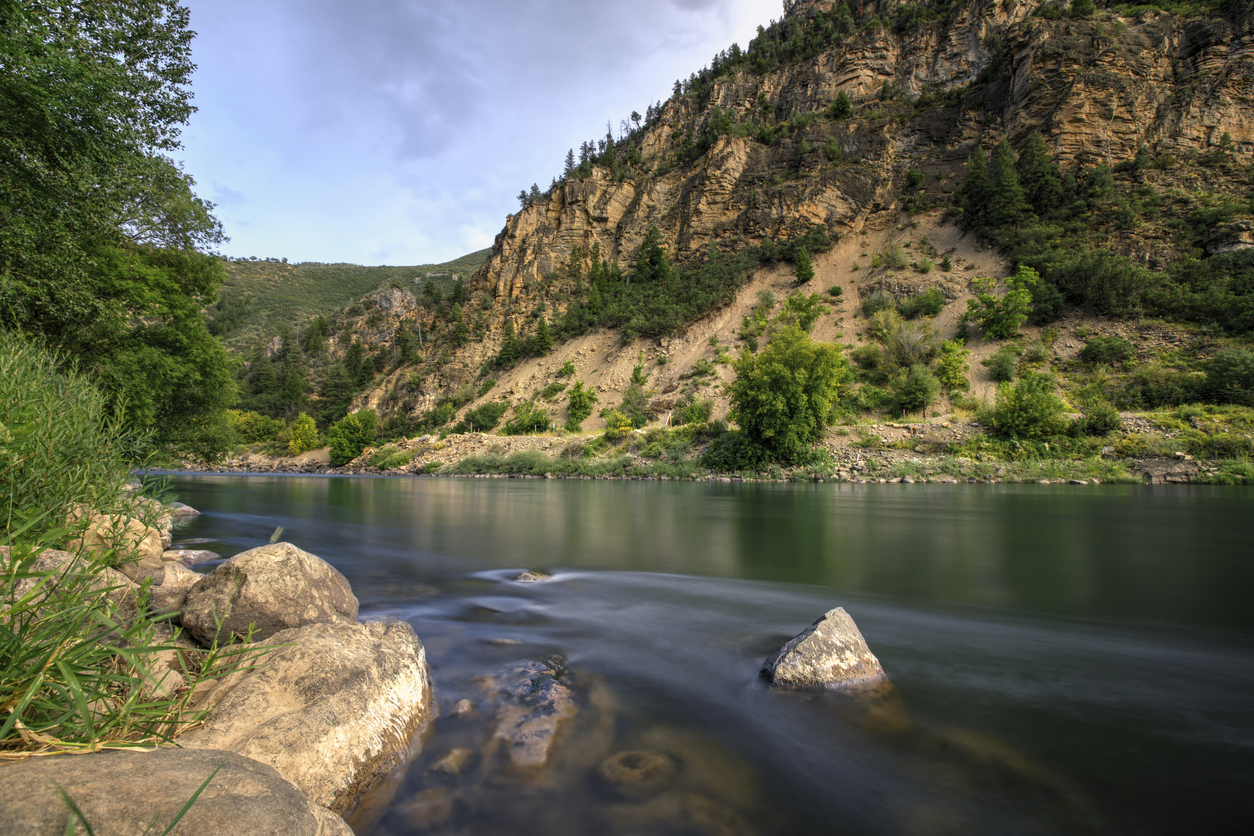
PHOTO: Colorado River, Glenwood Canyon at Glenwood Canyons Resort, Colorado, USA. (iStock │ #1213547321 – SergeYatunin)