
Award-winning farmer Josh McClain is looking forward to this year’s Kansas Creekside Carbon Retreat, to be held July 16 to 17 at Norton, Kansas.
It will be the second such gathering, culminating with music from bands brought in from Nashville. The first “carbon retreat” was held last year, with folks “involved in the carbon farming industry,” and the meetings and connections fostered there gave birth and a name to a new company—Creekside Carbon—with a focus to speed up carbon payments to farmers. (You can see a video of the first gathering here.)
The McClains had spent years listening to farmers through their involvement with their companies Firebolt Ag LLC, a full-service fertilizer and chemical retailer with a focus on customizing products and programs for individual farmers’ needs with its primary focus being customer profitability, and its affiliate Firebolt Carbon. One thing they heard over and over again from farmers interested in regenerative ag practices that promised to pay for “carbon farming” was that the payments took too long.
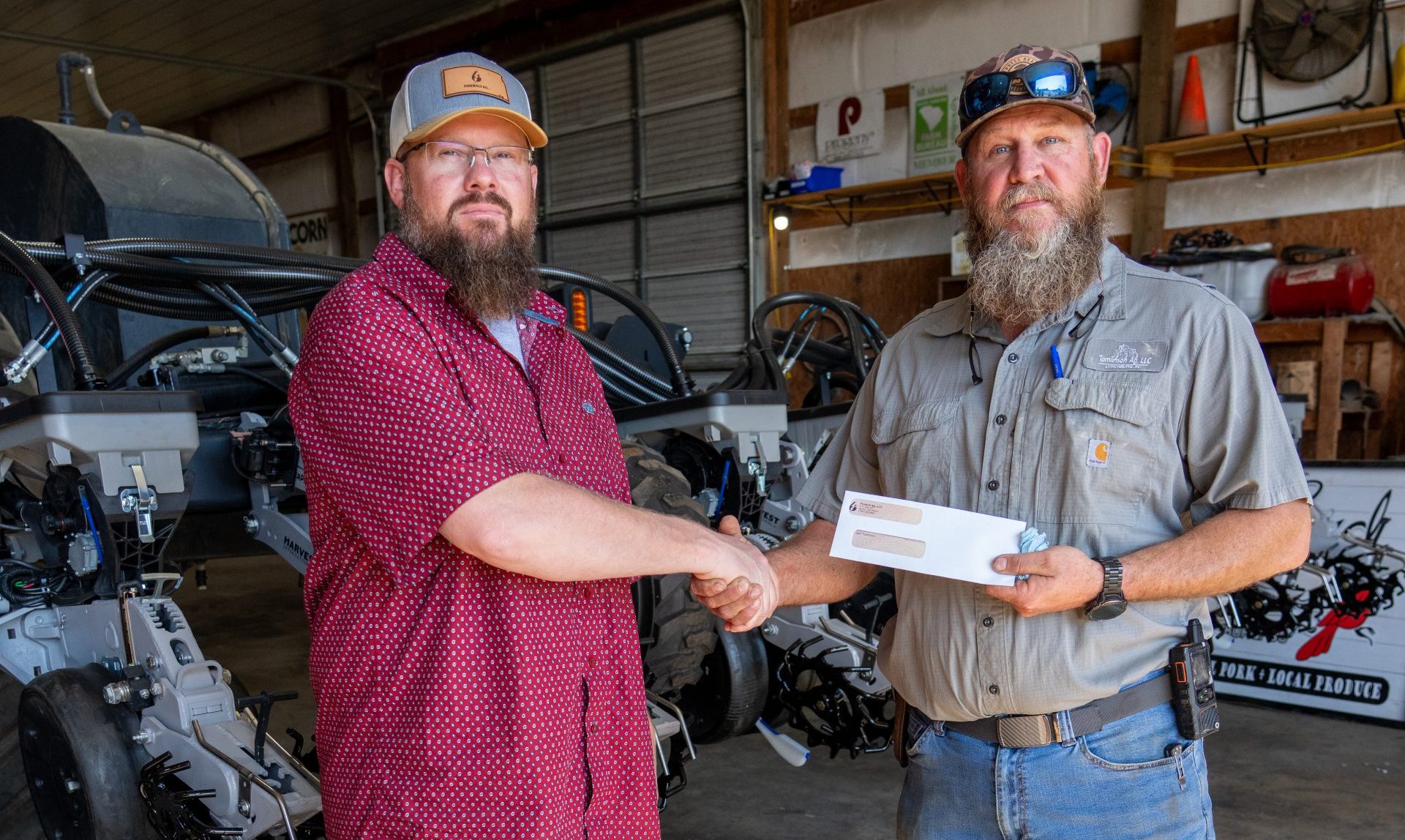
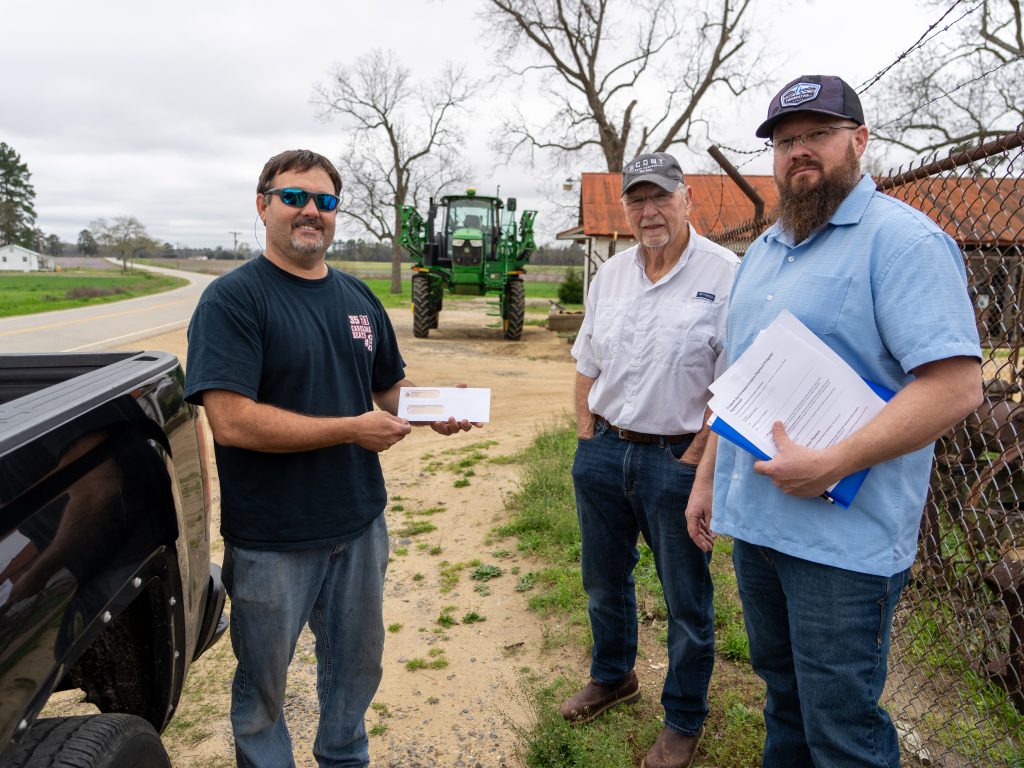
Josh (pictured at left at top Cpresents a check to Zan Tomlinson in a photo by Ben Clark) wanted to change that. Last year’s two-day “regenerative retreat” focused on education, connection and accelerating carbon payments.
“The concept [of carbon credits] is great, but we found that few act on what they promise,” he said. The retreat last year began with 120 “folks in the industry,” winding up with a concert attended by 500 people.
“We wanted to put some steam behind carbon payments,” McClain said. “We’re not trying to re-invent the carbon wheel, just get money back into farmers’ hands faster.”
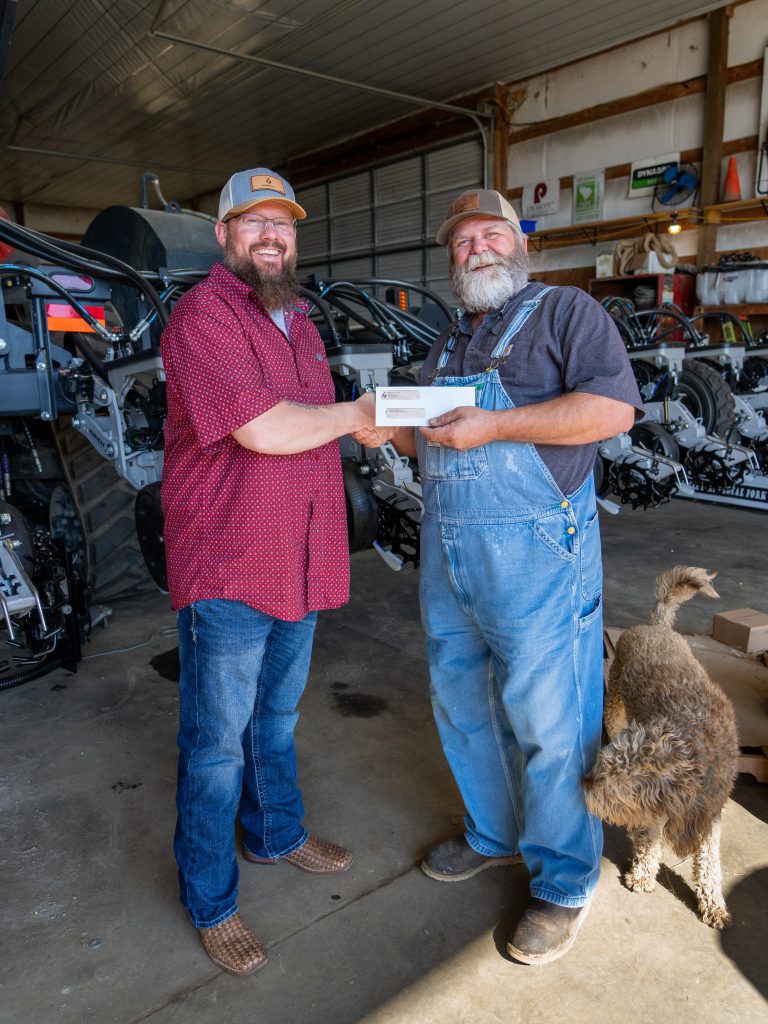
He said Creekside operates like the farmer co-operatives of earlier days.
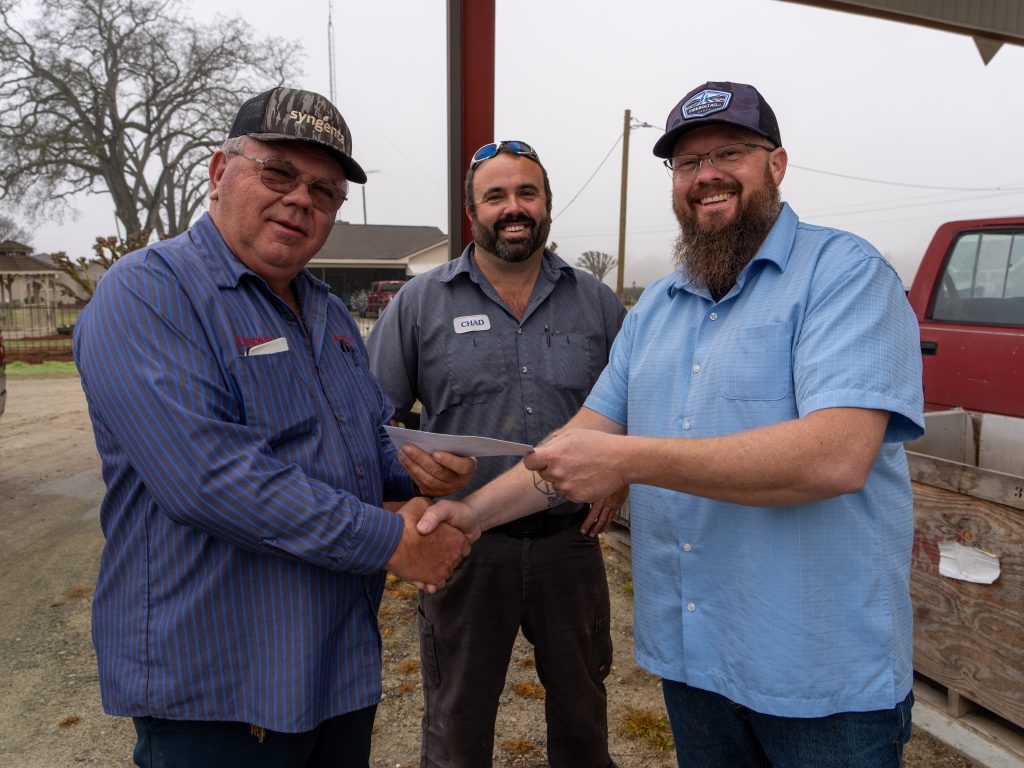
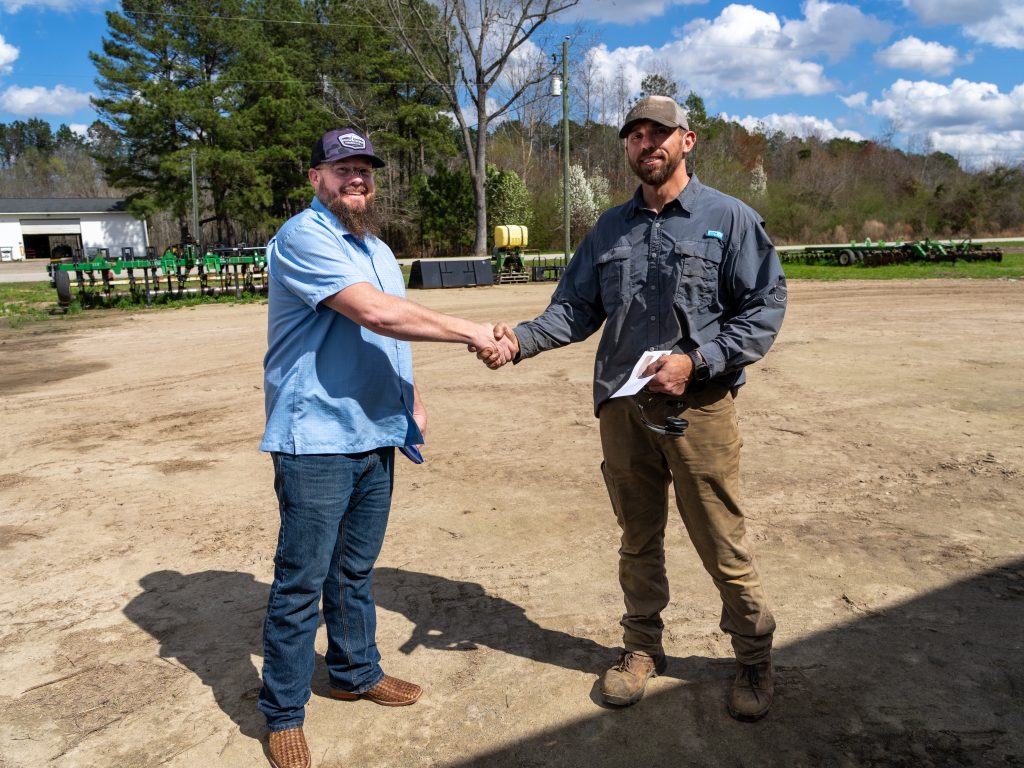
Creekside Carbon began keeping that promise with the first round of payments this month, a total of $2.89 million in early payments that started March 9. About 200 farmers in 12 states participated. They produced more than 100,000 carbon credits in this “vintage” (measured and verified through Indigo’s carbon program, an industry leader in carbon measurement). The average payment was more than $10,000, with a median of $3,000 and the largest single payment nearly $1 million. As the carbon credits get sold and traded, some of that income goes back to the farmers themselves.
“On average, farmers generate approximately 0.37 carbon credits per acre in the first year, with carbon storage increasing over time depending on practices and conditions,” he said.
For context the average American produces about 17 million metric tons of carbon dioxide annually. Firebolt Carbon has more than 1.5 million acres enrolled.
The in-person events are important for several reasons. Creekside welcomes support from larger investors looking to support and scale carbon credits. Buyers include corporations, individuals, philanthropic capital, and agriculture industry partners like Meristem that recognize the need for earlier payments to make regenerative agriculture economically viable at scale. It also invites individuals who want to support regenerative agriculture and connect directly with farmers restoring soil health and reducing environmental impact. Participation starts with a $10/month subscription.
That necessitates broadcasting the story of regenerative ag. Its co-founders include Mary Anne Potts, a longtime editor and writer for National Geographic, and her husband Ben Clark, a documentary filmmaker whose film “Preserved,” about landscape conservation, is screening across the county.
Storytelling is important for outside investors who may not be farmers themselves, but who want to support regenerative ag. Heidi Baxter is another Creekside partner, with more than 10 years of experience in connecting capital with regenerative ag opportunities.
“Capital is moving too slowly. Regenerative agriculture won’t scale unless farmers get paid sooner,” she says on her LinkedIn page. Why? “It’s a mixture of ‘can’ts’ and ‘won’ts,’” she told High Plains Journal. “I’ve seen all the friction points in this market and heard all the reasons why payments don’t get to farmers quickly. We must put farmers first in the financing, or none of the rest of it is going to happen.”
Creekside emphasizes “high-integrity” carbon credits. As the carbon credit market matures, the quality of credits by ratings associations like the Integrity Council for the Voluntary Carbon Market, which serves as an independent governance body, sets global quality benchmarks for carbon credits through its Core Carbon Principles, Beyond these international governance bodies and standards, groups like Ag Data Transparent and the National Corn Growers Association have come together to establish best practices and transparency principles for agricultural carbon credits.
Artificial intelligence is helping, as measurement and documentation become more accurate, more granular and speedier.
As Baxter points out, farm-related ag credits are only one item for investors on the carbon-credit menu. But they have a unique appeal to “values investors.” Baxter wants to get more foundations, non-profits and NGO’s involved in supporting these farm-related carbon markets.
As investors become more sophisticated, these ratings will become more important than ever, which is why high-trust documenting partners like Indigo are important. “Indigo is a partner, but we are also looking at other partners and programs as we continue to scale,” Baxter said. Some risk remains, but the market is consolidating and solidifying. “We’ve moved forward a lot.”
In the end, that word “trust” is the key to the whole effort, according to Josh McClain. He started farming at age 17, and the McClain operation now manages 15,000 acres. “When we started out, we had nothing—nothing but our word,” he told High Plains Journal.
“One individual can make a difference; it’s the great American way. We want everyone willing to help to feel they can contribute. The world population is growing. Everyone needs farmers three times a day. If we’re going to do something, let’s do it the right way.”
David Murray can be reached at [email protected].



