Pastures and hay meadows provide higher quality feed, are more productive, and require fewer inputs when they have good forage legumes growing in them.
Outside of moisture, nitrogen is often the limiting nutrient in pasture production. Commercial fertilizer may be a quick option, but it’s costly. Instead, let’s grow our own nitrogen using legumes.
Do you have a relatively weed-free pasture area or hay meadow that makes up no more than 15% of your total pasture acres? If so, here is what I want you to do. From now until grass stops growing this year, graze it hard. Grub it down, then graze it some more.
Now why would I recommend overgrazing? Sure, it will hurt the grass, but that’s exactly what we want. Next spring, you will interseed legumes like red clover, white clover and alfalfa into that grass to make it more nutritious and productive. Late-winter frost seeding may even be an option.
The biggest challenge to establishing legumes in a grass sod is competition from existing grass with slow-growing legume seedlings. Anything you do to reduce competition and slow down grass growth will help. Grazing hard this fall will weaken the grass and slow its spring growth, giving new legume seedlings a better chance to get started. Areas that experienced drought this summer may have seen unplanned overgrazing, and interseeding may be a way to make lemonade out of that lemon. Just be careful not to further stress drought-weakened stands. Of course, all this depends on moisture next spring.
While you’re at it, collect some soil samples and apply any needed fertilizer. Legumes especially need good phosphorus and potassium levels and the proper soil pH.
So, add some legumes to your pasture next spring. Graze your grass short this fall, and the legumes you add next spring will establish better because of it.
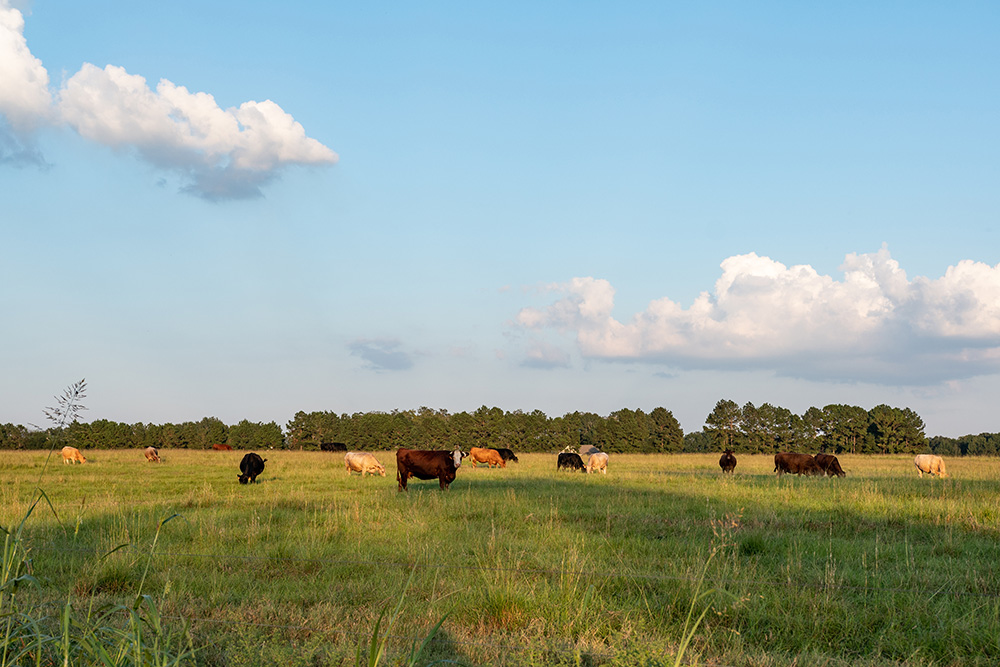
PHOTO: Beef cattle in late afternoon pasture. (Adobe Stock-#226286430 │ jackienix)