Governor highlights investment in McCook’s lead service line replacement

Nebraska Gov. Jim Pillen visited McCook to recognize the community’s use of state resources for water infrastructure improvements.
He was joined Oct. 15 by Nebraska Department of Water, Energy and Environment Director Jesse Bradley and McCook Mayor Linda Taylor.
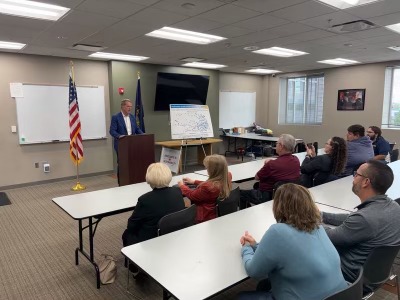
McCook has partnered with the department to receive $5 million in financial assistance through Nebraska’s Drinking Water State Revolving Fund to replace lead service lines. The state revolving fund programs provide low-interest loans and loan forgiveness to communities for water infrastructure projects.
“This kind of infrastructure investment protects communities and improves quality of life for Nebraskans,” Pillen said. “City leaders are being proactive and prioritizing public health and their community’s health.”
When the new federal lead regulation goes into effect in 2027, all communities will have to replace 10% of their lead service lines each year over the following decade. In addition to protecting public health, McCook’s effort to replace privately owned lead service lines will help the city comply with federal requirements.
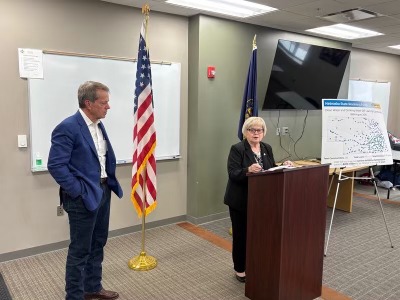
“This project will support the community’s long-term stability and growth and will allow McCook to make great strides toward ensuring their drinking water system is prepared to meet these future federal compliance obligations,” Bradley said.
Through the Drinking Water State Revolving Fund, 60% of the project funding McCook receives will be provided as loan forgiveness. The remaining financing will be provided at a 0% interest rate. Compared with private financing options, the state’s support is expected to save McCook residents at least $10 million in repayments over the life of the financing.
McCook also has used drinking water and clean water state revolving fund financing to construct its drinking water and wastewater treatment plants and drinking water mains across the city.
“SRF financing has been an important resource for our community,” Taylor said. “As we pursue funding for lead service line replacement and other infrastructure needs, we are building on decades of partnership through the SRF program. We appreciate the continued support that helps communities like McCook maintain the systems our citizens depend on every day.”
Since their inception, Nebraska’s state revolving fund programs have provided more than $1.75 billion in assistance through 713 loans to 326 communities. The department expects to fund roughly 40 new projects over the next two years, totaling approximately $220 million. The programs operate as revolving funds, with repayments financing additional community projects.
“We’re helping communities make necessary investments in clean, safe, and reliable water infrastructure without placing an unnecessary burden on local rate payers,” Pillen said. “Safe drinking water is fundamental to the health of our communities and the strength of our economy.”