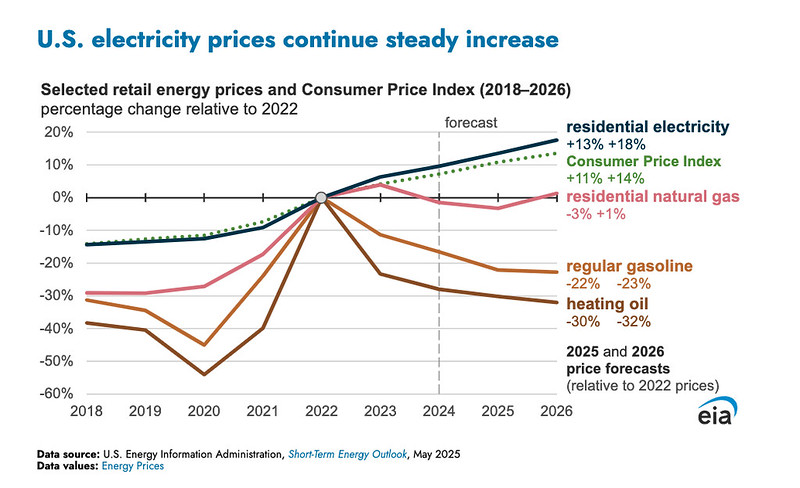
EIA said it expects residential electricity costs to rise 13 percent in 2025 and 18 percent in 2026 along with demand for power.

Retail electricity prices have increased faster than the rate of inflation since 2022, and the U.S. Energy Administration said it expects those costs to continue increasing through 2026.
“Overall, U.S. energy prices rapidly increased from 2020 to 2022 as economic activity recovered after the worst of the pandemic and Russia’s invasion of Ukraine interrupted energy supply chains,” the agency said, adding that while oil prices have declined, electricity process have continued a steady increase.
EIA said it expects residential electricity costs to rise 13 percent in 2025 and 18 percent in 2026 along with demand for power.
In Arkansas, the average cost per kilowatt hour rose from $12.62 in April 2024 to $13.61, which is still below the regional average of $14.63 per kilowatt hour. On average a U.S. utility customer purchases nearly 11,000 kilowatt hours of electricity per year, EIA said.
Summer heat is a major driver in electrical use and those kilowatt hours can go up very quickly.
“A heat wave can take a toll on home energy bills,” said Laura Hendrix, extension personal finance expert for the University of Arkansas System Division of Agriculture.
Hendrix offers a few simple tips to save energy and money:
- Adjust the thermostat. Turn the temperature up while you and your family are out. Automate this with a programmable thermostat.
- Close curtains to keep out the heat of the midday sun.
- Use bathroom vents to remove heat and humidity after showers.
- Avoid using the oven or running the dryer during the hotter part of the day.
- Change air conditioning filters regularly.
- Use caulk and weatherstripping to keep heat out and retain the cool air.
See the publication “52 Ways to Hazard-Proof Your Finances” for more ways to protect your finances from the effects of weather-related events.
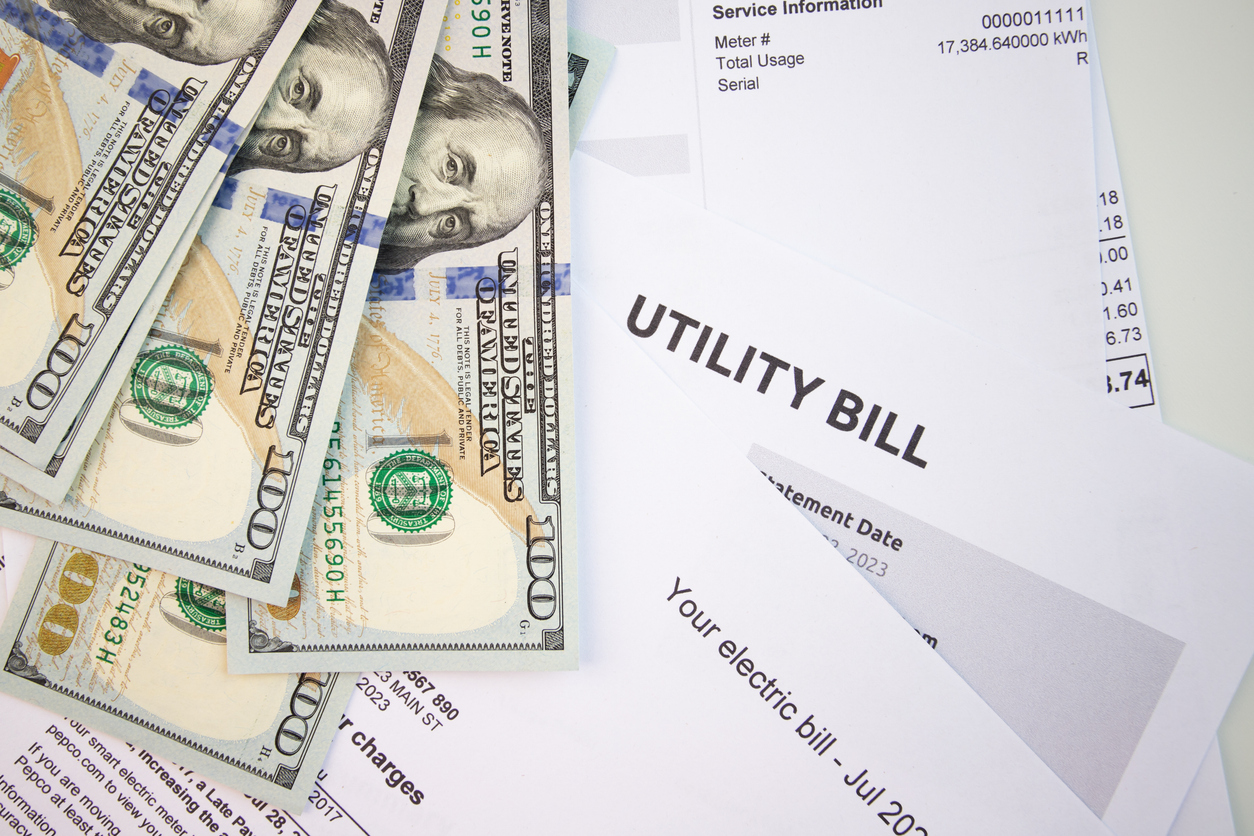
PHOTO: Paper bill with energy and water costs, invoice with energy and gas charges. (iStock │ #1548130941 – Yta23)