K-State expert says flooding brings risk and reward for people and ecosystems
Flooding across parts of the United States has made headlines in recent months, causing widespread damage to homes, infrastructure and natural resources. But while floods often leave behind costly destruction, a Kansas State University expert says these high-water events also play a valuable role in nature’s cycle.
On a recent episode of the K-State podcast, Fins, Fur and Feathers, K-State aquatics specialist Joe Gerken joined co-host Drew Ricketts to explore the causes and consequences of flooding.
“Flooding is simply when there’s too much water in places we don’t want it,” Gerken said. “But not all floods are created equal.”
According to Gerken, four key factors influence flooding: timing, duration, magnitude and intensity.
Spring floods might stem from snowmelt, while summer floods are often tied to heavy rainfall. Some floods rise quickly and disappear just as fast — known as flash floods —while others build over time as rivers exceed their banks.
Flash floods, Gerken noted, have been especially destructive this year.
“They’re driven mostly by rainfall, and recent warming in ocean waters — especially in the Gulf — has loaded the atmosphere with more water that is colliding with cooler air and dumping large amounts of rain,” he said.
Levees, dams, storm sewers and other human-built infrastructure aim to contain rivers, but urban development has created impervious surfaces like roads and parking lots that prevent water from soaking into the ground. That water moves quickly into storm drains and rivers, often worsening flood conditions.
Vegetation also plays a vital role.
“The plants that we have near a river can be really important,” Gerken said. “But when we remove that vegetation, especially near rivers, sediment washes away more easily and contributes to flooding.”
Still, floods aren’t always bad.
“Floods are a form of ecological disturbance,” Gerken explained. “If we take out some of the negative side effects to humans and property…flooding can serve the same role as prescribed fire and snow and ice. Over time, Mother Nature might reclaim some of those areas to regrow new trees. And that process is important, too.”
Also, floodwaters can carry nutrients into surrounding flood plains, replenishing some of the world’s most fertile farmland. The process, called lateral connectivity, helps rivers connect with adjacent wetlands and forests, enriching soil and encouraging biodiversity.
Gerken said flooding can also benefit aquatic life. “Some fish, like alligator gar and freshwater drum, take advantage of these shallow, flooded areas to spawn,” he said. “They lay eggs on vegetation in temporarily submerged fields. It’s an incredible process.”
Even so, Gerken urges landowners to stay alert after flood events.
“Monitor your pond for unwanted debris or invasive fish species,” he said. “If there’s any damage to your dam or embankments, act quickly. Fixing a small problem right away is much easier than addressing a major failure later.”
He adds: “There’s always going to be a balance (between the negative and positive forces of a flood). Floods challenge us, but they also shape the world we live in, for better and worse.”
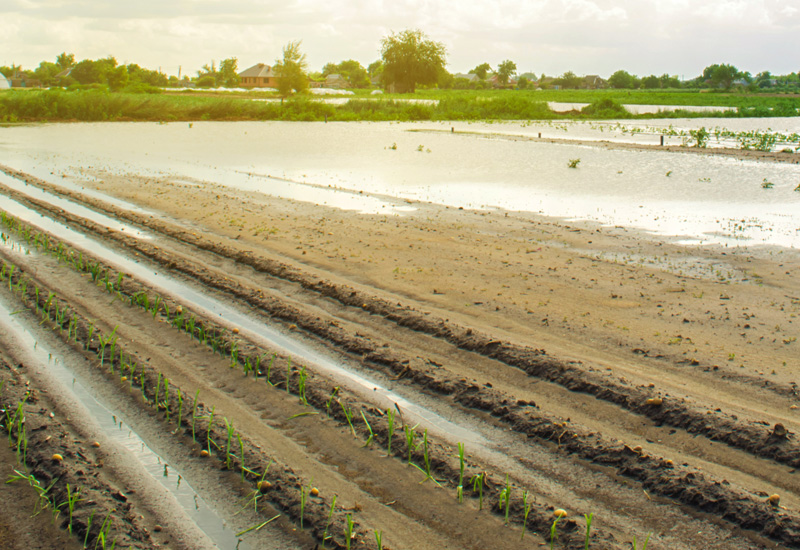
PHOTO: Agricultural land affected by flooding. Flooded field. Natural disaster and crop loss risks. (Photo: Adobe Stock │ #279795333 – Andrii Yalanskyi)