
Falconry: An age-old sport that continues to endure
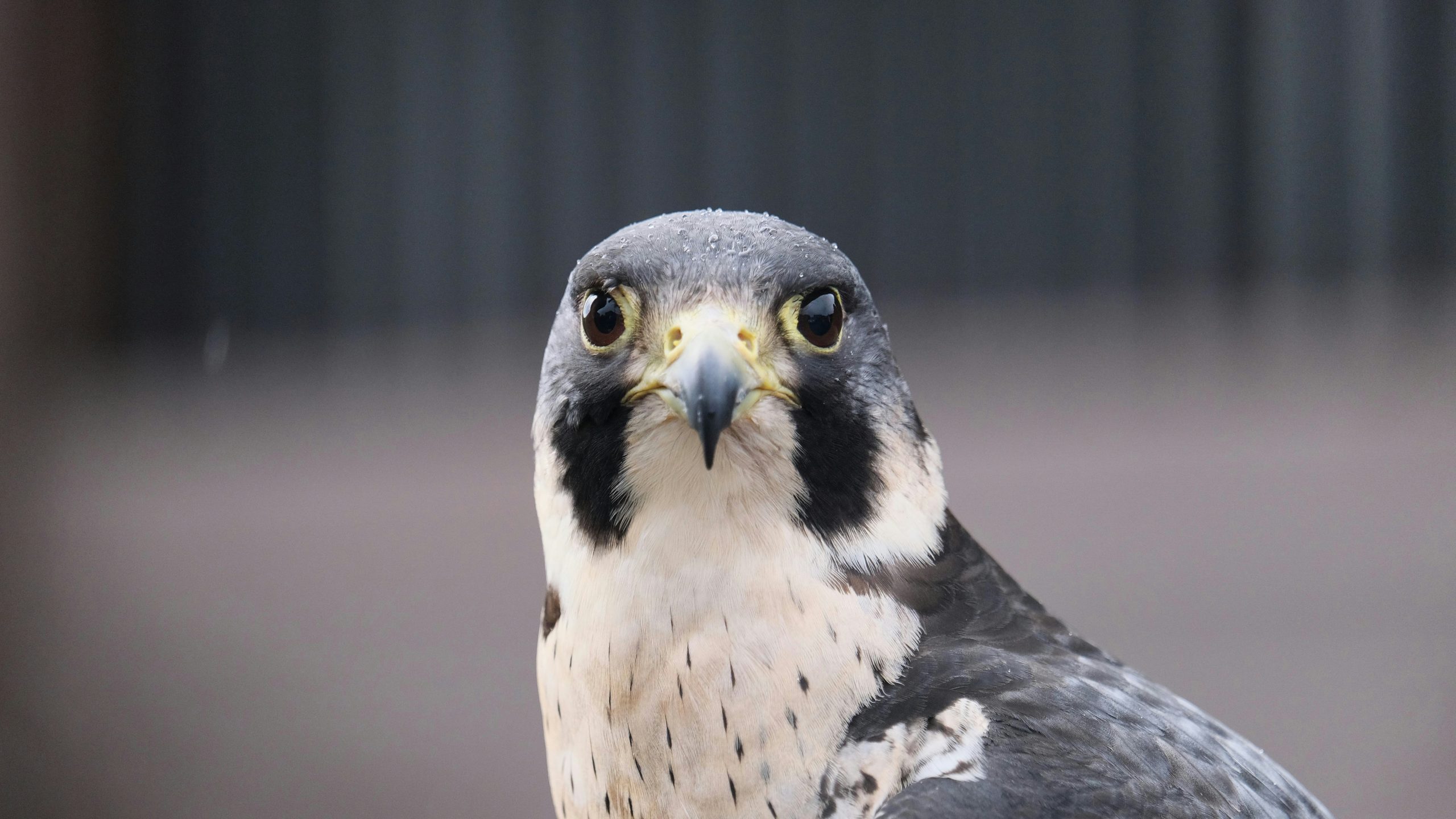
Anyone who has ever seen a hawk or falcon effortlessly glide through the sky in pursuit of prey has admired its grace and instinct, but some people, known as falconers, actually hunt with these majestic birds in an ancient sport called falconry.
It’s a pastime that combines nature, hunting and the challenge of working with wildlife in their natural habitat. Robert Huber, vice president of the Oklahoma Falconer’s Association, has owned and hunted with falcons for more than 50 years and says it has become a lifestyle he is passionate about.
“Falconry itself has been around for thousands of years,” Huber said. “It goes as far back as ancient China, and probably well into the BC time period. It was one of the earliest methods of capturing game for the table. It decreased some when bow and arrows came in, but in the mid-1800s there was a resurgence of falconry in England. It did well, but it started dying out when firearms came about because it was easier to get food with the firearm then using a hawk. Nowadays it’s a recreational type of sport.”
About falconry
Huber said in the United States, falconers can trap wild raptors or purchase birds bred in captivity to use for the sport.
“The mortality rate of these young nestling birds in the wild is 60% or greater that first winter,” Huber explained. “It’s tough and they’re competing for territory. The adult birds, especially in Oklahoma, stick around and they pick on any young bird that comes into their area. These birds starve to death or get hit by cars, which is why the federal government said you can take these immature birds out of the wild, because each one we take out, that’s one more that’s going to survive.”
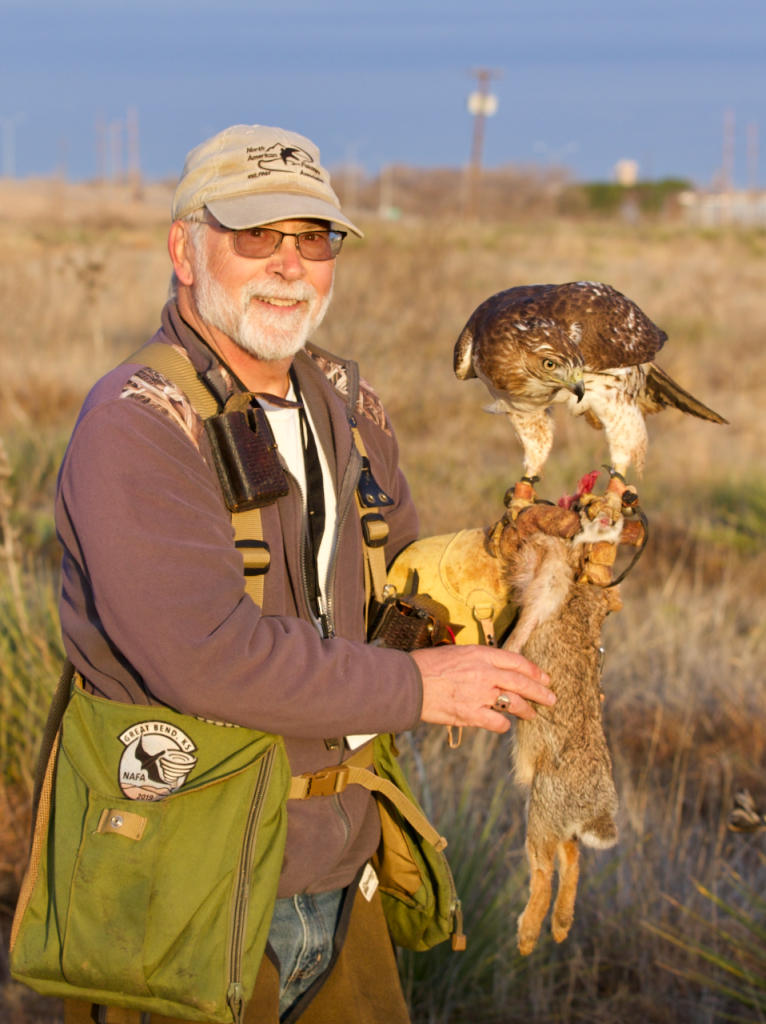
Huber said in the U.S., falconry is probably one of the most heavily regulated wildlife sports because hawks are protected under the Migratory Bird Treaty Act. To own a raptor, falconers must have a special state permit, which must be renewed every three years. Falconers coming into the sport must first pass a written test, find an experienced sponsor to teach them about the sport and the birds, and their equipment must pass an inspection to be approved before they acquire their first raptor.
“It’s quite a process to get involved in,” Huber said. “It’s not for everybody, because it’s a 365-day a year hobby. We’re kind of tied down from that perspective.”
Huber said he became interested in falconry at 12 years old after watching Mutual of Omaha’s Wild Kingdom, a documentary television program that featured wildlife and nature. Huber said there were several episodes about falconry.
“It really piqued my interest, and so here I was 12 years old, telling people I wanted to be a falconer,” he said. “My dad, in his wisdom, had me read a book about it. I think his idea was that it would discourage me. Probably within two years, I had my first Red-tail and started training and flying birds. That was the beginning of my falconry journey.”
About the raptors
There are a range of birds used for falconry, including American Kestrels, Merlins, Peregrine falcons, Prairie falcons, Gyrfalcon falcons, Red-tail hawks, Harris hawks, Goshawks, and Golden Eagles. Over his lifetime in falconry, Huber has had about 20 birds, including several Red-tailed hawks, two Goshawks, two Cooper’s hawks and two falcons.
He currently has two birds, an 8-year-old Peregrine falcon, which was captive-bred, and a Red-tailed hawk that was trapped last year. The falcon primarily hunts ducks and the hawk hunts rabbits. This allows Huber to have two separate types of species of prey to hunt. Huber said falconry is not an inexpensive sport. Between the equipment, time and special food, it can become costly.
“My birds are fed Coturnix quail every day,” he said. “I buy 300 frozen quail at a time at $3.50 a bird and they get half a quail a day. My wife, Julie, often says that the birds eat better than we do.”
Huber said wild birds are commonly trapped and used for hunting for a few years, and then their owners will sometimes release them back into the wild, so they don’t have to feed them in the summer.
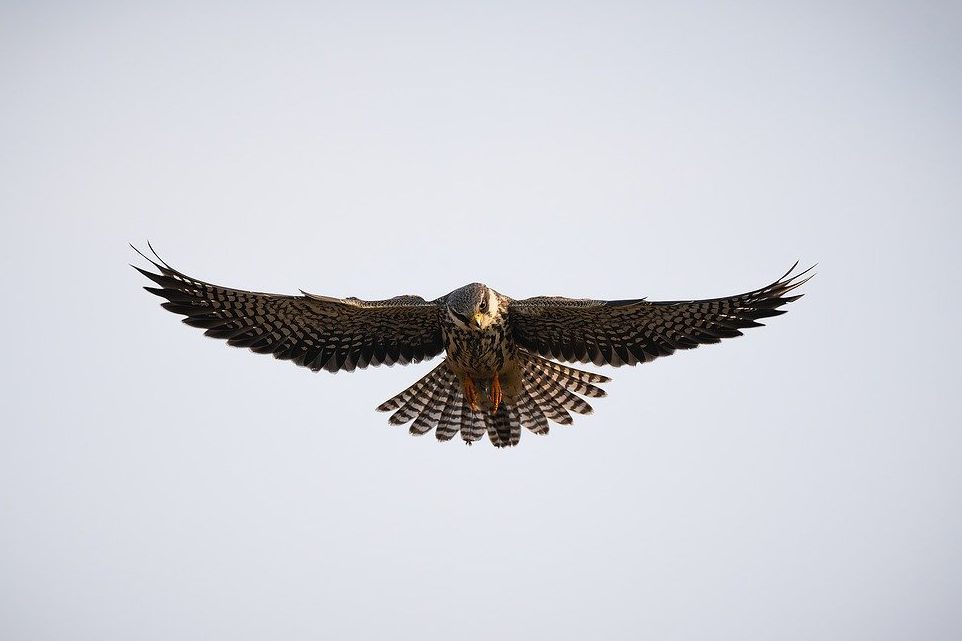
Captive-bred birds, however, are not allowed to be released into the wild because they have only ever known human care and confinement. Captive-bred birds are required to wear a metal band on their leg to indicate they were raised in captivity and are not allowed in the wild. Huber said wind turbines have created challenges for falconers with the dangers they pose to birds in the sky, and their presence has reduced the number of hunting locations.
“The sad part about is every place they want to put a windmill farm is our good prairie ground with no trees,” he said. “It’s great for flying falcons, but the windmills make it too dangerous.”
Huber said the most common misconception about falconry is that people think they’re pets.
“They truly are hunting partners,” he explained. “There’s this partnership interaction that’s really kind of hard to explain without seeing and participating in it. When I’m taking the falcon or Red-tail out, I’m playing the part of the dog in the field finding the game and she’s the hunter. As soon as I flush that rabbit, that bird’s gone after it, so I’m out of it. I’m an observer at that point between the bird and the quarry.”
Raptor training
So how are raptors trained to hunt with their owners?
“Let’s say I trapped a passage Red-tailed hawk. She may weigh 1,300 grams, which is going to be close to 3 pounds,” Huber said. “Before I get her flying to where she’ll come to me, I may get her down to 1,200 grams. I’m removing that body fat that she’s has, and now all of a sudden, she starts to respond to me because she doesn’t have that fat reserve and she becomes hungry.”
Huber was quick to clarify that falconers do not starve the birds in the training process. They only decrease the food provided to make the raptors reliant on them and pay attention to commands.
“Starving them would defeat the purpose because if you starve the bird, it doesn’t have the energy to fly. So, it’s a delicate balance.”
Huber said some birds take only four to five weeks to train, but some will take longer. Many birds are trained to come to a lure, which is just a piece of equipment that has food tied to it, and the birds associates that with eating, and they come down to it.
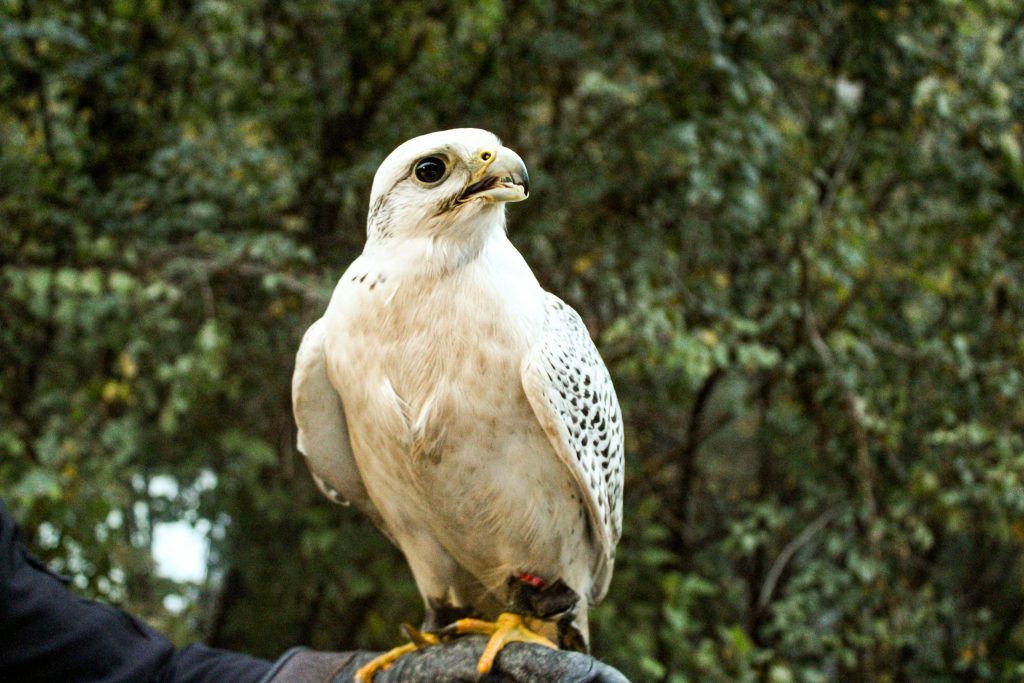
Some falconers tie bells to the feet of their birds so that if the birds fly off chasing game they are easier to find. However, many falconers, like Huber, have turned to GPS tracking systems to monitor birds while hunting.
“I can watch them in real time on my phone, and it makes the loss of the birds minimal,” he said. “It’s really allowed us to expand the limits of the birds. You’re not afraid to let them fly. Thirty years ago, a standard pitch for a falcon was probably 350 feet above a duck pond because if you let him get any higher, you’d take a chance of losing the bird and not being able to find it. With GPS, everybody’s looking to get that 800- to 900-foot pitch, because it allows the bird to fly higher and you can track it.”
A raptor’s prey, also known as quarry, is often determined by the type of bird and the quarry available in the area.
“Anybody flying falcons in Oklahoma, they’re probably hunting ducks,” Huber said. “Anybody flying hawks, whether they’re Red-tail or Goshawk, they’re typically hunting rabbits, or potentially squirrel. If somebody is flying a Cooper’s hawk, which is a smaller hawk, they’ll be flying quail, sparrows, and starlings.”
Huber said in other states, falcons will be hunting sharp tail-grouse and sage grouse. In Canada, they hunt a bird called a Chukar. He said the quarry available in the area often determines what type of bird falconers acquire.
Huber said when a raptor catches its quarry out in the field, he will either take the quarry and place it in his bag and give the bird some other food as a reward or give the raptor of piece of the kill itself. Otherwise, the bird can become possessive of its catch. Ducks, for instance, are a quarry Huber no longer lets his birds eat in the field.
“I used to feed the ducks to my birds, but I don’t anymore, because of avian influenza. Now the ducks are all for me. With rabbits, I let the hawk have the front and back legs, but I saved the back for me.”
Falconry’s role in conservation
What impact does falconry have on wildlife conservation? Huber said falconers have long considered themselves conservationists in protecting the raptor species, some of which have nearly gone extinct until falconers started breeding birds to improve population numbers. They have also worked to protect some of their bird’s quarry, including the prairie grouse.
“Prairie grouse numbers have declined significantly in the last 20 years,” he said. “A lot of it’s due to habitat change. Falconers noticed that, and so we’re we formed the North American Grouse Partnership to promote the protection of prairie land for grouse. It also protects every other species that lives on that prairie. It’s a very unique ecosystem that is slowly, and sometimes quickly, disappearing.”
Huber said falconers pay attention to quarry populations and adapt their hunting to keep those populations from dwindling. He said even though falconers can hunt rabbits year-round in Oklahoma, they usually stop hunting in March, because that is when rabbits start breeding and hunting female rabbits could reduce the quarry population the following year.

Apart from falconers, raptors provide their own impacts on conservation and aid in natural selection. Huber said even though hunters often blame hawks for low quail populations, he said that is not the full story.
“Hawks don’t really have that great of an impact on the actual native quarry numbers,” Huber explained. “If a gun hunter jumps a covey of quail, they just start shooting. Hawks are really selective and see things that we don’t see. They see a bird with a little different wing beat pattern than all the rest of them. Or a bird that is not going up as fast, and they actually pick those birds out. A lot of times, they’re injured or weak. From that perspective, they are actually doing a favor in protecting and increasing the strength of the quarry population, because they’re limiting some weaker birds instead of the healthy ones.”
Falconers like Huber have found a unique niche within the wildlife hunting and conservation sector and continue to preserve a primitive sport that is driven by determination, patience, and a passion for nature.
“With the falcons, I love watching them fly and having success with a duck is kind of icing on the cake,” Huber said.
Lacey Vilhauer can be reached at 620-227-1871 or [email protected].
TOP PHOTO: Peregrine Falcon. (Photo by Rory Tucker via Unsplash.)
Related coverage and resources
- Related on HPJ: Falconers seek Oklahoma land to hunt their birds of prey in November
- Related on HPJ: A rundown of the roadrunner
- Outside resource: USDA Natural Resources Conservation Service

