As I sit here looking at our 2025 Christmas tree, I thought it might be interesting to dig into the history of the tradition.

Why exactly do we use a tree to celebrate the birth of Jesus Christ, our Lord and Savior? To be honest, the history is quite simple. Dating back to 1500, folks in Estonia and Latvia decorated a tree and then lit it on fire for celebratory purposes. I fail to understand that concept. Seeing how many people have had home fires with real trees during the holidays, it falls short of making sense. But then again, in today’s world how many things really make sense?
The most interesting part of the history that I was able to glean is the family tree, similar to what we celebrate today with decorated trees, started in Germany and made its way through England before becoming commonplace in 1830. It really did not catch on in the U.S. until a sketch circulated of the British Royal family sitting around a decorated tree in about 1858. I thought we fought and lost lives to free ourselves of that family, but we still had an admiration for them.
The symbolism that I was really interested in digging up was the question as to why the evergreen was chosen. I assumed that it would have a tie to Christ coming to earth for our life eternal, but honestly that is not easy to find. The interesting tradition, that has now faded, but was present in the early days, was referred to as a Paradise Tree, decorated with apples and wafers to represent the Garden of Eden with Adam and Eve.
The most interesting part of the Christmas tree story is the history of real vs. artificial. The National Christmas Tree Association reports that somewhere short of 50 million real Christmas trees are sold. That figure represents about 20% of the total Christmas trees displayed each year. Clearly the marketing behind artificial trees is amazing. Reportedly, during the 19th century in Germany, reports suggested that families putting up Christmas trees once a year was causing a shortage of trees in the countryside. To save the environment, they began making a goose feather tree.
I can remember a few times as a kid that I would go with my Dad and we would walk the woods looking for the perfect Christmas tree. Now, I am looking at a beautiful Christmas tree in our house that is stored in the basement for 11 months of the year because it is more convenient. While the goose feather trees are still manufactured, most artificial trees are now a PVC material.
I am intrigued with the marketing behind the artificial tree. They say you don’t need to fight those needles that fall off a live tree and there’s no need to water it. Meanwhile, most people now have either a cat or dog in the house so needles for a couple weeks are nothing compared to the pet hair.
Overwhelmingly, proponents promote the “environmental” aspect of the artificial tree. How fitting is it, in 2025, that according to popular opinion, to be true environmentalist you need to get something fake or made from petroleum. Meanwhile, I still believe that cutting a tree and using it in a wholesome setting with your family must be as close as you can get to a homespun Christmas.
In closing, let us not lose the true meaning of “CHRISTmas” and that is to celebrate the birth of Jesus: the story of that first year with a baby born in a barn and not one artificial thing present. In today’s world, I don’t think it is big deal whether your tree is hand cut or made of PVC, it is the family memories generated that matter most and those will never be artificial and are truly sustainable.
Editor’s note: The views expressed here are the author’s own and do not represent the views of High Plains Journal. Trent Loos is a sixth-generation United States farmer, host of the daily radio show “Loos Tales” and founder of Faces of Agriculture, a non-profit organization putting the human element back into the production of food. Get more information at www.LoosTales.com, or email Trent at [email protected].
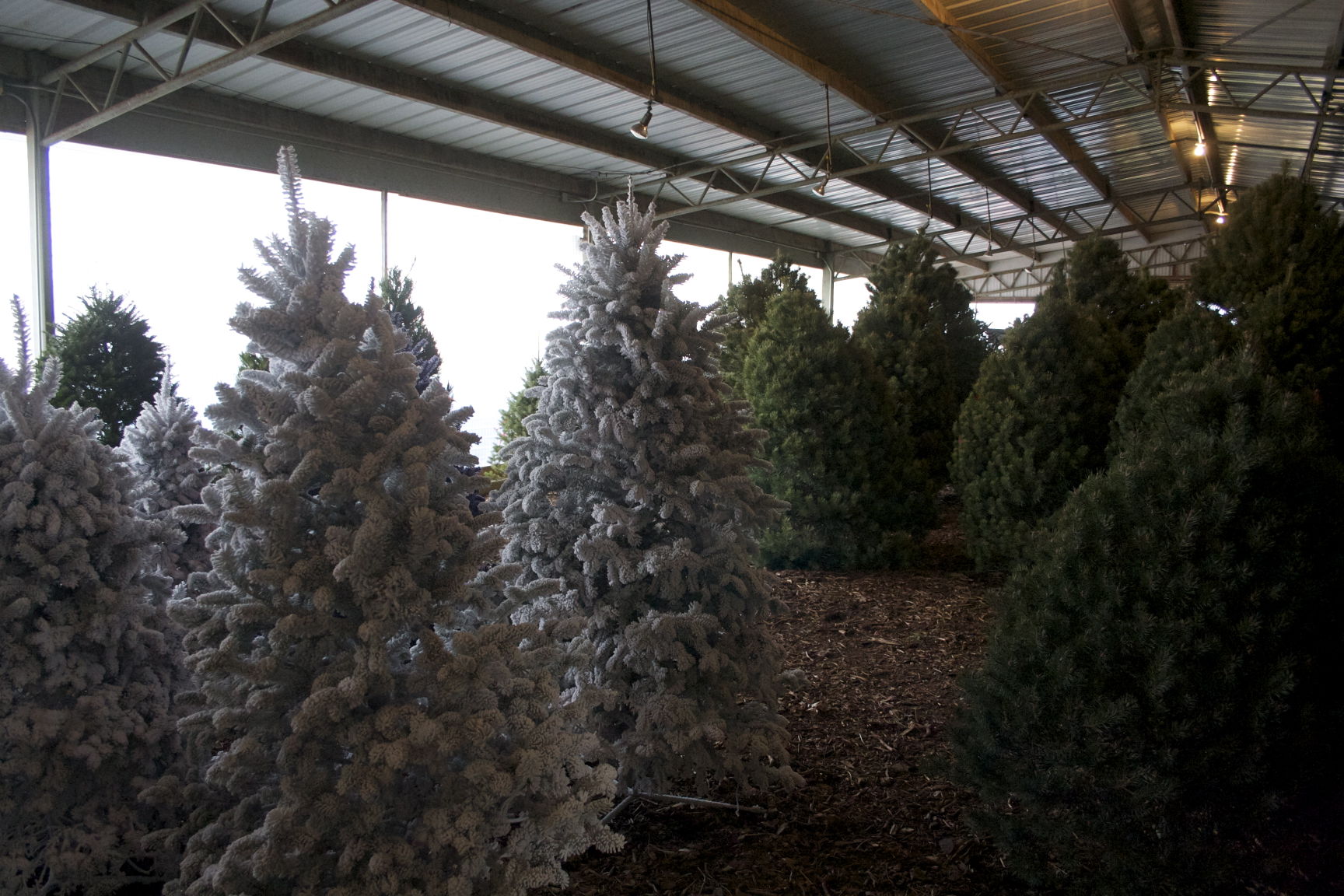
PHOTO: Christmas trees (Journal stock photo by Lacey Newlin)