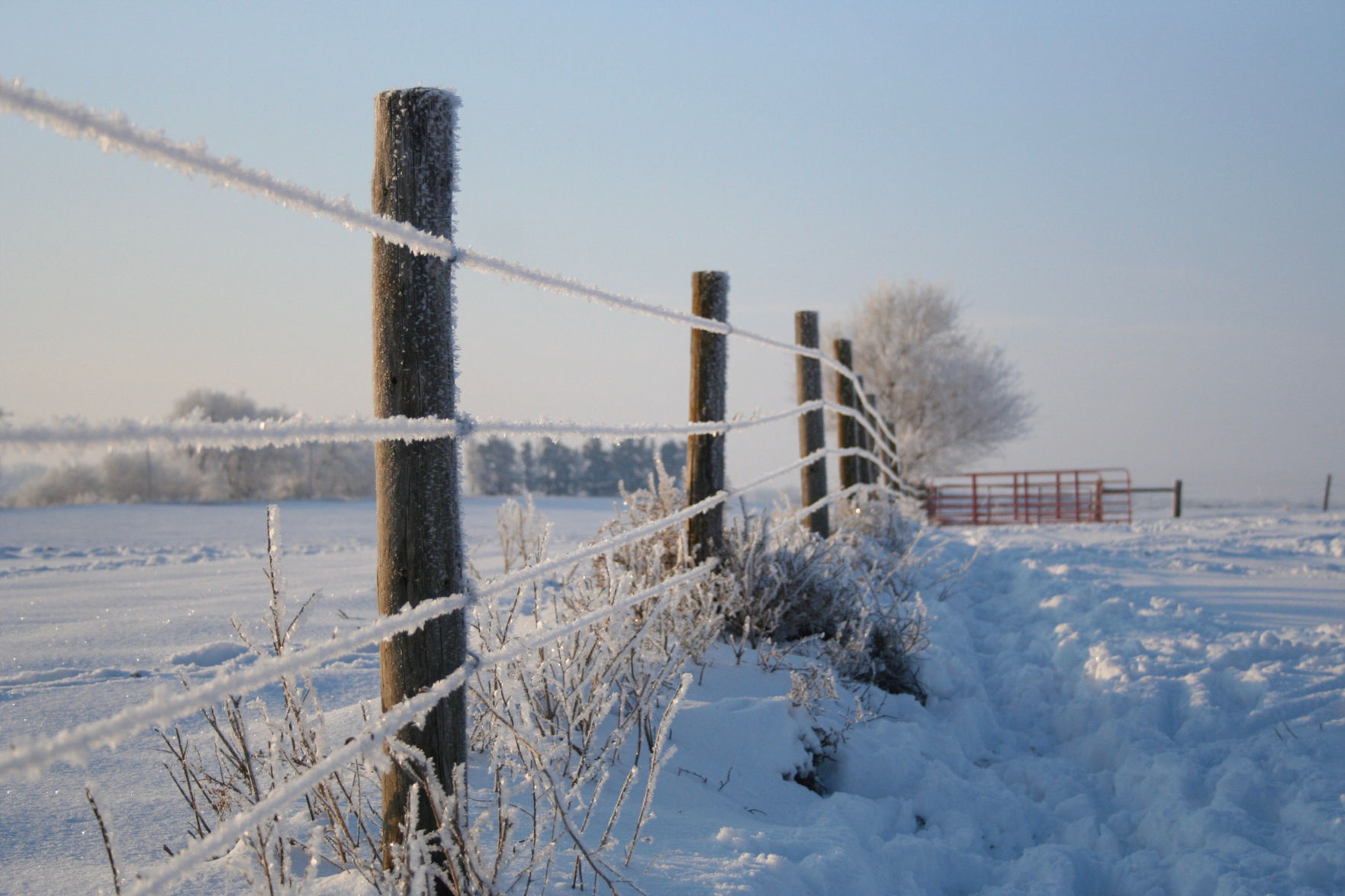
This year started with a mixture of some seasonably mild air but also record cold too.
A strong system spread widespread mixed precipitation in the southern to central Plains in the later part of the month. The timing of snow was beneficial for winter wheat in Kansas and points south to protect it from bitter cold air that surged in as well. Unfortunately, that wasn’t the case in Nebraska where some of the crop was exposed to sub-zero temperatures several days in a row.
With the winter storm, hefty snowfall totals were noted in parts of Kansas and Oklahoma including 8.5 inches in the span of three days in Oklahoma City, Oklahoma.
Looking closer at the cold that enveloped the Plains, Chadron, Nebraska, had two days in a row of new record lows on Jan. 23 and 24 with minus 16 degrees Fahrenheit and minus 21 degrees, respectively. Alliance, Nebraska’s temperature dipped even colder on Jan. 24 with a record low of minus 26 degrees. That same day, Delhart, Texas, set a new record low of minus 1 degree.
The cold stuck around for several more days after that resulting in more broken records. In Kansas, record lows were set in Salina, Jan. 25 and 26, with lows of minus 14 degrees and -minus 16 degrees. Russell also set a new record low on Jan. 25 as the temperature dipped to minus 16 degrees. More record lows on Jan. 25 were set in Lawton, Oklahoma, minus 2 degrees, and Lubbock, Texas, at 2 degrees. The next day Lubbock had another record low when the temperature bottomed out at minus 2 degrees with new record lows also set in Harlingen, 26 degrees, McAllen, 30 degrees, and Brownsville, 30 degrees, that day.
Looking farther into 2026, February looks to bring above-average temperatures from Texas to western Oklahoma into southwest Kansas. Meanwhile, northeast Kansas and eastern Nebraska are favored to see below-average temperatures.
Through April, temperatures are forecast above average for Texas into southern Oklahoma and the Oklahoma panhandle.
For precipitation, above normal precipitation is expected in February for south central to southwest Texas with below normal precipitation for northern Texas, Oklahoma, Kansas, and southern to western Nebraska.
That trend will continue through April for Texas, western Oklahoma and western Kansas.
I’m always keeping an eye to the sky (and the weather patterns), so watch for March’s update.
Editor’s note: Regina Bird grew up on a farm near Belleville, Kansas. The views from the farm helped spur her interest in weather. Following high school, she went on to get a bachelor’s degree in meteorology from the University of Kansas. She worked as a television meteorologist for nine years in Nebraska. Follow her on Twitter: @ReginaBirdWX.