Arkansas cattle industry suffers more than $24 million loss from winter storm damage
The heavy winter storm that brought snow, sleet and sub-freezing temperatures to Arkansas and surrounding states resulted in tens of millions of dollars in losses to farmers across the state, according to a new report from the University of Arkansas System Division of Agriculture.
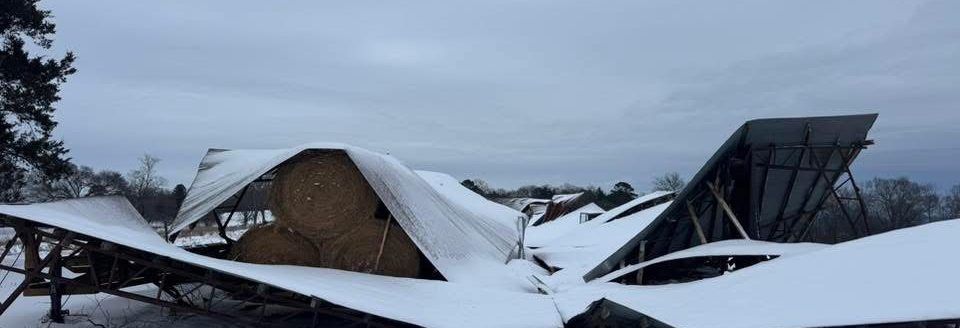
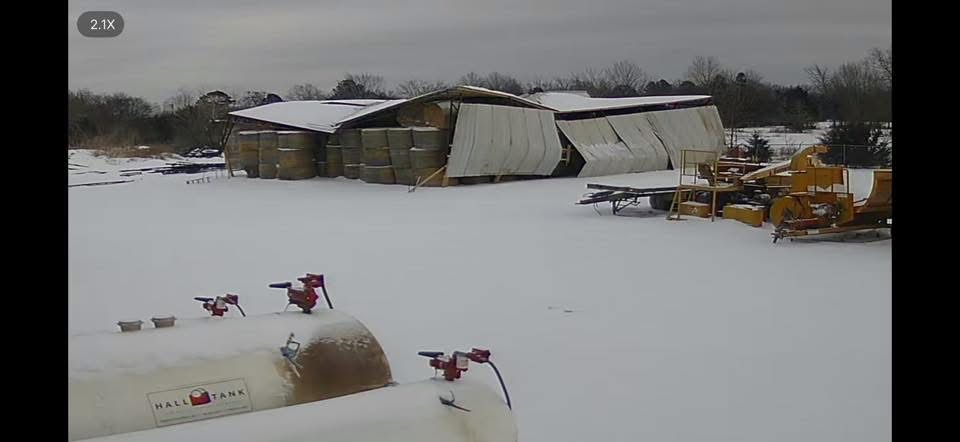
The Jan. 23-27 storm brought “extreme cold, ice, and snowfall that disrupted livestock operations, crop production, and agricultural infrastructure across the state,” according to the report. As much as 12 inches of snow and 2 inches of sleet fell on much of Arkansas, collapsing structures — especially poultry houses — throughout the region.
Cattle
In the wake of the storm, Cooperative Extension Agents surveyed their constituents about damage and losses to their operations. The data gleaned from the responses indicate that Arkansas cattle producers suffered $24.8 million in cow and calf mortality alone, based on an average calf mortality rate of 2.74 percent and a cow mortality rate of 1.65 percent. Producers also spent an additional $7.52 million on supplemental hay and feed above what they typically spend in January.
James Mitchell, extension economist for the Division of Agriculture and one of the report’s authors, said the current state of beef markets affected the underlying formulation for projecting economic losses.
“Cattle prices are historically high, so losses reflect higher values,” Mitchell said, noting that these numbers do not reflect “unusually large numbers of cow and calf mortalities.”
“Producers are encouraged to contact their Farm Service Agency office about the Livestock Indemnity Program,” he said.
Sheep and goats
Arkansas’ ruminant population includes an estimated 34,100 goats and kids and approximately 32,485 sheep and lambs. Respondents to the survey indicated a 2 percent mortality rate for lambs and kids born during the storm and a 1.3 percent mortality rate for sheep and goats during the week of the storm.
Most goats raised commercially in Arkansas are meat goats and most commercial sheep are raised for their wool. The estimated market value of the sheep and goats that died in the storm is between $151,200 and $170,100, according to the report. Producers also reported feeding about twice as much hay during the storm as they would in a typical week.
These estimates are less precise than the cattle numbers because “small ruminant inventory reporting is not sufficiently disaggregated to produce precise estimates,” Mitchell said.
Specialty crops
The report calculated losses for five major Arkansas specialty crops: Blueberries, blackberries, peaches, strawberries and grapes, including muscadines. Producers for each of the five crops estimated yield losses between 4 and 8 percent. This data was combined with baseline values for each respective crop in order to estimate a loss of $1,169,540 across all five crops.
Aquaculture
The report estimates that the Arkansas catfish industry suffered a 1.17 percent loss of inventory, which is estimated to result in approximately $270,300 in sales.
The Arkansas baitfish industry was estimated to have suffered less than 1 percent of inventory loss, resulting in an estimated economic loss of approximately $219,000.
Poultry
Although estimated poultry losses are not yet available, the industry “experienced the greatest losses in Arkansas among all livestock and crop sectors,” the report stated, citing both structural damage and flock mortality.
“A key challenge in quantifying these losses is the high degree of variability across operations, including differences in poultry house age, whether a house contained a flock at the time of the storm or had been repurposed, lost value of production and grower income, whether damaged houses can be repaired or must be fully replaced, and disruptions to the delivery of birds, feed, and propane,” reads the report.
Other Damages
Mitchell said that other losses include farm equipment and vehicles, farm buildings, greenhouses, timber stands and forages.
“The cost of these damages is farm-specific, so dollar estimates were not offered in the report,” Mitchell said.
The winter storm damage report was produced by the department of agricultural economics and agribusiness and the Fryar Price Risk Management Center of Excellence. A separate forthcoming report will examine the losses to the Arkansas poultry industry in detail.
To learn about extension programs in Arkansas, contact your local Cooperative Extension Service agent or visit uaex.uada.edu. Follow us on Facebook and Instagram. To learn more about the Division of Agriculture, visit uada.edu. To learn more about ag and food research in Arkansas, visit the Arkansas Agricultural Experiment Station at aaes.uada.edu.
PHOTO: Storm damage in Yell County after significant snowfall, Jan. 24-25, 2026. Image courtesy Bobby Powell.