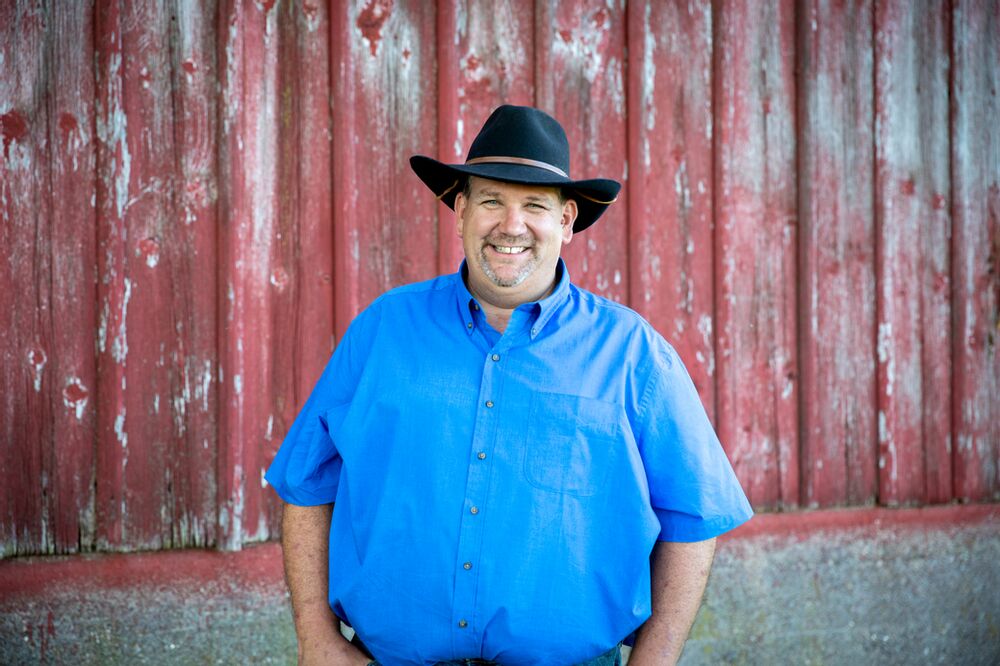
Monte Bottens believes that a regenerative soil health system that includes an integrated livestock operation improves his farm plus it offers consumers a product they desire.
Bottens, a fifth-generation northwest Illinois farmer, owns and operates Bottens Family Farm, Grateful Graze, is the founder and CEO of Ag Solutions Network Inc., and is host of the AmEmerge podcast.
In the next 20 to 30 years he wants to see regenerative practices become the normal practice. Bottens’ own farm has 2,500 acres with a regenerative soils philosophy that includes cover crops and no-till practices with an integrated livestock operation.
Bottens uses the latest agricultural innovations in precision farming technology and crop management systems while putting into practice advanced regenerative ag principles. Bottens Family Farm produces diverse corps and grass-fed livestock, which are sold direct to consumers under the Grateful Graze label.
Regenerative agriculture means striving for improvement and bringing the quality of the soil back to what it was before tillage practices were used and implementing data and analysis to match production processes to a natural ecosystem, he said.
“If we get too hung up on specifics of definition then we’ve lost the concept,” Bottens said, as it incorporates a different level of thinking. Bottens understands that producers and consumers have both changed.
Producers need to get closer to consumers, as an example he notes that the farmer only receives about 14% of the food dollar while 86% goes to the remainder of the food chain. Understanding what consumers want in their food is something producers need to take attention and evaluate.
“Why as farmers do we think it is OK to do something that’s convenient for us but not what a customer wants?” he said. “We have to get attuned to our customers and we have to grow crops the way they want.”
He believes that instead of over reliance on fungicides, herbicides and insecticides applying crop rotation and cover crops are workable and explainable to consumers.
From a practical standpoint researchers find that weeds and insects are able to develop resistance, he said.
His family’s Grateful Graze is a livestock operation in Illinois and takes a consumer-first approach. Bottens says it is a different mindset for a cattle operation that does require more land and labor. He uses a crop rotation that includes corn, soybeans, wheat and cover crop mixes, according to his website www.gratefulgraze.com.
Consumers like the flavor and health benefits of the cattle his family raises. Like traditional livestock operators he focuses on sustainability and profit but his is a model that reflects a holistic approach. His operation uses technology to help with livestock management because he removed fences and old structures and moves livestock daily, which means his operation has to be portable.
Starting point
No-till is the first step, followed by cover crops and then additional diversification in the farmer’s operation. Once those processes are in place than adding livestock is a logical step.
He understands the pain producers feel with high nitrogen costs, which is why finding a way to minimize application will help their bottom line, too. A system-based approach with no-till and cover crops, for him, makes sense.
“High prices encourage us farmers to be a little more innovative and that innovation is going to better align with minimizing disturbance, soil health principles and be better for the environment in general.”
Information for this story was from the Soil Solutions podcast with Jessica Gnad, the executive director of Great Plains Regeneration and soil health content consultant for High Plains Journal. Visit soilhealthu.net/podcasts to hear the podcasts. Sign up to receive the monthly Soil Health HPJ Direct newsletter and Soil Solutions podcast notifications by visiting hpj.com/signup and checking Soil Health.
Dave Bergmeier can be reached 620-227-1822 or [email protected].