
When farmers can’t afford to financially support cows, people often turn to a breed of 4 legged critters who can drive one straight to the funny farm. Goats do not require the same amount of land that cows need to thrive on, but they still need land rotation to allow the soil and the vegetation to heal. However, they can be a bigger handful.
Goats are among the most versatile livestock animals, valued for their milk, meat, fiber, and even companionship. The intelligence of a goat could equal that of a human toddler. The taste of goat’s meat and milk can change based on the breed. Their care can also change. But even then, each goat will have their own taste buds. Some will eat poison ivy while others will stay far away from the invasive poisonous species. One can not rely on all the information across the internet. Yet, there are those annoying goats who can’t stay out of the garlic and onions when you want them to.
When selecting goat breeds for your farm, it’s essential to understand the unique characteristics and benefits of each option. Milk, meat, companionship are among the top choices for a goat, but there is often a need for a goat just to be a conservation aid to fix the land. Sometimes farmers will breed a mixture for their benefits. There are other farmers who prefer to stick with purebreds. Other farmers prefer the taste of milk and meat from crossed breeds.
If you want a goat known for its rich milk with high butterfat content, the Nubian Goat might have originated from North Africa, but they saw prices between $200 and $500 in 2024. While they excel in dairy competitions, Nubians can be prone to gastrointestinal issues and foot rot, necessitating a balanced diet rich in feed, hay, grains, and pasture access. Another exceptional milk goat, the Saanen Goat, thrives in various climates and was priced between $250 and $700. They may experience metabolic disorders like milk fever, requiring a balanced diet with supplements.
For meat production, the Boer Goat from South Africa is recognized for its rapid growth and priced between $300 and $800, while needing a high-protein diet. Additionally, the Angora Goat from Turkey is valued for its luxurious mohair, priced between $150 and $450, and requires regular grooming. For a versatile option, the Alpine Goat from the French Alps excels in both milk and meat, with a price range of $200 to $500.
The charming Nigerian Dwarf Goat is ideal for small-scale farms, priced between $150 and $400, while the Tibetan Goat, or Cashmere Goat, is known for its high-quality fiber, priced between $300 and $600. Finally, the LaMancha Goat is recognized for its distinctive ear structure and impressive milk production, priced between $250 and $600. Keeping in mind the historical significance of the Bezoar Goat, one of the oldest breeds that laid the foundation for many domestic goats, enhances the understanding of genetic diversity and adaptability in your flock.
The wide world of common bred goats is rich with diversity, reflecting their various purposes, adaptations, and the unique qualities that each breed offers. These animals have evolved over millennia, playing a vital role in agriculture and human societies across continents. From their dietary needs to their quirks and challenges, embracing goat farming can be a rewarding experience for both personal enjoyment and agricultural benefit. Understanding their nuances helps foster better care and a deeper appreciation for these fascinating creatures.
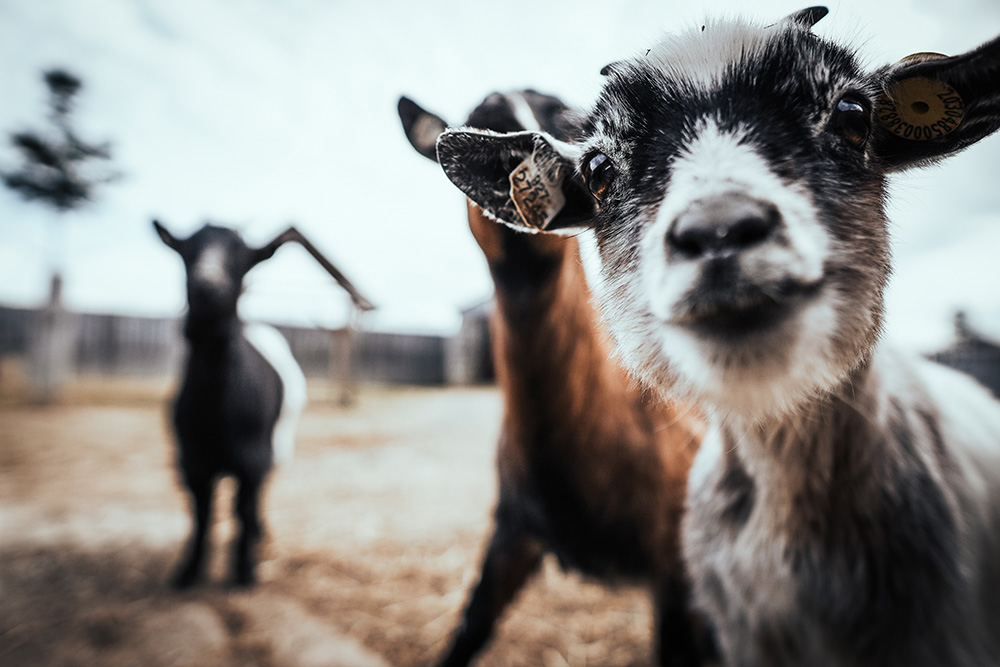
PHOTO: Happy goats look at the camera. (Adobe Stock │ #334175564 – Nataly)

