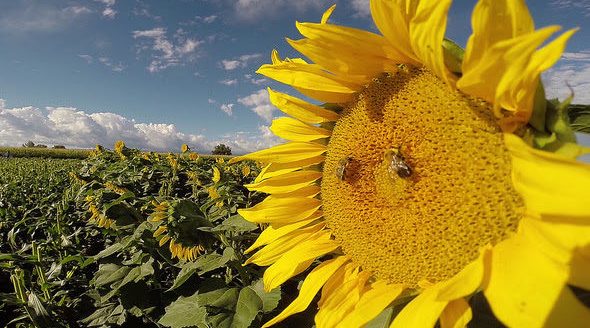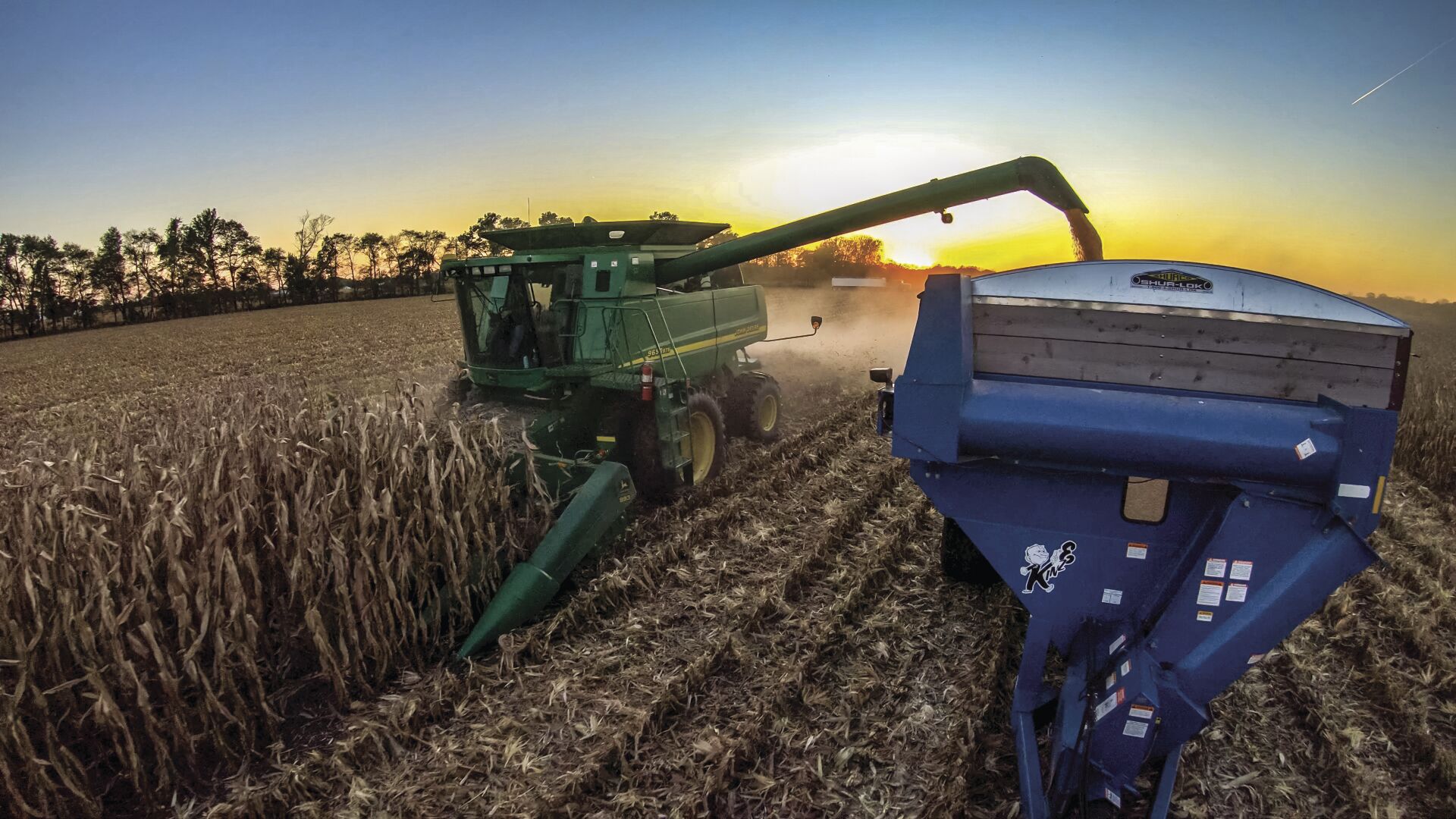
Corn lost ground in Ukraine’s crop mix from 2021 through 2024, while soybean acreage doubled as more market opportunities opened up for Ukrainian farmers. Despite the ravages of war, Ukraine remains the world’s top producer and exporter of sunflower oil.
Antonina Broyaka, Extension assistant professor at Kansas State University, opened her April 16 presentation, sponsored by K-State, on the state of agricultural production in her country by noting that it had been a awhile since her last presentation. Her country has shown great resilience, she said, as it suffered three years of damages and losses from war since Russia invaded its eastern portions.
A recent World Bank report detailed some of those losses, which it estimated at $176.1 billion in total, dated from Feb. 24, 2022, through Dec. 31, 2024. These include $29.5 billion in damage to productive sectors of the economy, including $11.2 billion to the ag sector; $67 billion in damage to infrastructure; and $77.1 billion in damage to “social sectors.” The damage includes stolen goods, lost crops, the forced slaughter of livestock, and destruction of fisheries.

Indirect losses were calculated at $58.8 billion, including $72.7 billion in indirect agricultural losses due to loss of annual farm production, higher input costs and related factors.
The report estimated that the total reconstruction and recovery needs of the Ukrainian economy will total about $523.6 billion over a 10-year period, with agriculture needing about $55.5 billion in investment. Broyaka said the Ukrainian government is committed to “building back better” and making new infrastructure more sustainable and resilient. She said the government also plans to put in place evidence-based ag policies in soil testing, food safety and extension services.
Demining needs
One urgent need is in demining services, especially on the estimated 7.4 million hectares of directly affected agricultural land. Ukraine is the most mined country in the world, Broyaka said. In 2024, about 300,000 hectares of agricultural land was returned to production.
The Ukrainian government has formed a National Mine Action Strategy. There are more than 200 mechanical demining machines operating, both imported and Ukrainian-made, and 5,000 demining specialists at work. The government is committed to providing farmers with 100% compensation for demining costs. Landowners are encouraged to wait for demining professionals, and not to try to remove mines themselves. Mines have killed hundreds of Ukrainian farmers.
Export updates
Ukraine has managed to keep up ag exports, although not at prewar levels. It remains the No. 1 exporter of sunflower oil. In 2024, 57% of its ag exports went to Europe, with Germany, Poland and Spain being important buyers. Exports to Asia have decreased, while Ukraine has regained some share in African and South American markets. Ag exports provide about 60% of government revenue, and supporting the ag sector remains a government priority.
Corn remained Ukraine’s top export ag commodity since the war began, with about 77,032 thousand metric tons exported, vs. 47,670 thousand metric tons for wheat. Sunflower oil was third by volume, with 15,824 thousand metric tons. Oil-cake, soybeans, rapeseed [canola] and barley were also significant export crops. The year 2023 saw unusually favorable weather conditions that led to higher yields for some crops.
Broyaka said rail is playing a more important role in transporting bulk cargoes to market, but this transport is more expensive and complicated than using Black Sea ports.
In 2023, Spain was a top export destination for Ukrainian wheat, followed by Egypt and China. In the 2024-25 export season, Spain remains a top buyer, Turkey has moved into second place, followed by Italy, Egypt and the Netherlands. Algeria has switched from buying Russian to Ukrainian wheat after Russia adopted export quotas.
Turkey is now Ukraine’s main corn buyer and the second-largest importer of bran after China, which it uses for livestock feed.
Ukraine is “way behind” in oilseed markets compared to last year, said Broyaka, with exports down to most buyers. Ukraine sends sunflower oil to 120 countries including the United States. Before the war, China and India were main customers, but now Romania, Turkey and Spain have taken over as top buyers. Turkey buys almost a quarter of Ukrainian soybeans, and Broyaka said many Ukrainian growers are switching from corn to soybeans due to lower input costs, higher losses from corn making it one of the least profitable crops, and more market opportunities for soybeans.
Broyaka said the soybean production area doubled in size from 2021 to 2024, while corn production decreased by 18 million tons in Ukraine. She said soybeans remains the “most dynamic” crop, with 2024 seeing the largest–ever soybean production areas.
“If global demand grows, soybean acres will increase,” she said, especially due to the lower cost of inputs compared to corn.
Broyaka also gave a presentation on the dynamics of grain production in Russia, noting that many of its ag-related exports products like fertilizer do not face sanctions. Russia remains the second-largest exporter of fertilizer to the U.S. after Canada.
After a question-and-answer period, Broyaka ended her presentation on a positive note, saying, “The Ukrainian government will work with any U.S. administration and we still hope to win this war. Ukraine is a favorable country for ag investment, and ag is a major driver of Ukraine’s economy.”
The full presentation, titled “Ukrainian Grain and Oilseed Markets After Three Years of Resistance,” is available at agmanager.info.
David Murray can be reached at [email protected].