
K-State dietitian Tandy Rundus suggests alternate foods for popular recipes
Thinking of a recipe as a road map for making a meal could be a simple way to save money on food costs while testing your creativity, according to a registered dietitian nutritionist at Kansas State University.
Tandy Rundus, the northeast region specialist for the Kansas Supplemental Nutrition Assistance Program Education (SNAP-Ed), said consumers can reduce food waste by using more of the food that they have on-hand before making new purchases.
“Reducing food waste saves you money,” said Rundus, citing a 2019 report from the U.S. Environmental Protection Agency estimating the cost of food waste to every U.S. consumer at $728 per year.
Put another way, a family of four is throwing away nearly $3,000 per year on food that is not consumed.
“And this number would probably be significantly higher if data was available for 2025 food costs,” Rundus said.
Rundus authored the publication, Cooking Basics: Making a Meal from What’s on Hand, which is available online for free from the K-State Research and Extension bookstore.
“We teach this idea of making a meal from what’s already in your kitchen in our Kansas SNAP-Ed cooking classes for audiences who currently use SNAP food assistance benefits, or are SNAP eligible,” Rundus said.
She likens a recipe to a road map in which there are alternate roads to arrive at a specific destination.
Similarly, “when you don’t have the exact ingredients listed in a specific recipe, there are alternate options to complete that recipe.”
“Think of your ingredients in categories or groups, such as proteins, vegetables, starches, liquids and sauces. Then, combining them to create a variety of dishes is the basis for the publication.”
Rundus initially wrote the publication during the COVID pandemic when the availability of certain foods or ingredients was a concern for consumers.
She said stir fry, skillet meals, casseroles, soups and salads are ideal meals that lend themselves well to a “component style of cooking.”
“Let’s use the skillet meal concept as an example,” she said. “If a recipe calls for hamburger, but hamburger is now $5 to $7 per pound and not in your budget for this week, you might feel like you can’t provide a healthy meal for your family.”
“But,” she adds, “hamburger is a protein food, and you know you have canned chicken in your pantry. Or maybe you have kidney beans or leftover cooked pork to cut up from a previous meal. Whatever protein I have on hand is what I use.”
Rundus said using basic components for main dish meals “not only saves money, but also means that the creative possibilities are endless and success is certain.”
Information about the next series of on-line classes offered by the Kansas SNAP-Ed program is available online.
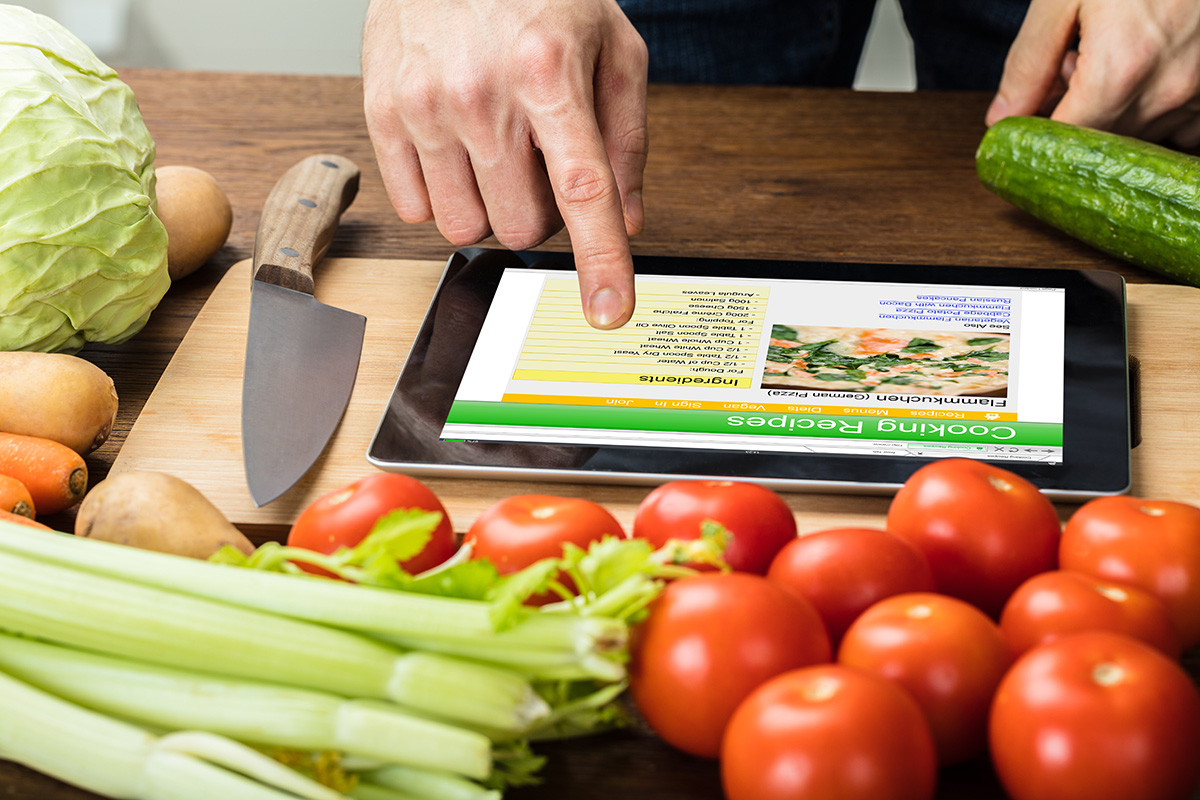
PHOTO: Person is preparing recipe using digital tablet. (Adobe Stock │ #144429721 – Andrey Popov)



