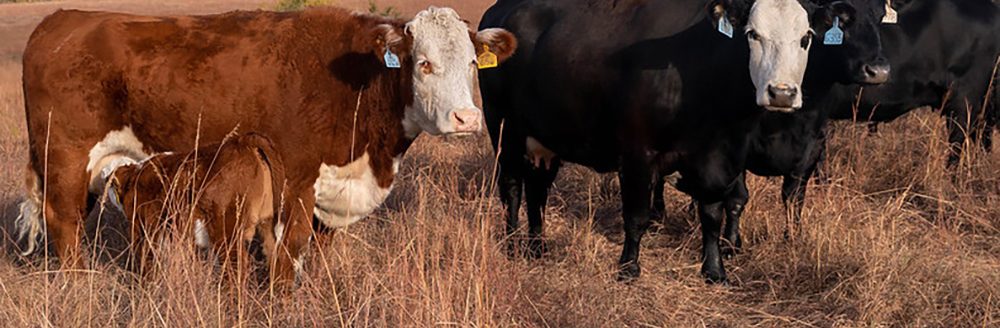
K-State beef cattle experts explain several ways to manage cattle on grazing pastures in the summer
Most people would agree there is nothing better than eating produce picked fresh from the garden. Similarly, cattle opt to graze the newest grass in a pasture because it is the most appealing, Kansas State University beef cattle nutritionist Phillip Lancaster said.
Lancaster led the discussion on a recent Beef Cattle Institute Cattle Chat podcast about ways that cattle producers can optimize grazing pastures. He and the other experts offered thoughts on rotational grazing versus continuous grazing and variations of each of those systems.
“In a rotational grazing system, the cattle are moved frequently and may come back to that same grazing tract later in the season, while with continuous grazing the cattle are turned out into a large pasture and remain there for many days and once they leave they don’t return to that pasture until the next grazing season,” K-State veterinarian Brad White said.
For Lancaster, the advantage of a rotational grazing system is that plants are allowed to rest and recover when the cattle are moved to another tract.
“By allowing the plant to recover, it keeps it from getting stressed by continuous grazing and allows it to be more productive over the growing season,” Lancaster said. “In a continuous grazing system, the cattle will often re-graze the plant over and over again in a short amount of time because that new growth is the most palatable, and that stresses the plants.”
Producers who follow a rotational grazing system will move cattle frequently, which brings on added labor challenges, K-State veterinarian Bob Larson said.
“With a rotational system, there is more fencing and water resources needed and then you need people to move the cattle between the pastures frequently,” Larson said.
K-State agricultural economist Dustin Pendell agreed and added: “Producers considering a rotational grazing system need to factor in the infrastructure and labor costs, and weigh that up against the benefits of using this system.”
With the additional fencing, White added that the labor to check the fences also increases as not only cattle but other wildlife — such as deer — can easily break the electric wire strands.
Larson said that some producers can follow a variation of these two strategies.
“Some producers will put a higher than normal load of cattle on a pasture and then mid-summer move them to another pasture, and then later in the season they move them to a third pasture. The following year they move the cattle through the pastures in a different order to allow the grasses to rest and experience grazing pressure at different times in the season,” Larson said.
Lancaster offered another way to adjust the grazing distribution in a large, continuous grazing pasture.
“By moving water and mineral feeders to different locations in the pasture, cattle will naturally go to those places,” Lancaster said. “Some producers do patch burning in the pastures at different places from year to year to encourage the cattle to graze the areas of new growth.”
To hear the full discussion, listen to Cattle Chat on your preferred streaming platform.