By any name, burrowing mammal causes damage to gardens and crop fields
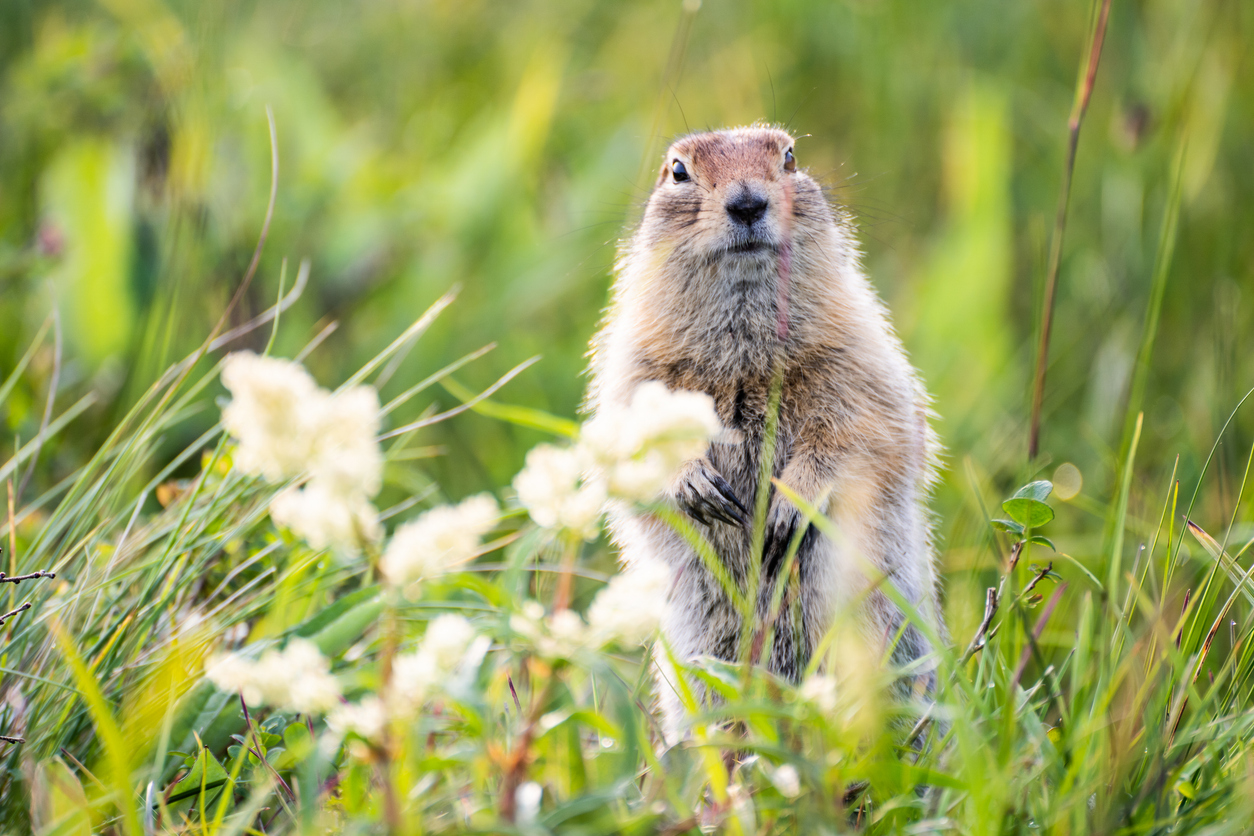
No matter the name – and it goes by many – the groundhog can be a real nuisance for farmers and home gardeners.
“The main conflict that people have with groundhogs eating things tends to be in vegetable gardens, because they like to eat many plants that humans plant and consume,” said Drew Ricketts, a wildlife specialist at Kansas State University.
Ricketts notes that groundhogs are herbivores, meaning their diet consists of mainly plant material that can be digested easily. Their preferred fare are broadleaf plants, especially leafy greens, but will also eat root vegetables, such as carrots.
“They do get into agricultural fields and can do a lot of damage,” Ricketts said. “They tend to do the most damage in hay meadows. In town, they may dig up homeowner’s gardens, or under sheds, sidewalks, or foundations.”
Groundhogs – which have also been called a ground pig, whistle pig, thickwood badger, marmot, monax, moonack, red monk, land beaver and…yes…even a woodchuck – also will dig burrows underneath wood and rock piles, fences and sheds.
“They’re also really good at climbing,” Ricketts said.
Cage traps work well for capturing groundhogs. Ricketts suggests “a raccoon-size cage trap” with a 10 X 10 inch door opening, and at least 24 inches long.
“Place the cage trap fairly close to the burrow entrance, and work the trap back and forth on the surface of the soil so that it is stable, with no gaps underneath the trap,” Ricketts said. “If the trap wobbles when they start to go in, they’re probably going to back out.”
Covering the trap with a tarp improves trapping effectiveness, and overripe fruit, especially bananas, works well as bait.
If building a fence to keep groundhogs out of an area, Ricketts suggests one with 2 X 4 inch or smaller rectangles in a woven or welded wire material.
“You need to bury about a foot of fence, then add a one foot apron making an ‘L’ that is buried in the soil,” Ricketts said. “The fence should sit two to four feet above the ground, with a hot wire on top to prevent the groundhog from climbing over the top.”
Ricketts said groundhogs are considered ‘huntable non-game’ in Kansas, so a hunting license is required to hunt or trap them. Landowners should always check local laws and regulations before shooting or trapping groundhogs and other wildlife.
Groundhogs, though, aren’t all bad, Ricketts said.
“They’re a native herbivore that’s supposed to be out there eating vegetation, and naturally disturbing the soil,” he said. “The digging activity they do is actually good for soil health. It’s not necessarily good for a farmer who might drop a wheel into their hole, but it is something that is a natural process that is good.”
Groundhogs, Ricketts added, also have liver function and chemistry that is the most similar to that in humans among mammals used for research.
“They’re actually the main model for research on how to treat people for liver cancer, hepatitis and other diseases,” he said.
More information on managing wildlife in Kansas is available online from K-State Research and Extension.