BASF rep: Multiple modes best way to combat difficult weeds
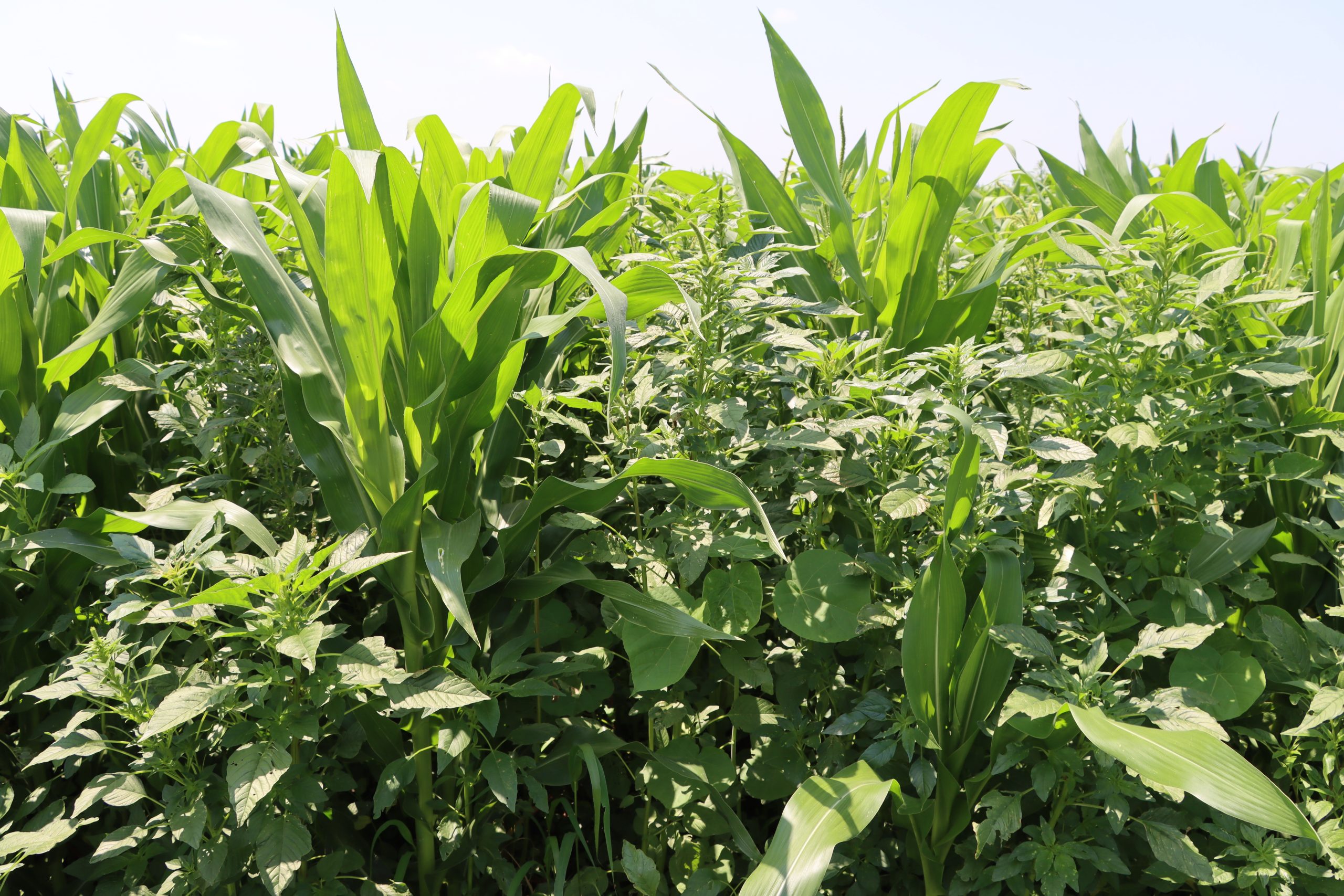
Welcome moisture around many parts of the High Plains have raised expectations for spring-planted crops.
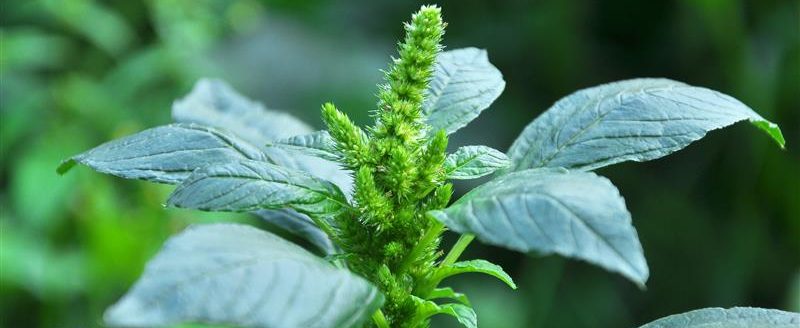
One nemesis—weeds—are also going to take advantage of the moisture and sun, BASF technical service representative Brady Kappler said. Herbicide-resistant weeds like Palmer amaranth (pictured in the top photo courtesy of BASF) and waterhemp continue to be yield robbers, and one herbicide is unlikely to stop them in the tracks.
BASF has noted that growers need to combine multiple modes of action, overlapping residuals and timely postemergence applications to stay ahead of weeds.
Kappler, who is based in Hastings, Nebraska, and whose territory includes Lincoln to Ogallala, has nearly 20 years of experience, said the crops and weeds are competing for resources.
“Corn and beans in our geography are off and running,” he said, adding the warmer weather that had followed some timely rains and now “the corn is starting to stretch its legs.”
As a result, for corn the window is getting smaller for applying some post-planting herbicides, Kappler said. Hopefully growers have their herbicide plan in place that includes a good layered residual program to combat weed pressure.
Residuals are also important in the post-application process, he said.
Familiar applications of products like Outlook herbicide, Liberty ULTRA herbicide and Status herbicide have been effective BASF products. Outlook herbicide is used as pre-emergent herbicide that is used before weed seedlings emerge. Liberty ULTRA herbicide can be applied to actively growing weeds ideally that are less than 3 inches tall and should only be used on crops with the glufosinate-tolerant trait.
Status herbicide is used as a post-emergent herbicide that can be applied when corn is 4 to 36 inches tall.
Kappler said weeds grow fast. With Palmer amaranth a 4-inch weed plant can grow to 12 inches in less than a week.
“It’s one of those things that you’ve got to be really focused on and aggressive with your weed control,” he said. “I know there is a temptation when we’re looking at ways where we can save money and maybe a grower might say I don’t need as much herbicide, but boy if he gets behind on this one, it come back and bite you in the rear end, too.”
Soybeans
Soybeans tend to grow a bit slower than corn early in the season, which can affect how growers manage them.
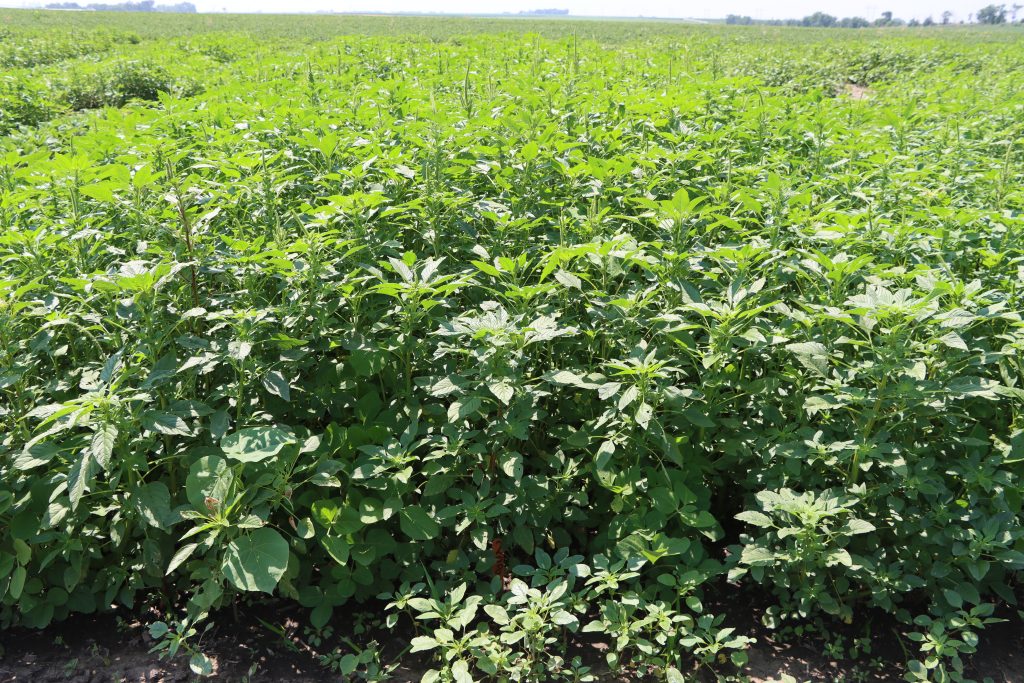
“Beans are beans and they’re always a little bit adolescent this time of year. They’re trying to figure out what they are and how they are going to grow,” Kappler quipped. “They kind of sit there and look out and then all of a sudden they start taking off. I think the warmer weather is going to push them along, too. The old saying of beans are made in August still holds true year in and year out. So, what we have for moisture availability in August will mean a lot for what they’re going to end up doing.”
Since soybeans are slower growing than corn, it means to counteract weeds by applying a residual because the plant’s canopy will take longer to develop than corn. A healthy leaf canopy for corn and soybeans plants puts shade on the ground and that retards weed growth, he said.
Commitment
Kappler said over the years he notes that successful growers think long term.
“The guys who actually stay with their programs and don’t tweak it a lot of times tend to have the best return on investment because what they’re doing is keeping the weed competition out early in the season,” he said. “If you can do that then you that helps preserve your yield.”
The reason a full-season plan is effective is that growers trying to save on input costs may look to only focus on a post-application process, but Palmer amaranth and pigweed are difficult to control without a good residual program.
“The guys who stick to their programs are going to be the ones who see the benefits and maybe even have the most savings when it comes down to it because they had a plan,” he said.
Growers also have to contend with kochia pressure, which can vary from year to year, and the key is to get treatments on earlier in the season, he said.
In the end, he follows the advice mentors provided him about 30 years ago, which was
“weeds are best controlled when they’re small and actively growing,” Kappler said. “That’s still holds true all this time later.”
Dave Bergmeier can be reached at 620-227-1822 or [email protected].