Wheat harvest goes much quicker than it once did, but I was blessed to see the early years in our family.
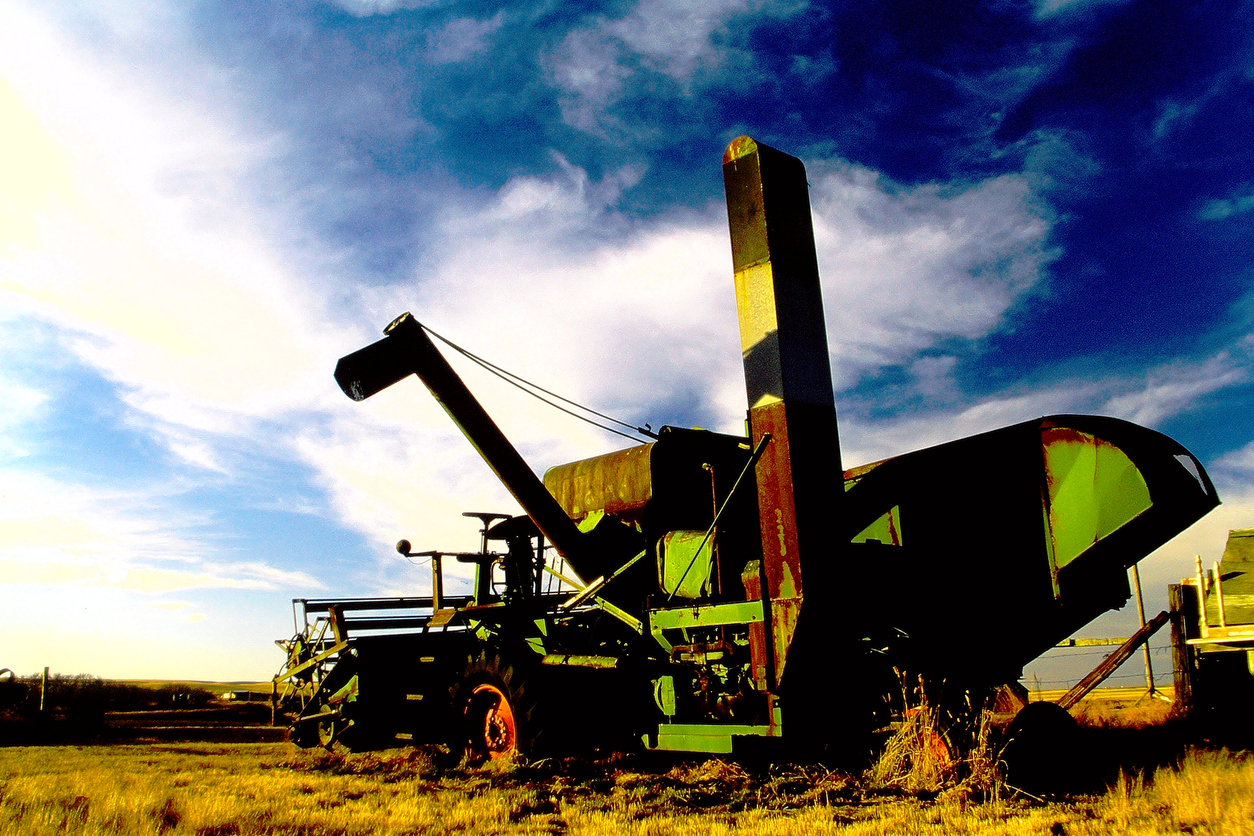
As a child I can remember going to my grandparents’ farm in Clay County, Kansas, and watching the family pull together and cut wheat with a John Deere 45 combine and gathered about 20 acres a day.
Dad would take a week off from his job, at the time he was working with John Deere Company, and that meant our family traveling from Colby to rural Wakefield. Mom got us organized and we headed out. Dad and my uncle would both take turns on the combine, which had a canopy, and help their father tend to livestock.
Grandma took turns pulling a small wagon that took grain to a bin on the farm.
The grandparents also took to the Wakefield Co-op and sold the wheat and used the proceeds to pay bills. With an old Ford truck, which doubled as a cattle hauler, sometimes Dad or my uncle would let us youngsters ride with them. The elevator looked large as a child, and we’d wait in line for tickets after the truck was weighed. It seemed like an anxious and stressful time, because it was.
One memory that sticks out was when Dad let myself and my two older brothers—one at a time—ride with him on the combine.
We felt like we were farmers too, watching that approximately 10- to 12-foot header gather wheat in.
I can remember Dad, as a John Deere territory manager, go to dealerships and talk to farmers about the 3300, 4400, 6600 and 7700 combine series, a major change from the 45, 55, 95 and 105 series. Farmers could take in much more wheat in a day’s time with the machines and I remembered Dad years later talking about them as versatile machines that could efficiently harvest corn, soybean and sorghum crops.
Other combine manufacturers were also important to that revolution, Dad said.
Today a machine can cut up to 150 to 200 acres a day. Marvels of modern technology with a cab that is like an office and a farmer can take on many tasks at his fingertips. That was a far cry from grandpa’s 45 with its only feature a pretty stiff yellow seat with an all-important carry-on water jug.
As a college student I worked in Dad’s dealership in Phillipsburg, Kansas, and could recall harvest as a two-week commitment of an all-hands on deck approach to make sure farmers got their parts to keep those combines rolling. A few hot and windy days in northwest Kansas could quickly finish the ripening process.
Today’s harvest goes much faster as growers have shifted more acres into spring crops combined with modern machinery that can knock down 1,000 acres in less than a week, weather-permitting.
Memories of past harvests that date back more than five decades serves as my foundation and I was always hopeful as many youths could experience what I did. I was a fortunate son.
Dave Bergmeier can be reached at 620-227-1822 or [email protected].