Uncharacteristically wet weather this year has left many producers across the state with a growing weed problem, according to a Texas A&M AgriLife Extension Service expert.
Scott Nolte, Ph.D., AgriLife Extension state weed specialist and associate professor in the Texas A&M Department of Soil and Crop Sciences, Bryan-College Station, said widespread drought during previous seasons allowed producers to keep weed growth in check. However, moisture is becoming a challenge this year due to weed growth and producers’ inability to control it.
“Some areas, like the South Plains, have had good moisture, but it has kept them out of their fields,” Nolte said. “They don’t typically have that this time of year, so they have been delayed probably a month getting cotton planted.”
Another problem, he said, is some production areas were dry early, and preemergence herbicide applications did not get good activation. Now, producers are relying on postemergence treatment, but it has been difficult to access fields between rains to spray or cultivate.
Delayed canopy production allows weed growth
Good growing conditions in the Coastal Bend helped crops to reach canopy faster than usual, which prevented many weeds from establishing themselves. But not all areas were able to plant the crops on schedule.
Canopy development typically reduces the amount of sunlight available for weeds to germinate and grow, Nolte said. But repeated rainfall and delays in planting put canopy development behind the rapid growth of weeds in some regions.
Now, producers need to make postemergence herbicide applications to clean up weeds after preemergence herbicide applications were no longer effective and plantings were delayed.
“Typically, we have drier conditions going into July, and it slows weed growth down, giving the canopy time to close up, which takes care of this problem,” he said. “In areas with more rainfall than normal, we’re getting a lot more germination of weeds later in the middle of July.”
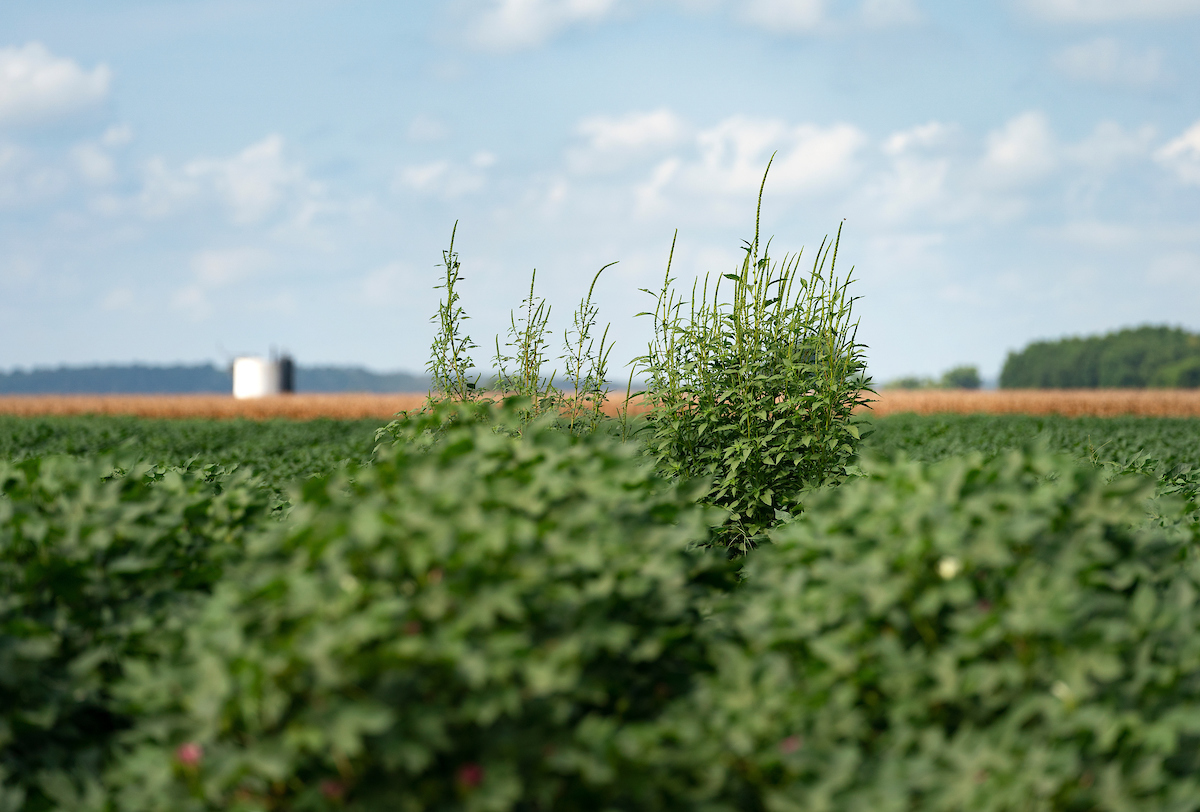
If weeds get above the crop canopy in cotton and sorghum, Nolte said producers will face issues during harvest. Producers also need to control those weeds before they produce seeds that could germinate next season.
Weeds to watch for
Producers in the Coastal Bend and areas around College Station are seeing more sedges this year because the rainfall has been steady and above normal, Nolte said. Sedges thrive in high humidity and moist conditions.
Other weed problems reported are Palmer amaranth, some jungle rice and glyphosate-resistant johnsongrass, he said. Johnsongrass causes more issues in years with abundant moisture.
“Roundup is not going to work if they have the resistant johnsongrass, so they just need to know if that is the problem going into the next season,” Nolte said. “Because if they try and spray glyphosate to control it next year, and it doesn’t work, they’re going to be a couple of weeks behind in control. The weeds will get established and be more difficult to control when they are bigger.”
Also, dicamba is not an option this year, he said. Depending on the crop they planted and what they are allowed, 2,4-D, glyphosate or glufosinate will be the treatment choices. Glufosinate is working better in high humidity and good soil moisture this year, Nolte said, although the weeds need to be smaller for it to be effective.
Pay now or pay later
In cotton, the most critical time to control weeds is in the first three to four weeks, when weed competition will reduce the yield the most, Nolte said. But keeping the crop clean before full canopy is also important.
With lower crop prices and higher costs, budgets are tight, and many producers are trying to control their inputs, he said. They may be tempted to leave late-season weeds because they don’t impact yields that much.
But weeds left unmanaged this year will continue to be a problem next year.
“Any weed left will have the potential to produce seed, and that problem is going to be there next year,” Nolte said. “Then you’re going to have higher weed pressure and have to spend potentially more on weed control.”
PHOTO: An abundance of moisture in some areas has left producers fighting weeds that have outgrown the crop canopy. (Laura McKenzie/Texas A&M AgriLife)