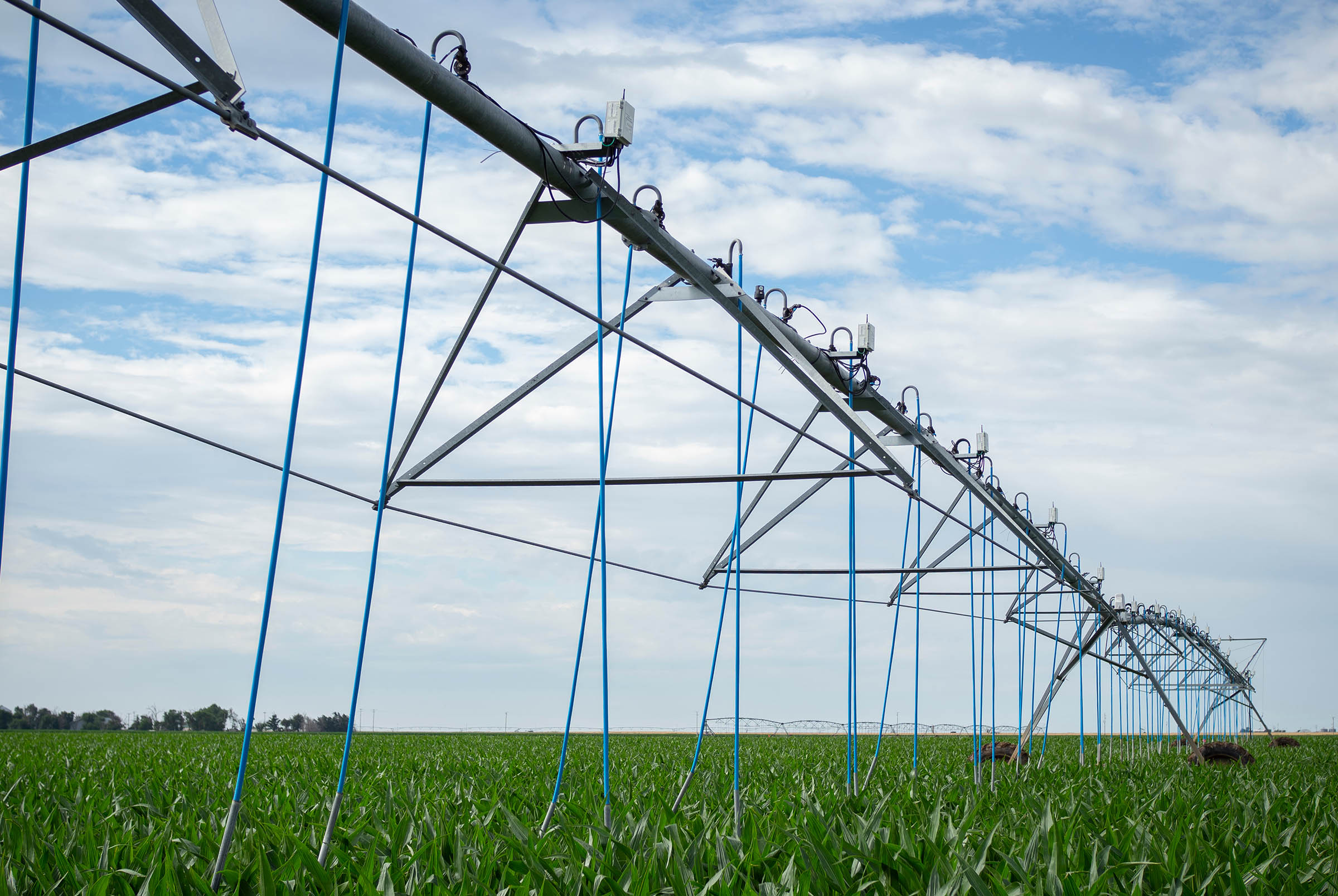
July 29-30 field days highlight irrigation strategies, forage options and tools for farm management under limited water conditions
Water is the lifeblood of western Kansas agriculture, but it is also a finite resource.
As the Ogallala Aquifer declines and rainfall becomes more erratic, farmers across the High Plains are being pushed to rethink how they manage every drop. Groundwater levels in parts of northwest and southwest Kansas have dropped more than 20 feet in the past two decades.
In response, local groundwater management districts have implemented tools like Local Enhanced Management Areas (LEMAs) and water conservation areas (WCAs), which are voluntary and regulatory strategies that aim to preserve the aquifer while supporting farm profitability.
In many LEMA zones, producers now operate on allocations averaging just 10 inches of irrigation water per year, forcing tough decisions about crop selection, input timing and technology adoption.
The Governor’s Water Action Plan, unveiled in 2024, further underscores the urgency of collaborative, local solutions. The plan emphasizes community-led initiatives, technology adoption and flexible, adaptive strategies that account for regional differences in water availability.
That’s where the Testing Ag Performance Solutions program fits in. TAPS is a farmer-driven, research-supported competition that brings together producers, researchers, and industry innovators to explore better ways to manage water, optimize inputs, and sustain the long-term viability of High Plains farms.
Kansas State University will host the 2025 TAPS Technology Field Days July 29 and 31 in Colby and Garden City to provide a front-row seat to that work in action.
Now in its second year in Kansas, the TAPS competition empowers producers to innovate through hands-on decision-making and real-world data. Organizer say the late-July field days offer a chance for farmers, ag professionals and students to learn about the latest technologies, strategies, and cropping systems designed to support long-term farm viability.
Field days will be held at both Kansas TAPS competition locations:
- Tuesday, July 29 at 8 a.m. in Colby (Northwest Research-Extension Center).
- Thursday, July 31 at 8 a.m. in Garden City (Southwest Research-Extension Center).
The events are free and open to the public. RSVPs are encouraged. Field day attendees will get hands-on experience with tools used by TAPS participants, including technologies from Arable, AquaSpy, CropX, GroGuru, Phytech and Sentek.
This year’s event also highlights a new forage competition, introduced to help explore alternative cropping systems under limited water. With Q-stable allocations averaging just 10 inches across much of northwest Kansas, producers are increasingly looking to integrate crops like forage sorghum into their rotations.
Attendees at the Colby event will also hear from representatives from Groundwater Management District No. 4. They will discuss the Irrigation Technology Initiative (ITI), a locally driven program designed to help producers better understand and improve the efficiency of their irrigation systems.
The initiative, supported by the Kansas Department of Agriculture’s Division of Conservation and Kansas Water Office, provides on-farm assessments of wells, pumps, pivots and power supply systems. Participants can receive up to $500 for completing the onboarding process, which includes 10 categories of system information.
Organizers say the TAPS program serves as a living laboratory for real-world decision-making under real constraints. Field days are a chance to explore the technology, talk with participants and researchers, and connect with a growing network of producers committed to sustaining High Plains agriculture.
The events are sponsored by Western Kansas Irrigation and supported by a wide range of collaborators committed to the sustainability and viability of High Plains agriculture.
To RSVP or learn more, visit www.k-state.edu/TAPS or contact Renee Tuttle at 620-805-9045 or [email protected].