Hays-based beef cattle scientist named ‘Legend of Feedlot Nutrition’ posthumously
They may not realize it, but when farmers sort cattle based on carcass potential, use ultrasound to project beef quality, or feed sorghum to finish a pen with less water, they are benefitting from the work of John Brethour.
Brethour, formerly a beef cattle scientist at K-State’s Agricultural Research Center in Hays, is a pioneer of feedlot science whose work continues to shape the industry more than a decade after his passing.
This year, that legacy was honored with his posthumous induction into the Legends of Feedlot Nutrition, a national award recognizing individuals whose contributions to feedlot nutrition and cattle management have stood the test of time.
For those who knew Brethour’s work, the recognition is no surprise.
“We stand on his shoulders,” shared his colleagues in a nomination letter. “Much of what we know about precision feeding, carcass gain, and sustainable cattle management began with Brethour’s work.”
Over a career spanning more than 50 years, Brethour became a national leader in applied cattle research. His body of work includes early research on growth implants, foundational carcass evaluation models, and development of live-animal ultrasound to estimate marbling and fat thickness.
These tools transformed feedlot decisions from guesswork into data-driven strategy — helping producers sort cattle more accurately, avoid overfeeding, and improve beef quality and net returns.
Brethour’s impact was especially important to Kansas. He exemplified the land-grant university mission — to serve the people through research, education and innovation rooted in place. Rather than conducting experiments in distant labs, Brethour worked in the feedyards and fields of western Kansas, side-by-side with producers.
“John didn’t just do science—he lived service. He reinvested awards into research, mentored young scientists, and led locally. His legacy proves world-class ag research can thrive in cattle country, not just university towers,” said Brian Olson, K-State department head of the Western Kansas Research-Extension Centers.
Brethour’s research was not only rigorous; it was local, relevant and deeply responsive to the needs of High Plains agriculture, Olson said.
Early sorghum feeding trials were among his most impactful work, long before sustainability became a buzzword. Brethour demonstrated that sorghum, a drought-tolerant crop with deep roots in Kansas agriculture, could be a viable, efficient feed option for finishing cattle.
That research is more relevant than ever as feedlots and researchers search for ways to maintain productivity while reducing water use in light of the ongoing decline of the Ogallala Aquifer. His early insights continue to guide sorghum-focused feedlot studies taking place at the same Hays research station today.
Equally groundbreaking was Brethour’s role in developing ultrasound technology for evaluating carcass traits in live animals. This innovation enabled feedyards to make informed decisions about sorting and marketing cattle, boosting quality and profitability while minimizing overfeeding.
The software he helped design, in partnership with K-State and industry collaborators, remains in use today and has generated significant returns across the industry.
“He’s now a Legend of Feedlot Nutrition, but his true legacy lives in how often his name still comes up when we talk about cattle feeding, tech adoption, and water-smart practices on the High Plains,” Olson said.
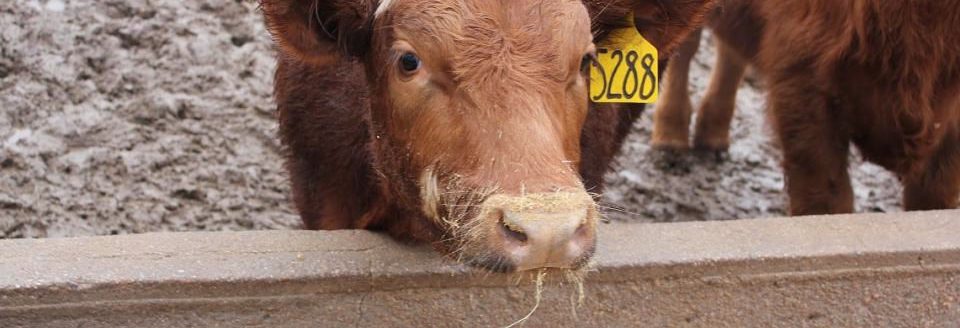
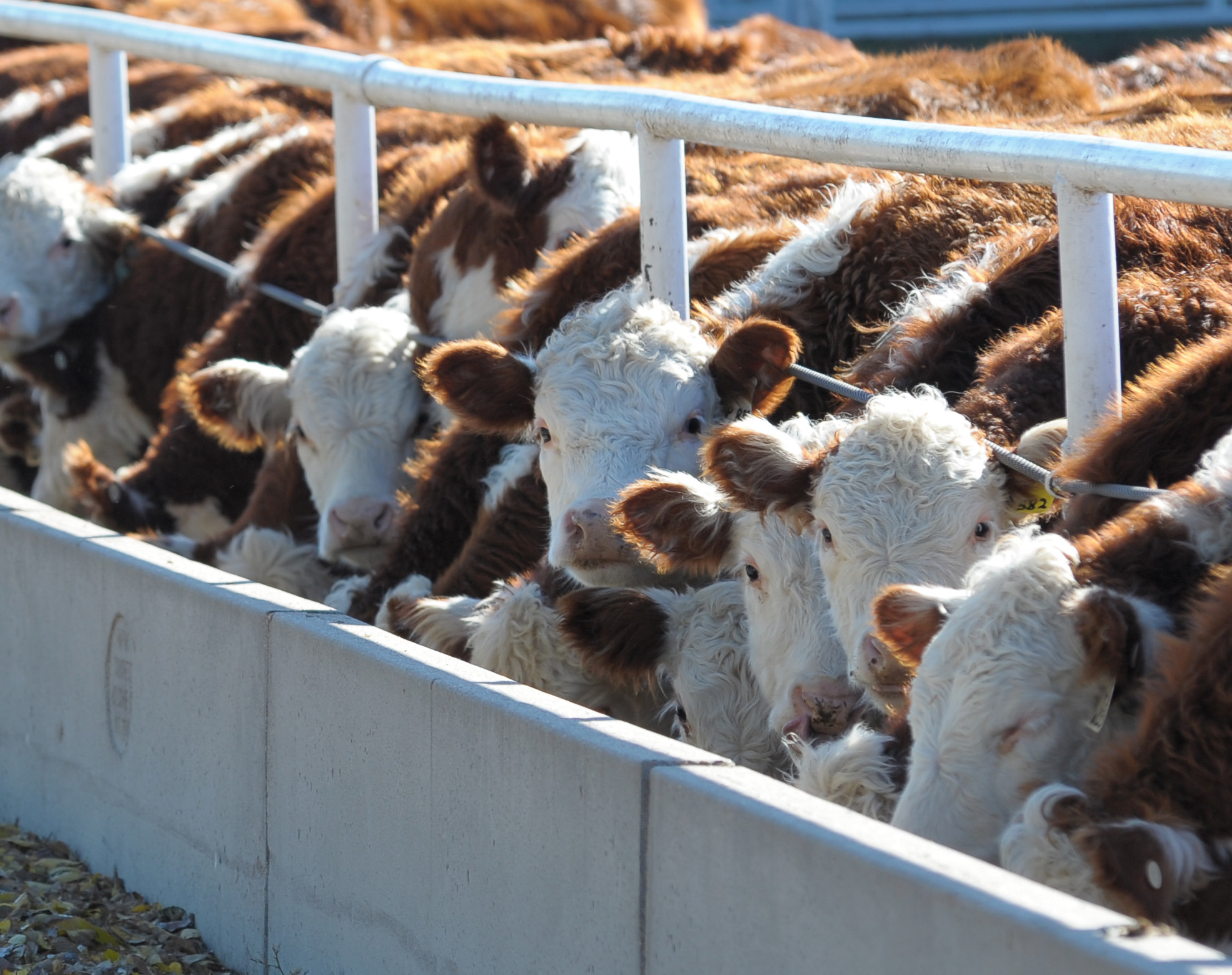
PHOTO: Cattle feedlot (K-State Research and Extension)