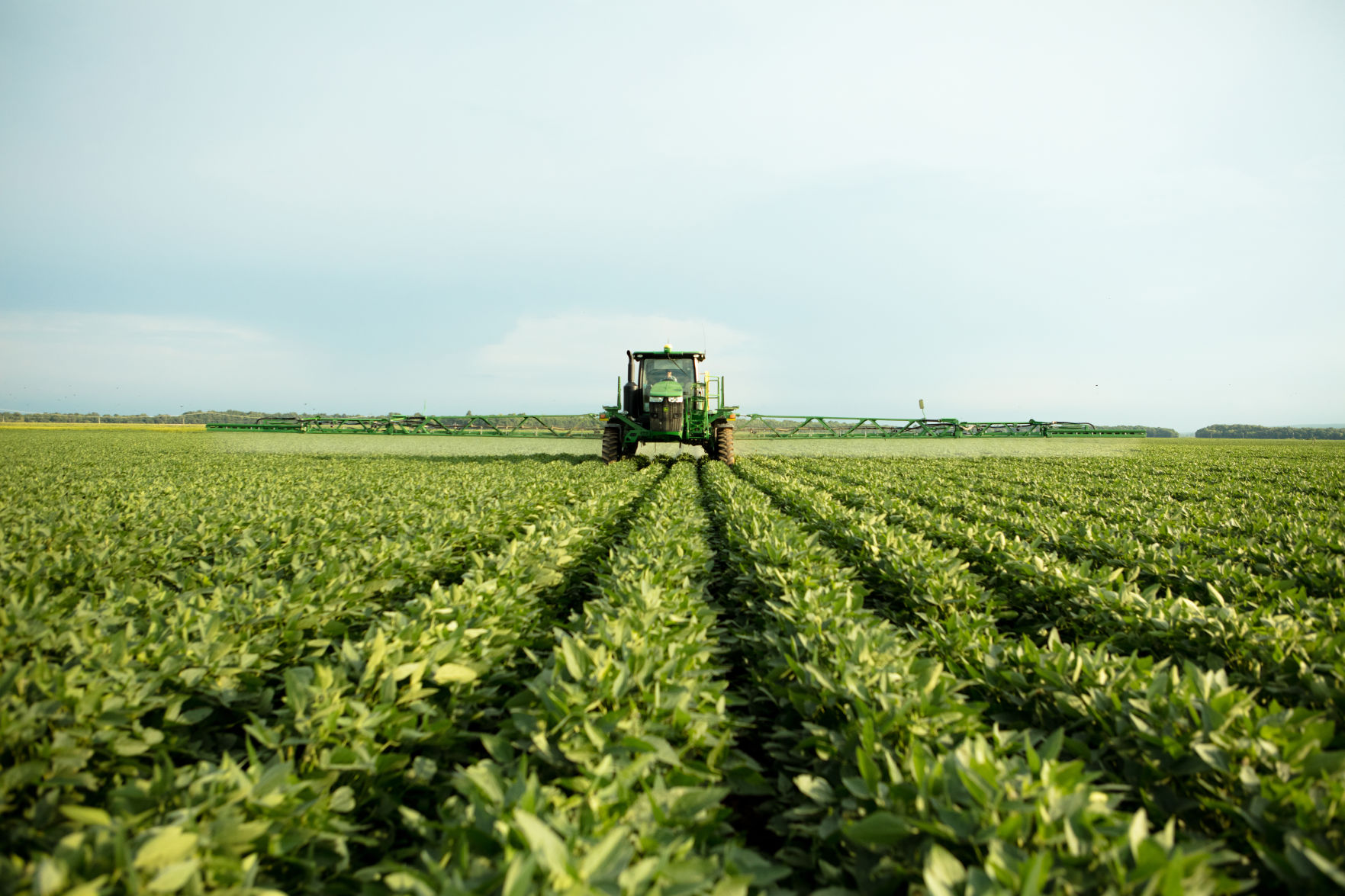
The Environmental Protection Agency announced plans on July 22 to re-approve three formulations of the controversial pesticide dicamba for use on genetically engineered cotton and soybeans.
It opened a 30-day public comment period July 23 for its proposed registration of dicamba in over-the-top applications. The agency received applications from Bayer, BASF and Syngenta, which market dicamba brands XtendiMax, Engenia, and Tavium plus VaporGrip.
The EPA’s proposal would allow year-round application and eliminate the proposed cutoff date of June 12 for dicamba application to soybeans. Time-of-day restrictions on spraying to reduce volatility were also dropped. EPA has instead proposed nine specific use restrictions, including temperature cutoffs that require “volatility reducing agents” on hotter days. Critics say these restrictions have failed in the past to reduce dicamba volatility.
Dicamba has been controversial not only among environmental critics, but also among growers and producers. Market analysts estimate the market for “core dicamba products” at about $600 million, with the broader market for products that contain some dicamba estimated at $1.2 billion. The product was designed to be applied on crops genetically engineered to resist dicamba damage.
But many growers complained about “dicamba drift” to neighboring non-resistant crops. The U.S. Department of Agriculture estimated that up to 15 million acres of soybeans were damaged by dicamba drift in 2018. In June 2020, Bayer agreed to settle multidistrict litigation involving thousands of growers across the United States, offering up to $400 million total, not counting the case of a peach orchard farmer who won a 2020 verdict against Bayer for dicamba drift that was later reduced to $60 million.
As of July 2025, there were 29 pending dicamba cases in multidistrict litigation in U.S. District Court of the Eastern District of Missouri. Beekeepers have complained that by damaging non-resistant flowering plants relied on by bees, dicamba drift has severely affected their businesses.
The EPA’s announcement came after two federal courts vacated the product’s registration as a result of lawsuits filed against EPA by the Center for Food Safety, Center for Biological Diversity, the National Family Farm Coalition, and the Pesticide Action Network—once in 2020 and again in February 2024. The EPA allowed existing stocks to be used in a workaround of that second order.
One of the court decisions came because EPA ignored the public comment process. This time, Bayer officials said, “We’re pleased to see that the EPA has made significant progress and opened a public comment period for low-volatility dicamba herbicides to be used over the top of dicamba-tolerant cotton and soybeans. This technology provides tremendous value to soybean and cotton farmers across the U.S.”
Critics, supporters react
The announcement drew immediate fire from dicamba’s long-time critics.
“EPA has had seven long years of massive drift damage to learn that dicamba cannot be used safely with GE dicamba-resistant crops,” said Bill Freese, science director at Center for Food Safety. “If we allow these proposed decisions to go through, farmers and residents throughout rural America will again see their crops, trees and home gardens decimated by dicamba drift, and natural areas like wildlife refuges will also suffer.
“EPA must reverse course and withdraw its plans to re-approve this hazardous herbicide.”
CFS noted that the decision to seek re-approval came after Kyle Kunkler, a former lobbyist for the American Soybean Association, was installed as the deputy assistant administrator for pesticides in EPA’s Office of Chemical Safety and Pollution Prevention.
“Trump’s EPA is hitting new heights of absurdity by planning to greenlight a pesticide that’s caused the most extensive drift damage in U.S. agricultural history and twice been thrown out by federal courts,” said Nathan Donley, environmental health science director at the Center for Biological Diversity.
The National Cotton Council has made securing a 2025 dicamba label a top priority. Dicamba-tolerant varieties make up about 75% of all planted cotton.
To submit a public comment to the EPA, visit the Regulations.gov website and navigate to the specific docket for dicamba (EPA-HQ-OPP-2016-0223). The EPA also provides guidance on commenting and accessing dockets at its website.
David Murray can be reached at [email protected].