Key to lower your water bill may already be at your door
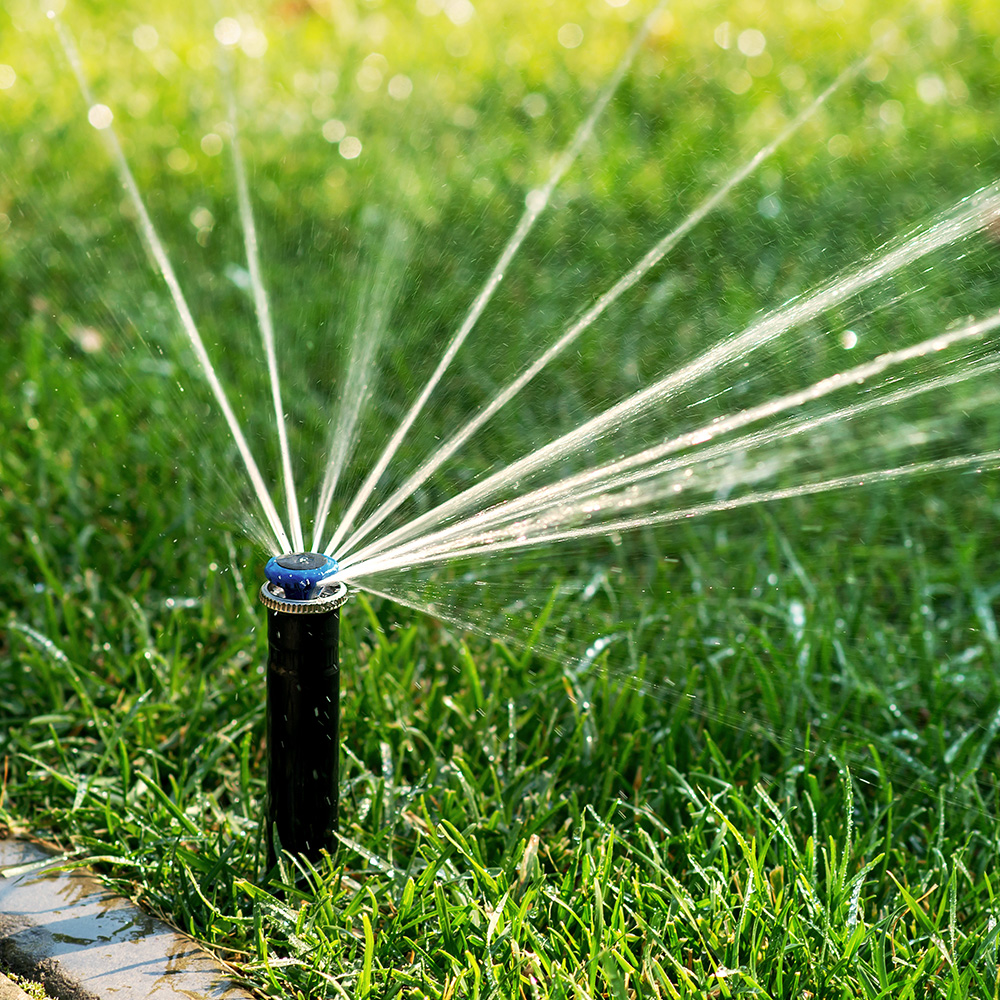
Doorbell cameras can be used to measure rainfall, conserve water, and save money
Doorbell cameras are already used for home security. But what if they could save you money on your water bill?
Researchers in the Texas A&M University College of Engineering and Texas A&M College of Agriculture and Life Sciences have developed an innovative irrigation system that combines doorbell cameras and artificial intelligence, AI, to make lawn irrigation more efficient. Their recently published paper details this “estimating rainfall with camera” irrigation system, dubbed ERIC, by the researchers.
The ERIC system makes home irrigation smarter, leading to increased efficiency and sustainability. The study shows that ERIC can help users save up to $29 per month in utility costs and as much as 9,000 gallons of water per month for a single residential home, demonstrating significant potential for water conservation.
“We built ERIC with two key components, an existing doorbell camera installed at the residential home and a low-cost irrigation smart controller,” said Tian Liu, a doctoral student in the Department of Computer Science and Engineering. “ERIC analyzes the camera footage using machine learning models to determine how much rain has fallen and automatically adjusts irrigation accordingly.”
How ERIC can lower your water bill
The ERIC irrigation system analyzes rainfall estimation and then automatically adjusts the irrigation schedule and duration for a property. This more precise irrigation schedule cuts down on excess water use and costs.
This novel approach addresses a long-standing problem in water conservation: inaccurate rainfall data. Most commercial systems rely on imprecise data from weather stations or simple rain sensors that detect the occurrence of rain but not the amount. By contrast, ERIC delivers hyper-local and accurate rainfall estimation using AI-powered video analysis — helping homeowners save water, money and time.
“Our goal was to make home irrigation both smarter and more sustainable,” said Liu. “And we’ve shown that even affordable, readily available hardware like doorbell cameras can be repurposed to achieve that.”
Radu Stoleru, Ph.D., professor in the Department of Computer Science and Engineering, and Charles Swanson, Texas A&M AgriLife Extension Service landscape irrigation specialist in the Department of Biological and Agricultural Engineering, co-authored the paper.
The collaboration was part of a 2017 Texas A&M Water Seed Grant Initiative project to develop enhanced water efficiency technologies that improve the WaterMyYard program.
The WaterMyYard program was created by Swanson and Guy Fipps, Ph.D., PE, AgriLife Extension statewide irrigation specialist in the Department of Biological and Agricultural Engineering, in 2012. The program utilizes a network of specialized weather stations to collect data and provides homeowners with weekly watering recommendations via email, text or mobile app based on localized conditions.
Swanson and Stoleru set out to solve several challenges — including the use of data from local weather stations — for the WaterMyYard program, leading to the development of the ERIC irrigation system.
The ERIC system can also solve the challenge of users needing to manually adjust their sprinkler schedules based on weekly rainfall data. Thanks to a type of AI called machine learning, the irrigation system can automatically adjust users’ irrigation systems.
“The biggest challenge we faced was collecting enough diverse rainfall data from real homes to develop and evaluate accurate models,” said Liu. “Due to the scarcity of rainfalls, we spent over two years collecting data, and training and validating models.”
Collaboration expands impact of WaterMyYard technology
This study expands upon a previous paper presented by researchers at the 11th Association of Computing Machinery, ACM, International Conference on Systems for Energy-Efficient Buildings, Cities, and Transportation in 2024.
The paper, which details the basic design of the ERIC irrigation system, won the Best Paper Award at the conference. In addition to Liu, Stoleru and Swanson, co-authors include computer science and engineering graduate students Liuyi Jin, Amran Haroon and Kexin Feng.
The ACM technical program committee noted that this research was “incredibly creative in utilizing existing hardware in an innovative way that could provide a reasonably significant impact and value if realized in a scalable way.”
Researchers in the Department of Computer Science and Engineering, Department of Biological and Agricultural Engineering and AgriLife Extension will continue to collaborate to make the ERIC irrigation system more accessible to the public, deploying and testing the system under the WaterMyYard program.
If successful, ERIC could mark a significant shift in how we manage one of our most precious resources — starting right at the front door.
This story originally written by Alyssa Schaechinger appeared on the Texas A&M College of Engineering news page.
PHOTO: The ERIC lawn irrigation system can make watering your lawn more efficient, reduce the cost of your monthly water bill and help conserve critical natural resources. (Texas A&M AgriLife)