Despite differences in location, one thing remains steady in agriculture
As the plane began its descent into the airspace above the Bentonville, Arkansas, regional airport, I began to notice the landscape through my window.
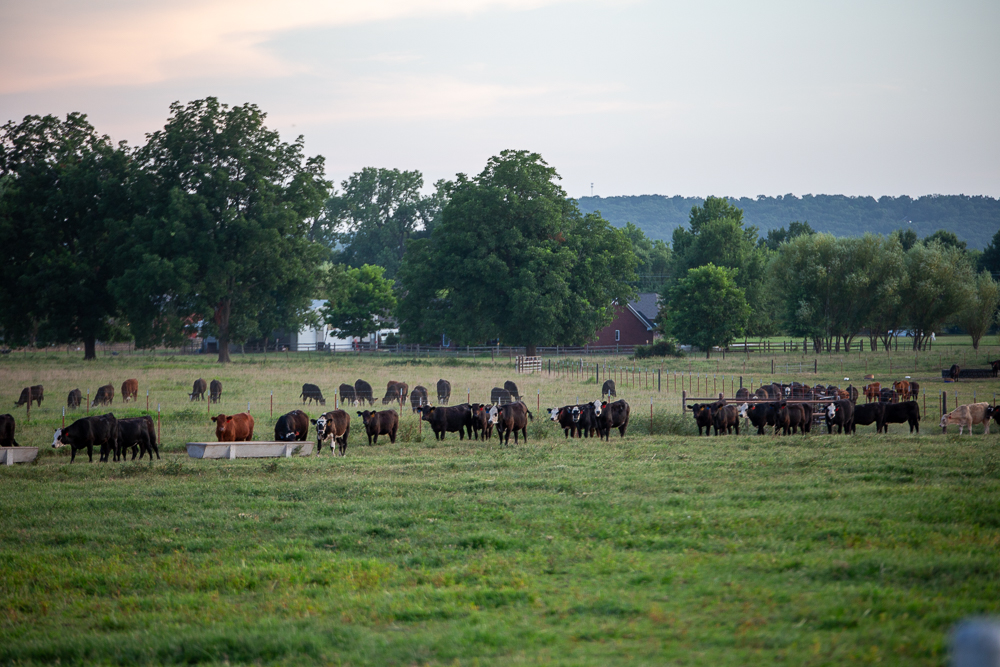
Trees after trees after trees, as far as the eye could see. Many of what I would call farms were surrounded on the perimeter by trees. More than once, I saw a mowed field with bales dotting the landscape. A couple pastures with cattle taking in the benefits of the pond, made me think about how hot and humid it has to be down there.
The closer I got to the airport, I noted how many housing developments were being constructed. Streets had houses in varying levels of construction starting at one end and progressing to the other.
My first Uber driver of the trip educated me on the major industries in the area—Tyson Foods, JB Hunt and Walmart. I was aware of Tyson and Walmart, but wasn’t sure where the trucking giant was located before my trip. It makes sense to be headquartered in the middle of all the action. Corporate offices for the big three were either on the way to the convention center or could be seen from the front door.
I was in Rogers, Arkansas, for the recent Ag Media Summit, and after several days of meetings, learning and networking, I participated in a tour of Arkansas agriculture. We were able to visit part of the University of Arkansas campus, Cobblestone Farms, a couple of local food establishments and take part in a photography workshop at the West Family Farm.
I was familiar with the West Farm, because of a former Journal intern Lindsay Kennedy. Kennedy was raised on the northwest Arkansas farm with her twin sister and now is a professor of agricultural communications at Texas Tech University.
The West family raises bermuda grass hay and Kennedy’s dad described the history of the farm to our tour group, and the more I listened to him talk, the more I thought about my own dad. They had the same sort of twinkle in their eye, and you could hear how proud he was of the farm and his daughter.
Established in 1860, the West Farm’s hay feeds mostly equines, and some cattle with small squares and large rounds sold to customers. At one time, the family raised poultry for Tyson, which spanned about 50 years. Despite their year-to-date precipitation total of nearly 40 inches, they were starting to be on the dry side, and West was between hay cuttings.
Located near Prairie Gove, Arkansas, the area is filled with Civil War history and land near the farm is primarily known for the Battle of Prairie Grove, a significant Civil War engagement that took place on Dec. 7, 1862, according to Google. The battle was the last major clash between the Union and Confederate armies in northwest Arkansas and resulted in a strategic Union victory. Kennedy said her ancestors watched battles from a ridge on the farm.
As we walked around the West Farm’s pond shooting photos during the photography workshop, I could see why people would settle there. Rolling hills and even “mountains” in the distance made it picturesque. Plus, the bermuda grass that now grows on the farm is top notch.
West described how the family has managed to hold off the encroachment of people wanting their own slice of rural living and how a neighboring property is currently for sale with a price tag in the millions. There isn’t a week that goes by that we don’t get a letter or mailer trying to entice us to sell our property here in western Kansas. I can’t imagine the pressure the West Farm has in their area. Land from Bentonville down to Fayetteville, is gobbled up by developers to crank out anything from houses to shopping and commercial uses.
The Uber driver who delivered me back to the airport to head home described his own experiences while living in Dallas and having population levels explode. While I was calling traffic crazy for 11 a.m., he was saying how light it was. He also described how Walmart policies are bringing high-dollar executives back to northwest Arkansas, and I can imagine what these counties, municipalities and other organizations have to deal with when facing these growing pains.
But one thing remains steady in my mind as I thought about Mr. West, the history of his farm, as well as my own family’s farm. Farmers and ranchers are a loyal bunch. Maybe too loyal and perhaps even loyal to a fault. I know I often tend to be that way. I don’t like change, and there’s probably a number of others out there who feel like I do. But as much as things change, they manage to stay the same.
At the end of a recent social media video I noticed the following: “Hot take, but rural America doesn’t need saving. It needs returning. The return of power, water rights, and respect for the people who’ve been feeding the nation while being treated like its leftovers.” It might lean a little political, but it’s true. Maybe if we treated the farmers and ranchers like kings or queens—instead of servants—the world might be a little brighter.
Kylene Scott can be reached at 620-227-1804 or [email protected].